Volunteer Tourism in Siquijor: Coral Reef Restoration Guide
Join coral reef restoration programs in Siquijor Island. Learn about marine conservation volunteering, reef planting, and eco-tourism opportunities.
Beneath the surface of Siquijor’s turquoise waters lies an ecosystem under pressure. Rising sea temperatures, blast fishing remnants from decades past, and increasing tourism have left portions of the island’s coral reefs in need of rehabilitation. For travelers seeking purpose alongside paradise, volunteer tourism in Siquijor offers a rare chance to directly contribute to marine conservation while experiencing one of the Philippines’ most pristine underwater environments.
Why Siquijor’s Coral Reefs Matter
Siquijor sits within the Coral Triangle, the global epicenter of marine biodiversity. The island’s reef systems support over 300 species of coral and hundreds of fish species, providing food security for local fishing communities and drawing divers from around the world. Unlike heavily commercialized dive destinations in the Visayas, Siquijor’s reefs remain relatively intact, making conservation efforts here particularly impactful.
The island’s six municipalities collectively manage more than a dozen marine protected areas. These sanctuaries serve as nurseries for reef fish populations that eventually replenish surrounding fishing grounds. When coral health declines, the entire chain suffers, from the smallest damselfish to the fishermen who depend on daily catches to feed their families.
The State of Siquijor’s Reefs in 2026
Monitoring data from local government units and partner organizations shows a mixed picture. Protected areas like Tubod Marine Sanctuary in San Juan have seen steady recovery over the past decade, with coral cover increasing from roughly 25 percent to over 40 percent in monitored zones. Fish biomass within sanctuary boundaries has doubled compared to unprotected areas nearby.
However, challenges persist. Crown-of-thorns starfish outbreaks periodically threaten recovery zones. Sedimentation from coastal development affects visibility and smothers young coral colonies. Climate-driven bleaching events, while less severe in Siquijor than in some Philippine reef systems, remain a recurring threat during unusually warm months.
These realities create both urgency and opportunity for volunteer involvement.
Types of Volunteer Programs Available
Coral Fragment Planting
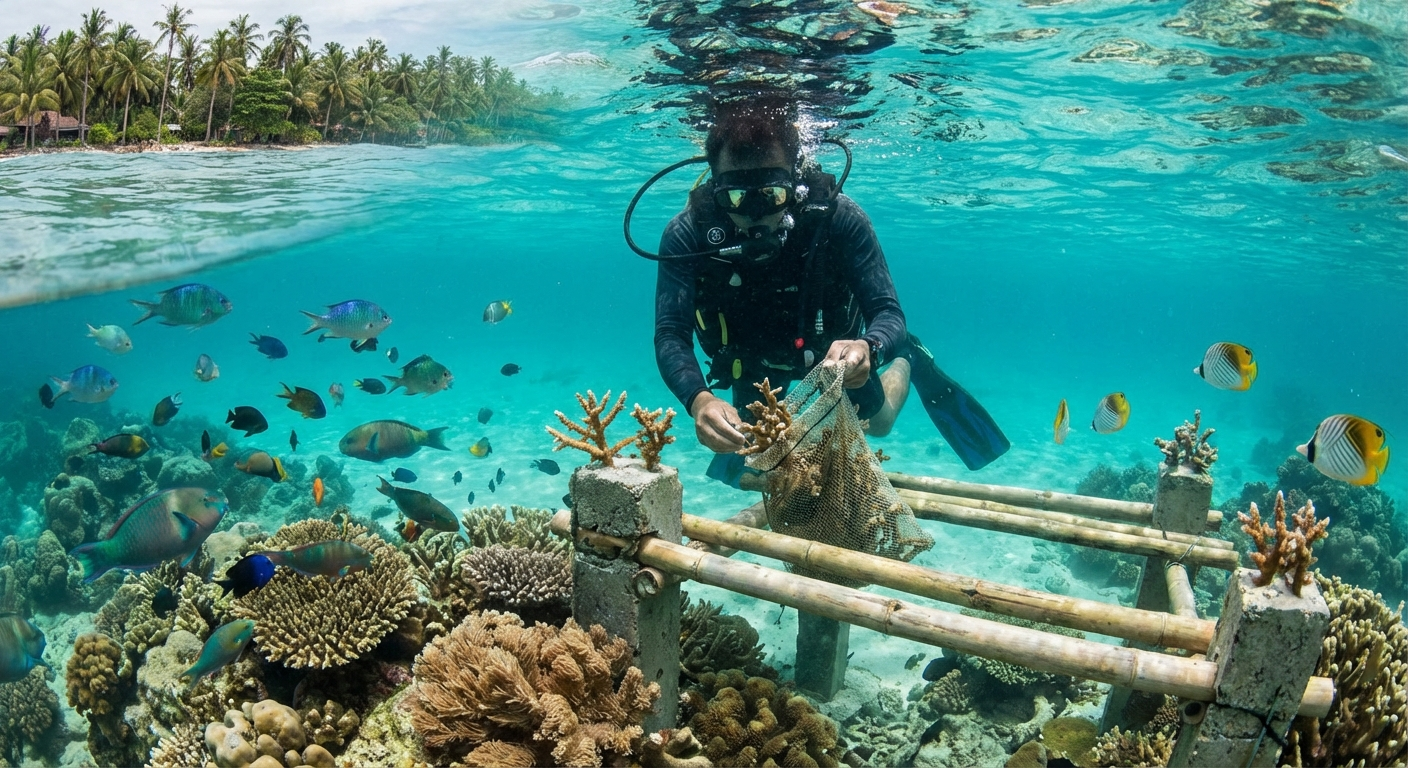
The most hands-on volunteer activity involves attaching coral fragments to artificial substrates or damaged reef areas. Programs typically use the coral gardening method, where broken but living coral pieces are secured to cement bases or metal frames and placed in optimal growth zones. Volunteers work alongside marine biologists and trained local guides who identify suitable planting sites and demonstrate proper handling techniques.
Sessions usually last two to three hours, including a briefing on coral biology and reef ecology. No prior experience is necessary for shallow-water planting, though participants should be comfortable snorkeling. For deeper installations, dive certification is required.
Reef Monitoring and Survey Participation
Several marine sanctuaries welcome trained volunteers to assist with reef health surveys. These programs follow standardized monitoring protocols, recording coral cover percentages, fish species counts, and indicators of reef stress. Data collected feeds into municipal and provincial conservation planning.
Survey participation typically requires at minimum an Advanced Open Water certification and completion of a brief orientation on monitoring methodology. Programs run most frequently during the dry season months of February through May, when visibility is best.
Beach and Underwater Cleanup Drives
Organized cleanup events happen regularly, particularly around marine sanctuaries. These events combine practical waste removal with community engagement and environmental education. Volunteers collect debris both on shorelines and underwater, with divers targeting submerged trash that damages coral and entangles marine life.
Monthly cleanup schedules are coordinated through barangay-level environmental committees. Visitors can inquire at municipal tourism offices or directly at sanctuary management stations for upcoming dates.
Mangrove Restoration
While not directly reef-related, mangrove planting programs complement coral conservation by stabilizing coastlines and filtering sediment before it reaches reef systems. Several sites around Siquijor, particularly in Lazi and Maria municipalities, maintain active mangrove restoration projects that welcome volunteer participation.
Where to Volunteer
Tubod Marine Sanctuary, San Juan
Located along the popular San Juan coast, Tubod is Siquijor’s most established marine protected area and the easiest entry point for volunteer tourists. The sanctuary management team has experience hosting international volunteers and offers structured half-day programs that include coral planting and basic reef education. The site is accessible directly from the beach, with planting areas in shallow water suitable for snorkelers.
Capalasanan Marine Protected Area, Lazi
Less visited than Tubod, Capalasanan offers volunteer opportunities in a quieter setting. The reef here includes impressive wall formations and diverse soft coral gardens. Conservation work focuses on monitoring and protecting recovery zones from anchor damage and illegal fishing encroachment.
Sandugan Marine Sanctuary, Larena
Near the Larena port area, Sandugan has undergone significant rehabilitation in recent years. Volunteer programs here often combine reef work with educational outreach to local schools, giving participants a broader view of community-based marine conservation.
Salagdoong Marine Protected Area, Maria
The waters off Salagdoong Beach, better known for cliff jumping, also host a marine protected area with ongoing conservation programs. Volunteer activities here tend to focus on cleanup operations and boundary marker maintenance.
What to Expect During a Volunteer Session
A typical volunteer half-day begins with registration at the sanctuary management station, where participants pay a modest program fee that covers materials, guide services, and sanctuary entrance. Fees generally range from 500 to 2,000 PHP depending on the activity and duration.
After registration, a brief orientation covers reef ecology basics, proper underwater behavior, and the specific techniques used in that day’s activity. For coral planting sessions, guides demonstrate how to handle fragments without damaging living tissue and how to secure them to substrates.
Participants then enter the water in small groups, each accompanied by a trained guide. Shallow-water planting is done while snorkeling in waist to chest-deep water, making it accessible even to relatively inexperienced swimmers. Deeper activities require appropriate dive gear and certification.
Sessions conclude with a debrief where guides share context about the sanctuary’s history, progress, and ongoing challenges. Many programs also include a free snorkel tour of established reef areas so volunteers can see what healthy recovered reef looks like.
Planning Your Volunteer Trip
Best Time to Visit
February through May offers the best conditions for marine volunteer work in Siquijor. Seas are calm, visibility routinely exceeds 20 meters, and water temperatures hover around 27 to 29 degrees Celsius. February specifically combines ideal diving conditions with relatively low tourist crowds compared to Easter and summer months.
Duration
While single-session participation is welcomed and meaningful, volunteers who stay for a week or more gain deeper understanding of reef systems and can contribute to ongoing monitoring projects. Some accommodations near San Juan offer discounted rates for volunteer tourists staying extended periods.
What to Bring
Essential items include reef-safe sunscreen, a rash guard or wetsuit for sun and coral protection, and your own mask and snorkel if you have them. Dive-certified volunteers should bring their certification card. Reef-safe sunscreen is particularly important as chemical sunscreens containing oxybenzone and octinoxate directly damage coral tissue.
Physical Requirements
Coral planting in shallow water requires only basic swimming ability and comfort in open water. Reef surveys and deeper conservation work require dive certification and reasonable fitness. All programs can accommodate a range of ability levels with advance notice.
The Impact of Volunteer Tourism
Volunteer tourism in marine conservation operates on multiple levels. The direct ecological impact of planting coral fragments or removing debris is real but modest on a per-person basis. The greater impact often comes through economic signals, when tourist spending flows into conservation programs rather than purely extractive tourism models, local governments receive clear evidence that reef protection has economic value.
Sanctuary management fees paid by volunteers and eco-tourists fund bantay dagat (sea patrol) operations, equipment maintenance, and guide salaries. This economic support strengthens the political case for maintaining and expanding marine protected areas against competing development pressures.
There is also an education dimension. Volunteers return home as informal ambassadors for marine conservation, carrying firsthand understanding of reef ecosystems and the challenges facing them. This ripple effect, while hard to measure, contributes to broader awareness and support for ocean protection.
Responsible Volunteer Tourism Practices
Not all volunteer tourism is created equal. To ensure your participation genuinely benefits Siquijor’s marine environment, follow these guidelines.
Choose programs run by or in direct partnership with local communities and government units. Avoid operations that appear to prioritize tourist experience over ecological outcomes. Legitimate programs will emphasize proper technique and ecological protocols over photo opportunities.
Follow all instructions from guides regarding coral handling, fin placement, and underwater behavior. Even well-intentioned volunteers can cause damage by standing on coral, stirring up sediment with improper finning, or handling fragments roughly.
Respect the limits of your certification and experience. If conditions feel beyond your comfort level, communicate this to guides without hesitation. Conservation work should not compromise participant safety.
Consider the broader context of your visit. Combining volunteer activities with responsible general tourism, choosing locally owned accommodations, eating at local restaurants, and respecting cultural norms, amplifies the positive impact of your trip.
Beyond the Reef
Volunteer tourism in Siquijor extends beyond marine conservation. Opportunities exist in reforestation programs on Mount Bandilaan, waste management initiatives through the island’s growing zero-waste movement, and educational programs in rural schools. Travelers interested in a more comprehensive volunteer experience can combine marine and terrestrial programs across a multi-week stay.
The island’s small scale works in its favor here. Unlike volunteer programs in larger destinations where individual contributions can feel anonymous, Siquijor’s tight-knit communities notice and appreciate visitor participation. Connections formed during volunteer work often become the most memorable part of a Siquijor trip.
Getting Started
Contact the municipal tourism office in San Juan for current volunteer program schedules and requirements. Walk-in participation is often possible during the dry season, but advance coordination ensures availability and allows program managers to prepare materials. The Siquijor Provincial Tourism Office can also direct visitors to programs across all six municipalities.
For travelers arriving by ferry from Dumaguete, San Juan is approximately 30 minutes from both Siquijor port and Larena port. Motorcycle rental, the island’s primary transport mode, costs around 350 to 500 PHP per day and provides the flexibility needed to reach sanctuary sites on your own schedule.
Siquijor’s coral reefs do not need saving by tourists alone. They need the sustained commitment of local communities, government policy, and global climate action. But volunteer tourism, done thoughtfully, adds meaningful support to these efforts while offering travelers something increasingly rare: the chance to leave a place slightly better than they found it.
Frequently Asked Questions
How can I volunteer for coral reef restoration in Siquijor?
Do I need diving certification to join reef restoration?
How much does volunteer tourism cost in Siquijor?
Siquijor.xyz Editorial Team
Related Experiences

Budget Travel Siquijor: Complete Money-Saving Guide
How to experience Siquijor on a budget - cheap accommodations, free attractions, money-saving tips, and sample budgets for backpackers.
Romantic Siquijor: A Couples & Honeymoon Guide
Plan the perfect romantic getaway in Siquijor. Secluded beaches, sunset dinners, couples activities, and the best accommodation for an intimate island escape.
Digital Nomad Guide to Siquijor: Remote Work in Paradise
Everything remote workers need to know about working from Siquijor: internet, coworking, accommodation, costs, and whether this island suits nomad life.