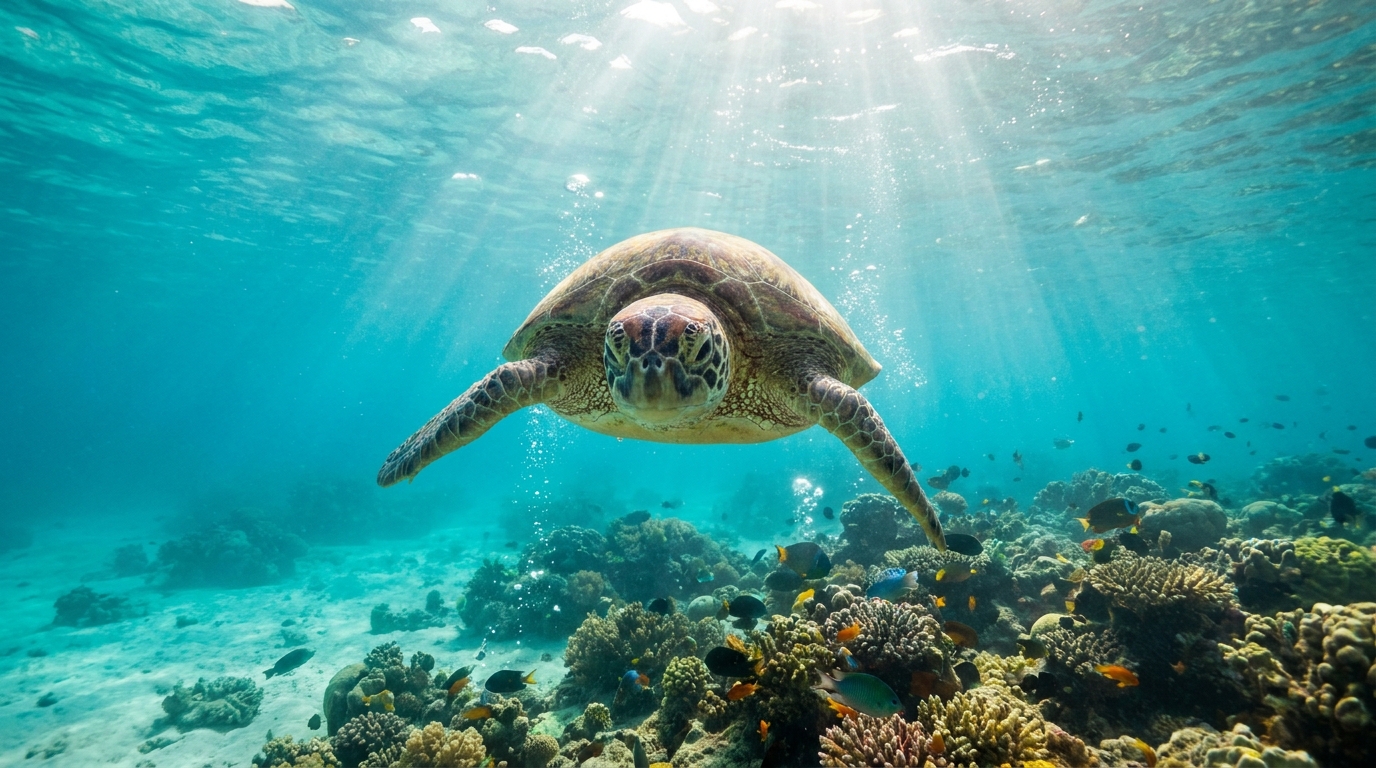
Siquijor Sea Turtle Watching: Complete Guide to Nesting and Conservation
Complete guide to sea turtle watching in Siquijor. Best dive sites, nesting season, marine conservation efforts, and responsible turtle tourism practices for visitors.
Siquijor has quietly become one of the most important sea turtle conservation areas in the Visayas region. The island’s marine sanctuaries, protected bays, and dedicated local conservation groups have created safe havens for green sea turtles (Chelonia mydas) and hawksbill turtles (Eretmochelys imbricata). For visitors, this means encounters with these ancient mariners are not just possible - they are increasingly likely.
Why Siquijor Matters for Sea Turtles
The Philippines sits at the heart of the Coral Triangle, the world’s center of marine biodiversity. Within this hotspot, Siquijor occupies a particularly important position. The island’s surrounding waters serve as feeding grounds, migratory corridors, and nesting sites for sea turtles that travel thousands of kilometers across the Pacific.
Green sea turtles, the most commonly spotted species around Siquijor, can weigh over 200 kilograms and live for more than 50 years. They return to the same beaches where they were born to lay their own eggs - a behavior called philopatry. This makes beach protection and marine corridor preservation critical for their survival.
Local marine sanctuaries established in the early 2000s have given turtle populations a fighting chance. Communities around Siquijor, particularly in San Juan and Lazi municipalities, have formalized marine protected areas where fishing is restricted and nesting beaches are monitored.
Best Dive Sites for Turtle Encounters
Caticugan Marine Sanctuary delivers the highest probability of turtle sightings. The sanctuary’s healthy coral reefs and seagrass beds provide ideal feeding habitat. Expect to see multiple turtles on a single dive, along with large schools of reef fish and occasional rays.
Paliton Bay offers excellent surface interval opportunities and is known for turtle cleaning stations where fish remove parasites from turtle shells. Snorkelers can often drift alongside turtles here without needing scuba equipment.
Apo Island, while technically a separate municipality, is frequently visited from Siquijor and hosts one of the most well-managed marine sanctuaries in Southeast Asia. The turtle population there is robust and habituated to divers.
Tubod Beach near the marine reserve provides shallow-water turtle encounters perfect for snorkelers and beginner divers.
Nesting Season: What to Expect
Sea turtle nesting in Siquijor follows a seasonal pattern, though exact timing varies year to year.
Peak nesting season runs from June through September. During these months, female turtles come ashore at night to lay eggs. The process is extraordinary - a 100-kilogram reptile hauling herself up the beach, digging a pit with her rear flippers, depositing around 100 eggs, and covering everything before returning to the sea.
Hatching season follows from August through November. After roughly 60 days of incubation, hatchlings emerge and make their frantic dash toward the ocean. This is one of nature’s most dramatic moments, though it is also precarious - only a small percentage of hatchlings survive to adulthood.
What visitors should know:
- Never approach a nesting turtle if you spot one on the beach. Keep at least 10 meters distance and avoid using flashlights or phone lights.
- Do not interfere with nests or attempt to “help” hatchlings. Their struggle to the water is a critical developmental process.
- During peak season, local guides organized through marine sanctuaries sometimes offer nighttime turtle watching tours. These are conducted under strict protocols to minimize disturbance.
- If you encounter a disoriented hatchling or injured turtle, contact the local marine conservation office.
Siquijor’s Marine Conservation Framework
The Tourism Ecological Fee introduced in February 2026 directly funds marine sanctuary management. A portion of every visitor fee goes toward patrol boats, nest monitoring equipment, and community education programs.
Local organizations work with the Bureau of Fisheries and Aquatic Resources (BFAR) to tag and track turtle movements. Data from these programs helps scientists understand migration patterns and identify critical habitat areas that need protection.
Several dive operators in Siquijor have become certified by the Marine Sustainable Tourism Council, meaning they follow strict guidelines on how to interact with marine life without causing stress or damage.
Responsible Turtle Tourism Practices
Seeing a sea turtle in the wild is a privilege that comes with responsibility.
Maintain proper distance. The standard rule is to stay at least 3 meters from turtles. Never chase, corner, or touch them. Turtles that are harassed may abandon feeding grounds or become stressed to the point of illness.
Control your buoyancy. In coral-rich areas, good buoyancy control prevents accidental contact with the reef. A swept fin can damage decades of coral growth in seconds.
Use reef-safe sunscreen. Chemical sunscreens contain oxybenzone and octinoxate, compounds shown to cause coral bleaching and developmental abnormalities in marine organisms. Mineral-based alternatives with zinc oxide or titanium dioxide are safer.
Choose operators carefully. Reputable dive shops brief their customers on marine life interaction protocols before every dive. Ask about their sustainability practices before booking.
Conservation Challenges Remain
Despite progress, Siquijor’s turtle populations face ongoing threats. Ghost nets - abandoned fishing gear that continues to trap and kill marine life - occasionally wash up on shores. Climate change affects sand temperatures, which determines the sex of hatchlings (warmer sand produces more females, which could eventually skew population dynamics). Ocean plastic pollution remains a persistent issue.
Supporting local conservation organizations, even through small donations or purchasing merchandise, contributes to patrol efforts and education programs that make a tangible difference.
How to Plan Your Turtle-Watching Trip
The best months for guaranteed turtle sightings are typically October through May, when water visibility is highest and turtles are actively feeding in the sanctuaries. June through September offer nesting opportunities but coincide with rough seas that can affect dive conditions.
Hiring a local guide who knows the marine sanctuaries intimately significantly improves your chances of a meaningful encounter. The investment also directly supports community-based conservation efforts.
Several dive shops in San Juan and Lazi offer dedicated turtle dive packages. These operators know which sites the turtles frequent at different times of day and year.
What Your Visit Supports
Every dive trip, snorkeling excursion, and marine sanctuary visit in Siquijor contributes to the local economy that depends on healthy oceans. Tourism revenue funds the patrol boats, the community hatchery programs, and the awareness campaigns that have shifted local attitudes toward marine protection over the past decade.
Sea turtle populations anywhere recover slowly - these animals take 20 to 30 years to reach maturity. But the trajectory in Siquijor has shifted from decline to gradual increase, and that is directly attributable to the combination of protected areas and responsible tourism.
Final Thoughts
Swimming alongside a sea turtle in the clear waters off Siquijor is an experience that stays with you. These animals have been swimming these waters for millions of years, long before humans appeared. Seeing them in their natural habitat, undisturbed and going about their lives, connects you to something ancient and irreplaceable.
The island has made a conscious choice to protect that connection. Choosing Siquijor for your marine wildlife encounters means participating in a conservation model that actually works.
For more information on responsible marine tourism in Siquijor, visit the local marine sanctuary offices in San Juan and Lazi, or connect with certified dive operators committed to sustainable practices.
Siquijor.xyz Editorial Team
Local experts sharing authentic Siquijor experiences
Related Experiences

Budget Travel Siquijor: Complete Money-Saving Guide
How to experience Siquijor on a budget - cheap accommodations, free attractions, money-saving tips, and sample budgets for backpackers.

Romantic Siquijor: A Couples & Honeymoon Guide
Plan the perfect romantic getaway in Siquijor. Secluded beaches, sunset dinners, couples activities, and the best accommodation for an intimate island escape.

Digital Nomad Guide to Siquijor: Remote Work in Paradise
Everything remote workers need to know about working from Siquijor: internet, coworking, accommodation, costs, and whether this island suits nomad life.