Siquijor Tropical Fruit Guide: Seasonal Fruits to Try on the Mystic Island
Discover the tropical fruits of Siquijor Island. From Philippine mangoes and coconuts to rare island varieties, learn what to eat, when it ripens, and where to find fresh fruit across the island.
 Island Adventures Team
 Siquijor Island sits in the warm waters of the central Visayas, where a tropical maritime climate creates ideal conditions for fruit trees to flourish year-round. The island’s volcanic soil, consistent rainfall, and abundant sunshine produce some of the sweetest, most flavorful tropical fruits in the Philippines. For travelers, tasting local fruit is one of the simplest and most rewarding ways to connect with the island’s agricultural heritage and everyday life.
Unlike the sanitized fruit sections of Manila supermarkets, fruit in Siquijor comes directly from the tree to your hand. Roadside vendors set up small tables under mango trees. Farmers carry baskets of freshly picked coconuts on their motorcycles. Children sell bags of calamansi from their family gardens. The fruit here tastes different because it ripens on the branch rather than in a shipping container, and that difference is immediately noticeable.
Mangoes: The Crown Jewel of Philippine Fruit
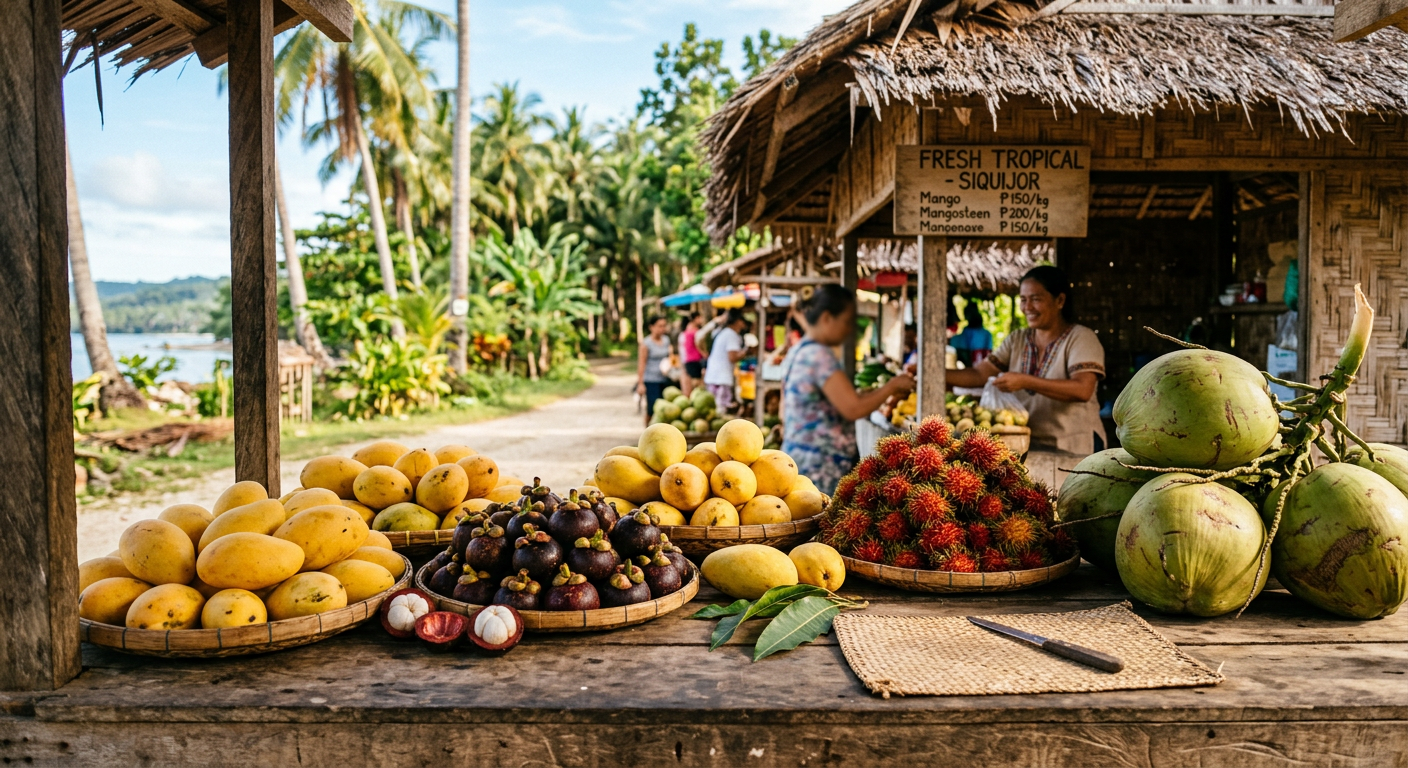
The Philippine mango is widely considered the best in the world, and the mangoes grown in the Visayas region, including Siquijor, consistently rank among the sweetest. The carabao mango, also called the Manila super mango, is the dominant variety on the island. Its skin turns from green to golden yellow when ripe, and the flesh inside is buttery, fiber-free, and intensely sweet with a slight citrus note.
Mango season in Siquijor runs from March through June, with peak availability in April and May. During these months, mangoes appear everywhere. Vendors line the road between Siquijor town and Larena with bags of fruit priced at 50 to 80 pesos per kilo, a fraction of what you would pay in Manila or export markets. Some families simply pile their surplus harvest on a table at the edge of their property with an honor-system payment box.
Green mangoes are available year-round and serve a completely different culinary purpose. Siquijor residents eat them dipped in bagoong (fermented shrimp paste) or salt, a combination that balances the tart crunch of the unripe fruit with savory umami. Street vendors near the public market in Siquijor town sell green mango slices with bagoong as an afternoon snack for 20 to 30 pesos.
How to Choose the Best Mango
Look for fruit that gives slightly when pressed, has a fruity aroma at the stem end, and shows no dark spots or wrinkled skin. The best mangoes feel heavy for their size, indicating high juice content. Avoid fruit with a sour or fermented smell, which indicates overripeness.
Coconut: The Island’s Most Versatile Fruit
Coconut palms dominate the Siquijor landscape. They line every beach, shade every road, and tower over every village. The coconut is not just a fruit here but an entire agricultural ecosystem that provides food, drink, oil, building material, and income for hundreds of island families.
Young coconuts, called buko, are available everywhere on the island. Vendors hack open the green husk with a bolo knife and hand you the nut with a straw for drinking the sweet, slightly mineral water inside. After finishing the water, ask for a spoon to scrape out the soft, jelly-like meat from the interior. A fresh buko costs between 25 and 50 pesos depending on location, with beach vendors charging slightly more.
Mature coconuts yield the firm white meat used in cooking. Grated coconut meat is pressed to extract coconut milk and coconut cream, which form the base of many local dishes including ginataang kalabasa (squash in coconut milk) and various desserts. The oil extracted from dried coconut meat, called copra, remains an important export product for Siquijor.
Coconut sap also produces tuba, the traditional fermented coconut wine that has its own rich cultural significance on the island. Mananguete (tuba gatherers) climb the palms twice daily to collect the sweet sap before it naturally ferments. Fresh tuba tastes mildly sweet with a slight tang, while aged tuba develops a stronger alcoholic character.
Banana Varieties You Will Not Find Back Home
The Philippines grows more than 80 varieties of banana, and Siquijor cultivates a surprising number of them. The standard Cavendish banana that dominates international supermarkets grows here, but it represents only a fraction of what the island produces.
Saba bananas are thick, starchy cooking bananas that locals boil, fry, or grill. Fried saba coated in caramelized sugar becomes banana cue, one of the most popular street snacks in the Philippines. Look for vendors near the Siquijor public market frying banana cue in large woks during the afternoon hours.
Lakatan bananas are smaller than Cavendish with a more intense sweetness and a slight orange tint to the flesh. Many visitors consider them the best eating banana they have ever tasted. They grow in backyard gardens across the island and appear at roadside stands for 30 to 50 pesos per bunch.
Latundan, also called silk bananas, have thinner skin and a tangy sweetness that distinguishes them from other varieties. Seniorita bananas are tiny, finger-sized fruits that pack concentrated sweetness into each bite. Both varieties grow in Siquijor’s highland areas around Mount Bandilaan where cooler temperatures and richer soil favor their development.
Papaya: Year-Round Tropical Staple
Papaya trees grow rapidly in Siquijor’s climate and produce fruit year-round, making them one of the most reliable tropical fruits on the island. The trees reach maturity within a year of planting and bear fruit continuously for several years, which explains why nearly every household garden includes at least one papaya tree.
Ripe papaya in Siquijor has deep orange flesh with a creamy texture and mild sweetness. Locals eat it fresh for breakfast, blend it into shakes at juice stands, or slice it as a simple dessert. The seeds, which have a peppery flavor, are sometimes dried and ground as a seasoning.
Green papaya serves as a vegetable in local cooking. It appears in tinola (a clear soup with chicken or fish), where its mild flavor absorbs the broth while maintaining a firm texture. Shredded green papaya also features in atchara, a pickled relish that accompanies grilled meats and fish.
Calamansi: The Tiny Citrus That Flavors Everything
Calamansi is a small, round citrus fruit about the size of a large marble. It looks like a miniature lime with thin green or yellow-green skin and intensely sour juice. Despite its diminutive size, calamansi is arguably the most important flavoring ingredient in Filipino cooking, and Siquijor produces it abundantly.
Every carinderia (local eatery) on the island keeps a bowl of calamansi on the table alongside soy sauce and vinegar. Diners squeeze it over pancit (noodles), grilled fish, soups, and virtually anything else. The juice adds a bright, complex acidity that regular lime cannot replicate, with floral undertones that lift the flavors of whatever dish it accompanies.
Calamansi juice mixed with water and sugar makes a refreshing drink that vendors sell for 15 to 20 pesos. In the heat of a Siquijor afternoon, a cold glass of calamansi juice provides both hydration and a vitamin C boost. Some cafes on the island now incorporate calamansi into cocktails, iced teas, and even desserts.
Jackfruit: The Giant of Tropical Fruits
Jackfruit trees grow throughout Siquijor’s lowland areas, producing enormous fruits that can weigh over 30 kilograms. The exterior is covered in small, bumpy protrusions, and the interior contains dozens of yellow, pod-like segments surrounding large seeds. Each segment has a distinctive sweet flavor with notes of pineapple, banana, and bubblegum.
Ripe jackfruit segments are eaten fresh or used in desserts, particularly halo-halo, the iconic Filipino shaved ice dessert. Unripe jackfruit, locally called langka, is cooked as a vegetable in dishes like ginataang langka (jackfruit in coconut milk) where its meaty texture serves as a satisfying plant-based protein source.
Jackfruit season peaks between March and September, aligning well with the main tourist season. During these months, you will find entire jackfruits for sale at the Siquijor public market, or individual portions of pre-separated segments packed in plastic containers. A whole jackfruit costs 100 to 300 pesos depending on size, while prepared segments sell for 30 to 50 pesos per container.
Lanzones: The October Treasure
Lanzones season runs from September through November, and for many Filipinos, it represents the highlight of the fruit calendar. These small, round fruits grow in clusters resembling grapes and have thin, pale brown skin that peels easily to reveal translucent, segmented flesh. The flavor is unique: sweet with a slight tart edge and a delicate floral quality that no other fruit quite matches.
While Siquijor’s lanzones season falls outside the peak tourist months, travelers visiting during the shoulder season in October or November will find the fruit everywhere. The nearby island of Camiguin holds an annual Lanzones Festival, but Siquijor’s own harvest provides plenty of opportunity to taste this remarkable fruit without the festival crowds.
When choosing lanzones, look for clusters with uniformly sized fruits and dry, taut skin. Avoid fruits with wet or split skin, as these deteriorate quickly. The easiest way to eat lanzones is to pinch the skin at the stem end and peel it away in one motion, then pop the segments into your mouth while being careful to avoid biting the bitter seed inside.
Rambutan and Mangosteen: Seasonal Delicacies
Rambutan arrives in Siquijor between August and October. These striking fruits are covered in soft, hair-like spines (rambut means hair in Malay) with a red or yellow exterior. Peeling away the skin reveals a grape-like translucent fruit with sweet, mildly acidic flesh that separates easily from the central seed. Rambutan is best eaten fresh and chilled.
Mangosteen, often called the queen of fruits, has a harder purple shell that cracks open to reveal snow-white segments with an extraordinary flavor profile combining sweetness, tartness, and a subtle peachy fragrance. Mangosteen season overlaps with rambutan, and both fruits command higher prices than more common varieties due to their shorter season and higher demand.
Both fruits appear at the Siquijor public market and at roadside stands during their respective seasons. Prices range from 80 to 150 pesos per kilo, still far cheaper than imported versions sold in Western countries.
Guava, Atis, and Guyabano: Underrated Island Fruits
Guava trees grow semi-wild across Siquijor, producing small green fruits with pink or white flesh. Ripe guava has an intense, aromatic sweetness and is eaten fresh, juiced, or made into jellies. The fruit is extremely rich in vitamin C, containing several times more than oranges by weight.
Atis, also known as sugar apple or sweetsop, has a bumpy green exterior that breaks apart to reveal creamy white flesh with a custard-like texture. The flavor is genuinely reminiscent of vanilla custard with a tropical sweetness. Atis season runs from August through November, and the fruit is often overlooked by visitors who do not recognize it.
Guyabano, or soursop, produces large, spiny green fruits with soft white flesh and a tart-sweet flavor. Locals blend guyabano with milk and ice to create one of the most refreshing smoothies available on the island. The fruit also features in traditional health remedies, as it contains compounds that have attracted interest from medical researchers studying potential anti-inflammatory properties.
Where to Find the Best Fruit in Siquijor
The Siquijor Public Market in Siquijor town offers the widest selection and most competitive prices. Morning visits between 6:00 and 9:00 AM provide the freshest selection, as farmers bring their harvests at dawn. The market operates daily but is busiest on weekends when farmers from the highland municipalities bring additional produce.
Roadside fruit stands appear along the main circumferential road, particularly between Larena and Siquijor town and along the road from Maria to Lazi. These informal stands often offer fruit that was picked that morning from adjacent farms. Prices are generally fixed and fair, though buying multiple kilos may earn a small discount.
The highland area around Mount Bandilaan hosts several small farms that welcome visitors. While there is no formal agritourism program, asking politely at farm properties along the road to the national park may result in an impromptu tour and the chance to pick fruit directly from the tree. Bring cash for purchasing fruit, as these are informal transactions.
Seasonal Fruit Calendar for Siquijor
Available year-round: coconut, banana, papaya, calamansi, guava
March through June: mango (peak April-May), jackfruit begins
June through September: jackfruit (peak), durian occasionally available from Mindanao traders
August through November: lanzones, rambutan, mangosteen, atis, guyabano
December through February: citrus fruits, marang occasionally available
Planning your visit around fruit seasons adds a delicious dimension to your Siquijor trip. March through May offers the legendary mango season, while September through November brings the more exotic lanzones, rambutan, and mangosteen. Regardless of when you visit, the island’s year-round fruits ensure you will never go without a fresh, tropical snack picked that very morning from a tree within sight of the sea.
Tips for Enjoying Fruit in Siquijor
Wash all fruit before eating, even if you plan to peel it. Tap water in Siquijor is generally safe for washing produce, but bottled water is available if you prefer extra caution.
Bring a small knife when exploring the island. Many fruits require cutting or peeling that is easier with a blade, and vendors do not always provide utensils.
Ask locals for recommendations. Siquijor residents take pride in their fruit and will happily direct you to the best mango tree in the neighborhood or the sweetest lanzones stand in the market.
Buy more than you think you need. Tropical fruit in Siquijor is inexpensive, incredibly fresh, and tastes nothing like the imported versions available in other countries. The mango you eat on this island may genuinely be the best mango of your life, and at 50 pesos per kilo, there is no reason not to indulge.
Island Adventures Team
Exploring the flavors and traditions of Siquijor Island.
Related Experiences

Budget Travel Siquijor: Complete Money-Saving Guide
How to experience Siquijor on a budget - cheap accommodations, free attractions, money-saving tips, and sample budgets for backpackers.

Romantic Siquijor: A Couples & Honeymoon Guide
Plan the perfect romantic getaway in Siquijor. Secluded beaches, sunset dinners, couples activities, and the best accommodation for an intimate island escape.
Digital Nomad Guide to Siquijor: Remote Work in Paradise
Everything remote workers need to know about working from Siquijor: internet, coworking, accommodation, costs, and whether this island suits nomad life.