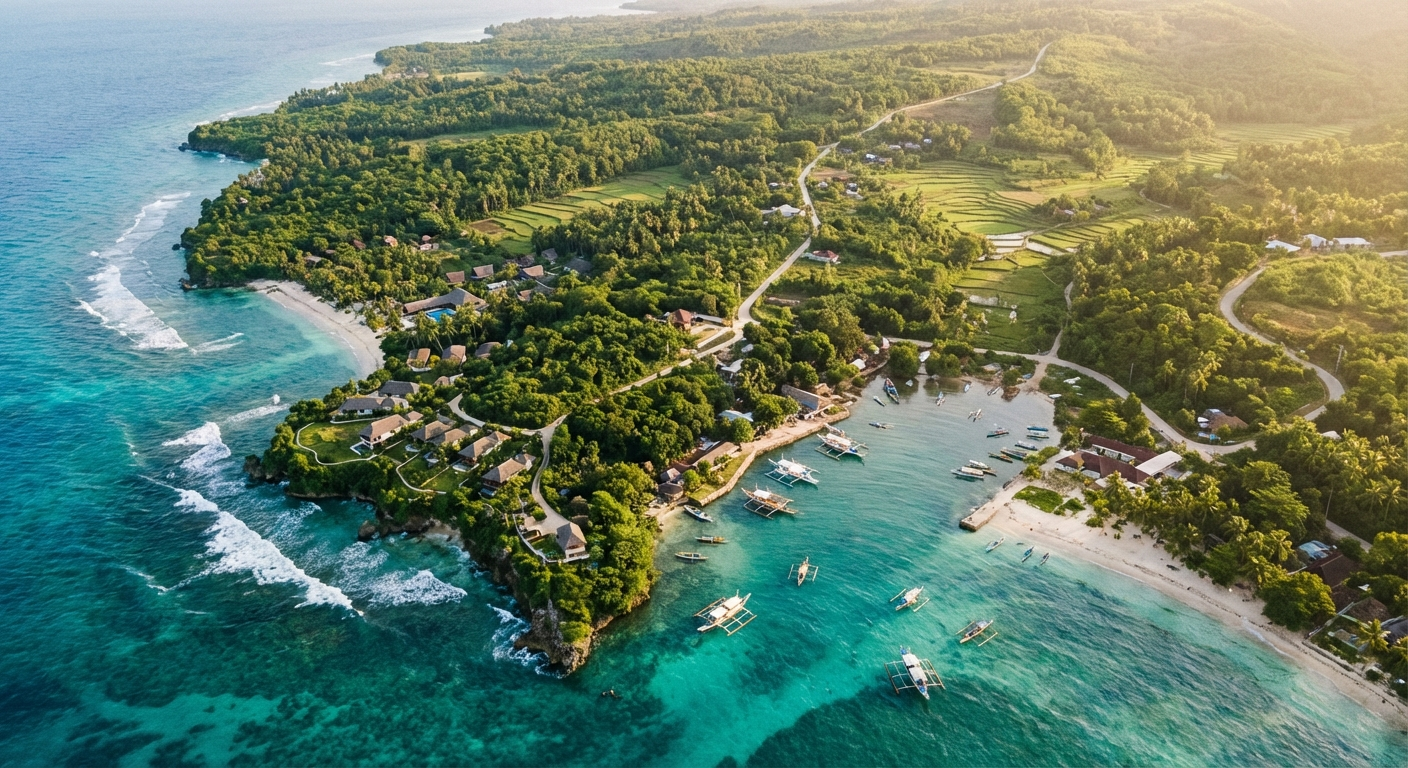
Siquijor's Tourism Boom: How the Island Handles Its Global Fame
Siquijor topped Agoda's fastest-growing destination list. Here's what the tourism boom means for visitors, locals, and the island's future.
Something remarkable has happened to the small island province in the Central Visayas that many travelers had never heard of five years ago. Siquijor topped Agoda’s “New Horizons” list as the fastest-growing destination for international visitors in the Philippines. Travelers from China, South Korea, the United States, Australia, and Germany are arriving in numbers that would have seemed impossible a decade ago. The mystical Island of Fire, long known primarily to backpackers and diving enthusiasts, has entered the global tourism conversation.
This shift carries enormous implications for the island, its roughly 100,000 residents, and the travelers who visit. Understanding what is driving the boom, how the island is responding, and what visitors should expect provides essential context for anyone planning a trip to Siquijor in 2026 and beyond.
What Sparked the Boom
The growth did not happen overnight. Several converging factors transformed Siquijor from a whispered recommendation among Southeast Asia backpackers into a destination that international booking platforms now actively promote.
Improved Air Access
The introduction and expansion of commercial flights to Siquijor Airport in Lazi fundamentally changed the island’s accessibility. Previously, reaching Siquijor required a ferry ride from Dumaguete, Cebu, or Bohol, adding hours and logistical complexity to the journey. Direct flights from Cebu, taking roughly 45 minutes, opened the island to travelers who would not have considered a multi-transfer route.
The psychological barrier of ferry-only access kept visitor numbers naturally limited for decades. Removing that barrier invited a new category of traveler, those with shorter vacation windows who need efficient connections. Weekend trips from Cebu or Manila became feasible in ways they never were before.
Social Media and Content Creator Attention
Siquijor’s visual appeal translates powerfully to platforms like Instagram, TikTok, and YouTube. The turquoise waters of Cambugahay Falls, the otherworldly atmosphere of the enchanted Balete Tree, and the dramatic cliffs at Salagdoong have generated millions of views across social platforms. Content creators from Korea, Japan, and Western countries have produced viral videos that introduced Siquijor to audiences who had never considered the Philippines as a destination.
The island’s mystical reputation adds narrative depth that purely scenic destinations lack. Stories about traditional healers, love potions, and the Island of Fire moniker give content creators a compelling angle that drives engagement beyond standard beach footage.
Philippine Tourism Department Promotion
National tourism campaigns have increasingly featured destinations beyond the established circuit of Boracay, Palawan, and Cebu. The Department of Tourism’s push to distribute visitors across the archipelago positioned Siquijor as an alternative that offers authentic experiences without the infrastructure strain visible at more developed destinations.
Regional marketing partnerships between Central Visayas provinces have also promoted multi-destination itineraries that include Siquijor alongside Cebu, Bohol, and Dumaguete, introducing the island to travelers who might otherwise have skipped it.
The Numbers Behind the Growth
While exact figures vary by source, the trajectory is unmistakable. Visitor arrivals to Siquijor have increased year over year since 2023, with international arrivals showing the steepest growth curve.
Hotel and resort bookings during peak season now frequently reach capacity in San Juan, the municipality that serves as the island’s primary tourist hub. Properties that once struggled to fill rooms during weekdays now maintain strong occupancy throughout the week during dry season months.
The ecological fee collection data, a reliable proxy for total visitor numbers since all arriving tourists must pay, shows consistent upward movement. The provincial government has used this data to plan infrastructure improvements, including road widening projects and waste management upgrades.
Ferry operators have responded by adding routes and increasing frequency. The Dumaguete to Siquijor route now runs multiple daily departures from several competing operators, and the Tagbilaran (Bohol) to Siquijor route has become more consistent.
How the Island Is Responding
The provincial and municipal governments have taken a notably measured approach to the tourism growth, attempting to balance economic opportunity with preservation of the island’s character and environment.
Infrastructure Investment
Road improvements across the island have accelerated. The main circumferential road receives regular maintenance, and secondary roads leading to popular attractions have been upgraded. These improvements serve both tourists and residents, addressing long-standing infrastructure gaps.
Water supply and waste management have received attention as well. The increase in tourist accommodations places additional demand on the island’s freshwater resources, and the provincial government has worked with national agencies on sustainable water management plans.
The Ecological Fee System
Siquijor’s ecological fee, collected from all arriving visitors, funds environmental conservation and infrastructure maintenance. The fee structure has been updated to reflect the island’s growing tourism profile, with revenue channeled toward marine sanctuary maintenance, beach cleanups, and solid waste management programs.
This system gives the provincial government a direct financial mechanism tied to visitor volume. As arrivals increase, so does the available budget for mitigating tourism’s environmental impact. The approach has drawn praise from sustainable tourism advocates who point to Siquijor as a model for Philippine island destinations.
Community-Based Tourism Initiatives
Several barangays have developed community-based tourism programs that channel visitors and revenue to areas beyond the established tourist corridor. The Cantabon Cave guides association, for example, provides trained local guides and ensures that spelunking tourism generates income for the community while maintaining safety standards.
Similar models operate around various waterfalls, marine sanctuaries, and cultural sites across the island. These programs distribute tourism’s economic benefits more broadly than a model concentrated entirely in resort areas would achieve.
What Visitors Should Know in 2026
The tourism boom creates both opportunities and considerations for travelers planning a Siquijor visit.
Peak Season Realities
March through May represents the highest demand period. Accommodation in San Juan should be booked well in advance for these months, particularly around Easter and long weekends. Visitors who prefer a quieter experience should consider June, November, or December, when weather remains pleasant but crowds thin considerably.
Popular attractions like Cambugahay Falls and the Balete Tree experience their heaviest visitor traffic between 10 AM and 2 PM. Early morning visits, arriving before 8 AM, offer a dramatically different experience with fewer people and better light for photography.
Beyond San Juan
The concentration of tourism infrastructure in San Juan means that the island’s five other municipalities see comparatively fewer visitors. Lazi, with its UNESCO-tentative Convent and growing cafe scene, offers excellent accommodation options at lower prices than San Juan equivalents. Maria and Enrique Villanueva on the island’s southwestern coast provide genuinely quiet beach experiences.
Exploring beyond San Juan is not just a strategy for avoiding crowds. It provides a more complete picture of Siquijor’s character and supports economic distribution across the island. The circumferential road makes every municipality accessible within a short motorcycle or tricycle ride.
Pricing Trends
The tourism boom has pushed prices upward, though Siquijor remains affordable by international standards. Mid-range accommodation in San Juan now typically runs between 2,000 and 4,000 PHP per night, up from 1,500 to 3,000 PHP two years ago. Dining costs have risen less dramatically, with local restaurants maintaining prices that reflect the island’s cost of living rather than tourist-inflated rates.
Budget travelers can still find rooms below 1,500 PHP per night, particularly outside San Juan and during shoulder season. The island has not experienced the kind of extreme price inflation seen in Boracay’s boom period.
Environmental Awareness
With more visitors comes more responsibility. The marine sanctuaries that make Siquijor’s snorkeling and diving exceptional depend on visitor compliance with rules about reef contact, sunscreen use, and waste disposal. Several sanctuaries now provide briefings before entry, and reef-safe sunscreen is increasingly available at island shops.
Solid waste remains a challenge for the island, as it does across much of the Philippines. Visitors who carry reusable water bottles, refuse single-use plastics when possible, and dispose of waste properly contribute meaningfully to keeping the island clean.
What the Future Holds
Siquijor stands at an inflection point that will define its tourism trajectory for the coming decade. The island has natural advantages that larger, more developed destinations do not, primarily its small size, strong community identity, and provincial government that has demonstrated willingness to regulate rather than simply accommodate growth.
The risk of overdevelopment is real but not inevitable. Siquijor’s geography, limited flat land for large-scale construction, and existing building height restrictions create natural constraints that Boracay, for example, did not have when its boom began. The ecological fee system provides a financial feedback loop that connects visitor volume to conservation funding.
Several proposed developments, including expanded resort facilities and improved airport infrastructure, are moving through approval processes that include environmental impact assessments. The provincial government has signaled that it intends to prioritize quality over volume, encouraging boutique and mid-range development rather than mass-market resort construction.
Visiting Responsibly During the Boom
Travelers who visit Siquijor during this period of growth have an opportunity to support the kind of tourism development that benefits both visitors and residents. Practical steps include choosing locally owned accommodations and restaurants, hiring local guides for activities, respecting marine sanctuary rules, and spending time and money in municipalities beyond San Juan.
The island’s charm has always been rooted in its people, its pace, and its natural environment rather than manufactured attractions. The boom tests whether those qualities can survive increased attention. The early signs are encouraging, but the outcome depends partly on the choices that each visitor makes.
Siquijor earned its place on the global tourism map. The question now is whether it can grow without losing the qualities that put it there. For travelers who visit thoughtfully, the island remains one of the most rewarding destinations in Southeast Asia, a place where the tourism boom has added convenience and options without yet diminishing the experience that made it special in the first place.
Frequently Asked Questions
Is Siquijor becoming too crowded for tourists?
How has the tourism boom affected prices on Siquijor?
Are there new flights to Siquijor in 2026?
Siquijor.xyz Editorial Team
Local experts sharing authentic Siquijor experiences
Related Experiences

Budget Travel Siquijor: Complete Money-Saving Guide
How to experience Siquijor on a budget - cheap accommodations, free attractions, money-saving tips, and sample budgets for backpackers.

Romantic Siquijor: A Couples & Honeymoon Guide
Plan the perfect romantic getaway in Siquijor. Secluded beaches, sunset dinners, couples activities, and the best accommodation for an intimate island escape.
Digital Nomad Guide to Siquijor: Remote Work in Paradise
Everything remote workers need to know about working from Siquijor: internet, coworking, accommodation, costs, and whether this island suits nomad life.