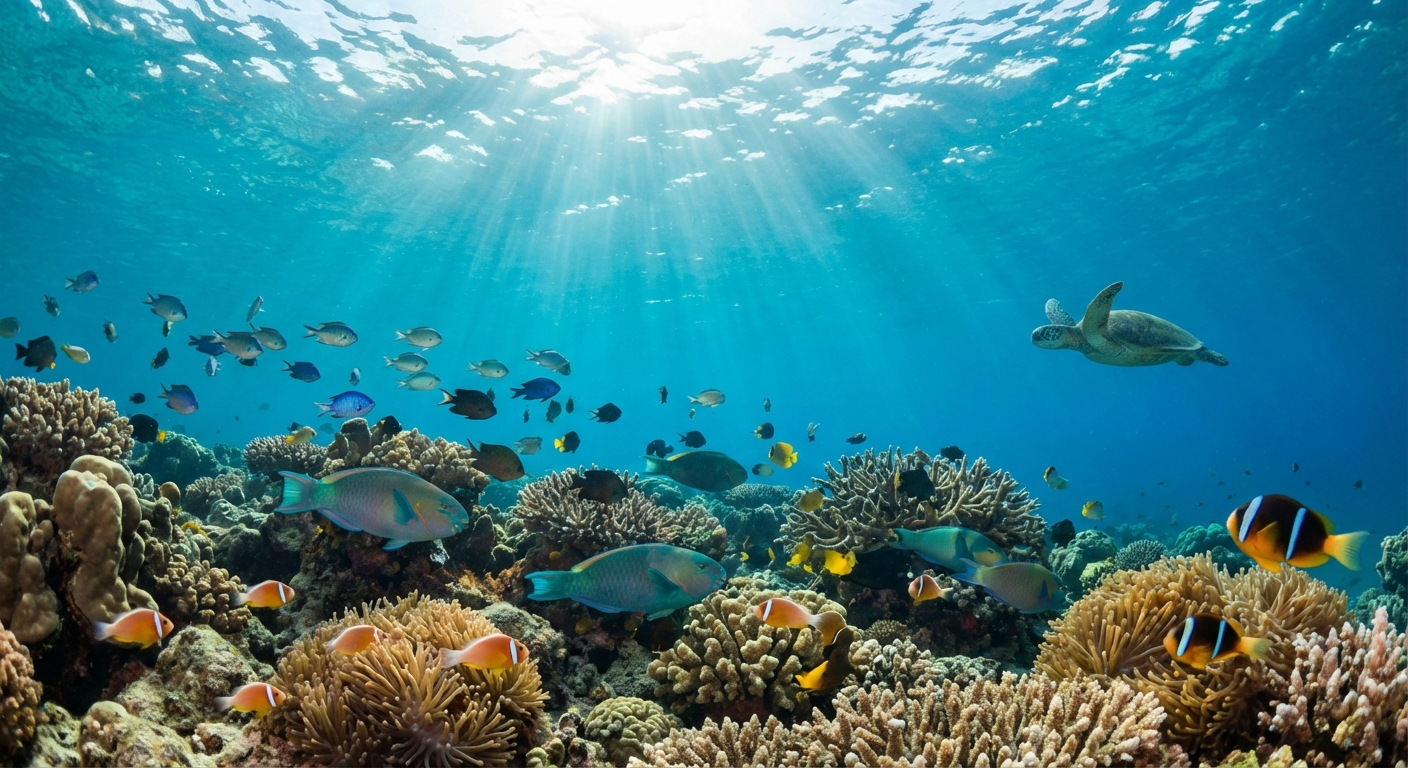
Siquijor Snorkeling Calendar: Best Marine Life to See Each Month
Month-by-month guide to snorkeling in Siquijor. Discover what marine species appear each season, from whale sharks and sea turtles to coral spawning and rare nudibranch migrations.
The waters surrounding Siquijor Island host an extraordinary diversity of marine life that shifts dramatically with the seasons. From the green sea turtles that graze on seagrass beds year-round to the spectacular coral spawning events that transform reefs in spring, every month brings something different beneath the surface.
This month-by-month guide helps you plan your snorkeling trips around the marine encounters that matter most to you. Whether you are chasing manta ray sightings, hoping to witness clownfish breeding behavior, or simply want the clearest visibility possible, timing your visit right makes all the difference.
Understanding Siquijor’s Marine Seasons
Siquijor sits in the heart of the Coral Triangle, the most biodiverse marine region on Earth. The island’s position in the Bohol Sea and Sulu Sea creates a convergence of currents that supports an unusually rich underwater ecosystem for such a small island.
Two primary seasons shape the underwater experience. The dry season from December through May generally brings calmer waters, better visibility, and warmer surface temperatures. The wet season from June through November introduces nutrient-rich upwellings that attract larger pelagic species, though visibility can decrease near river outlets after heavy rains.
Water temperatures around Siquijor range from approximately 26 degrees Celsius in January to 30 degrees in May. These fluctuations, while subtle, trigger biological events like spawning and migration that create unique snorkeling opportunities throughout the year.
January: Winter Clarity and Pelagic Visitors
January marks one of the best months for underwater visibility around Siquijor. The amihan (northeast monsoon) wind has settled into a predictable pattern, and reduced rainfall means less sediment runoff entering coastal waters. Expect visibility of 15 to 25 meters at most sites.
The cooler water temperatures attract larger fish species to shallower areas. Schools of barracuda are regularly spotted at Tubod Marine Sanctuary, and hawksbill turtles become more active in the mornings as they feed on sponges along the reef walls.
Best sites: Tubod Marine Sanctuary, Caticugan Marine Sanctuary
What to look for: Hawksbill turtles, barracuda schools, large groupers, blue-spotted stingrays resting on sandy patches
Conditions: Water temperature 26 to 27 degrees Celsius, visibility 15 to 25 meters, calm seas on the western coast
February: Nudibranch Season Begins
February brings what local dive guides call “nudi season.” As water temperatures slowly begin to rise, an extraordinary variety of nudibranchs and sea slugs emerge on the reefs. Siquijor hosts over 200 documented nudibranch species, and February through April is when the greatest diversity appears.
These tiny, brilliantly colored creatures are easy to overlook unless you know to search for them on coral rubble, sponges, and seaweed. Slowing down and examining reef surfaces closely reveals a miniature world of electric blues, vivid oranges, and psychedelic purples.
Green sea turtles continue their year-round residence at several sites, particularly the seagrass beds near San Juan and the reef flats at Siquijor town.
Best sites: Paliton Wall (for nudibranchs on the reef slope), Sandugan Marine Sanctuary
What to look for: Chromodoris nudibranchs, Nembrotha species, flatworms, shrimp gobies, cleaning stations active with bluestreak cleaner wrasse
Conditions: Water temperature 27 degrees Celsius, visibility 15 to 20 meters, generally calm
March: Peak Visibility and Reef Fish Breeding
March represents the sweet spot for snorkeling in Siquijor. The dry season is fully established, water clarity reaches its annual peak, and reef fish are entering their breeding season. Male fish display their most vivid coloring as they compete for mates, making the reefs noticeably more vibrant.
Watch for elaborate courtship dances among triggerfish, which become territorial over their egg nests in sandy patches. Titan triggerfish, in particular, can be aggressive near their nests, so maintain a respectful distance from any unusually agitated triggerfish hovering over a section of sand.
Anemonefish (clownfish) begin their breeding cycles, and careful observers can spot pairs tending orange egg clutches on rocks near their host anemones. Siquijor hosts at least five species of anemonefish, with Clark’s anemonefish being the most abundant.
Best sites: Tubod Marine Sanctuary, Apo Island (day trip), Salagdoong reef
What to look for: Breeding triggerfish, anemonefish with eggs, parrotfish schools, cuttlefish displays, mantis shrimp
Conditions: Water temperature 28 degrees Celsius, visibility 20 to 30 meters, calm seas, minimal current
April: Coral Spawning and Night Snorkeling
April brings one of the most spectacular events in the marine calendar: coral spawning. Triggered by rising water temperatures and the full moon cycle, entire reef sections release millions of tiny pink and white egg bundles simultaneously. The event typically occurs three to five nights after the April or May full moon.
If you are on the island during a spawning event, night snorkeling becomes an extraordinary experience. The water fills with floating gametes that look like an underwater snowstorm in reverse, with particles rising rather than falling. It is one of the most surreal natural phenomena visible to snorkelers anywhere in the world.
During the day, April continues to deliver excellent conditions. Whale sharks occasionally pass through the deeper channels between Siquijor and Bohol, though sightings are not guaranteed. More reliably, eagle rays patrol the reef edges, and large schools of fusiliers create shimmering silver walls above the coral.
Best sites: Any healthy reef section for spawning (Tubod and Caticugan are most accessible), Paliton for eagle rays
What to look for: Coral spawning (check moon phases), eagle rays, whale shark (rare), Spanish dancers (at night), bioluminescent plankton
Conditions: Water temperature 29 degrees Celsius, visibility 15 to 25 meters, warm and calm
May: Peak Water Temperature and Macro Life
May brings the warmest water of the year, which drives an explosion of small marine life. Macro photography enthusiasts consider this month among the best for finding pygmy seahorses, ornate ghost pipefish, and various species of commensal shrimp living on corals and anemones.
The warmer water also increases the activity of octopuses, which become bolder and more visible during their hunting forays across the reef. Siquijor hosts at least three octopus species, with the day octopus being most commonly spotted.
Jellyfish numbers can increase in May, particularly near the surface. Most species around Siquijor are harmless, but moon jellyfish and occasional box jellyfish sightings mean wearing a rash guard provides an extra layer of protection.
Best sites: Caticugan Marine Sanctuary, Sandugan reef, shallow reef flats for macro life
What to look for: Pygmy seahorses, ghost pipefish, octopuses, frogfish, juvenile reef fish, jellyfish
Conditions: Water temperature 29 to 30 degrees Celsius, visibility 10 to 20 meters, calm but occasional afternoon swells
June: Transition Season and Nutrient Upwelling
June marks the transition from dry to wet season. The habagat (southwest monsoon) begins to influence weather patterns, and the first significant rains introduce nutrients into coastal waters. While surface visibility may decrease temporarily after rainfall, this nutrient influx triggers a feeding frenzy across the reef ecosystem.
Filter feeders like manta rays become more likely to appear near Siquijor during this period, drawn by the increasing plankton density. While mantas are never guaranteed, June through September offers the best statistical chance of encounters.
The western coast becomes more sheltered as winds shift, making sites like Paliton and Lazi reef more accessible. The eastern coast, particularly around Siquijor town, can experience stronger waves.
Best sites: Paliton (sheltered), Lazi reef, western coast sites
What to look for: Manta rays (possible), whale sharks (rare), schools of jacks, trevally, increased crustacean activity
Conditions: Water temperature 28 to 29 degrees Celsius, variable visibility 8 to 20 meters, choppy on eastern coast
July: Rainy Season Marine Activity
Despite being solidly in the rainy season, July offers compelling underwater experiences. The nutrient-rich water supports dense aggregations of baitfish, which in turn attract predators. Reef edges become hunting grounds where you can watch coordinated hunting behavior among trevally, mackerel, and jacks.
Sea turtles reach peak feeding activity during this period. The combination of warmer water and increased algae growth on reef surfaces means green sea turtles spend more time in shallow, accessible areas. Snorkelers at Tubod Marine Sanctuary regularly encounter multiple turtles in a single session.
Visibility is more variable, ranging from excellent between rain events to reduced immediately after downpours. Planning snorkeling sessions for morning hours, before afternoon rain, typically yields better conditions.
Best sites: Tubod Marine Sanctuary (turtles), Caticugan (baitfish schools), reef edges for predator action
What to look for: Feeding frenzies, green sea turtle aggregations, moray eels hunting in open water, cuttlefish, octopus
Conditions: Water temperature 28 degrees Celsius, visibility highly variable 5 to 20 meters, morning sessions recommended
August: Pelagic Season Peak
August represents the peak of pelagic activity around Siquijor. The monsoon-driven currents pull nutrient-rich deep water toward the surface, creating conditions that attract ocean-going species to the island’s waters.
Schools of mobula rays occasionally sweep through the channels between islands. These small, graceful rays travel in groups of dozens or even hundreds, creating one of the most dramatic spectacles available to snorkelers in the Visayas.
Reef sharks, primarily blacktip and whitetip species, become more active and visible at dawn and dusk. While encounters require snorkeling at reef drop-offs rather than shallow areas, these sharks pose no threat to humans and provide thrilling wildlife sightings.
Best sites: Deep water edges near Caticugan, channel between Siquijor and Apo Island area
What to look for: Mobula rays, reef sharks at dawn and dusk, large tuna, barracuda schools, Spanish mackerel
Conditions: Water temperature 27 to 28 degrees Celsius, visibility 8 to 15 meters, stronger currents at some sites
September: Seahorse and Pipefish Activity
September brings a lesser-known highlight: seahorse breeding season. Siquijor’s seagrass beds host several seahorse species, including the thorny seahorse and the common seahorse. During September, males visibly carry eggs in their brood pouches, and careful observers can sometimes witness the dramatic moment when juveniles are released.
Pipefish, close relatives of seahorses, also reach peak activity. Ghost pipefish appear among crinoids and soft corals, their extraordinary camouflage making them one of the most rewarding finds for patient snorkelers.
The reef continues to benefit from nutrient enrichment, and soft corals reach their most extended and vibrant state during this period.
Best sites: Seagrass beds near San Juan, Caticugan shallow zones, soft coral gardens
What to look for: Breeding seahorses, ghost pipefish, ornate pipefish, soft coral extensions, juvenile reef fish swarms
Conditions: Water temperature 27 to 28 degrees Celsius, visibility 8 to 15 meters, afternoon rain common
October: Whale Shark Transit Season
October brings the second annual window for whale shark sightings around Siquijor. These massive filter feeders follow plankton blooms through the Visayas, and their transit routes occasionally bring them within snorkeling distance of the island.
While dedicated whale shark tourism operates elsewhere in the Philippines, Siquijor encounters happen naturally and unpredictably, which many marine enthusiasts consider a more authentic experience. Local fishermen and boat operators occasionally report sightings and can arrange impromptu snorkeling encounters when conditions allow.
The rainy season begins to taper, and visibility starts its gradual improvement. The reef ecosystem remains highly active, with large schools of anthias and damselfish creating dense clouds of color above coral formations.
Best sites: Open water areas (boat required for whale shark encounters), reef edges, Tubod for consistent reef life
What to look for: Whale sharks (rare but possible), large pelagic fish, dense anthias schools, lionfish hunting at dusk
Conditions: Water temperature 28 degrees Celsius, improving visibility 10 to 18 meters, decreasing rainfall
November: Reef Recovery and Clarity Return
November marks the transition back to the dry season. Rains diminish, visibility improves rapidly, and the reefs display the accumulated benefits of months of nutrient enrichment. Corals appear at their healthiest, with polyps fully extended and vibrant coloring throughout.
Sea cucumber and sea star populations reach their most visible levels during this period, creating interesting encounters on sandy patches between coral formations. Crown-of-thorns starfish monitoring programs sometimes welcome volunteer snorkelers to help survey reef health during this month.
Reef fish populations are at their most abundant, as juvenile fish from the wet season breeding events have grown large enough to be visible. The reef essentially overflows with life during November, making it an underrated month for snorkeling.
Best sites: All marine sanctuaries, Salagdoong reef, any accessible reef section
What to look for: Peak reef fish abundance, healthy coral displays, sea cucumbers, sea stars, juvenile fish of all species
Conditions: Water temperature 27 to 28 degrees Celsius, improving visibility 12 to 22 meters, calming seas
December: Year-End Calm and Night Diving
December closes the year with increasingly calm conditions and excellent visibility. The amihan wind establishes itself, pushing waves to the eastern coast and leaving the western and southern shores glassy calm.
Night snorkeling during December offers some of the best conditions of the year. Calm, clear water and warm temperatures make evening sessions comfortable, and the reef transforms after dark. Sleeping parrotfish wrapped in mucus cocoons, hunting moray eels, and the bioluminescent displays of various organisms create an entirely different underwater world.
December also brings the return of seasonal visitors like barracuda schools and migrating tuna species. The combination of improving conditions and holiday travel makes it a popular month, so arriving at marine sanctuaries early in the morning ensures less crowded conditions.
Best sites: Western coast sites for calm water, Tubod for night snorkeling, Paliton Wall
What to look for: Night marine life, barracuda schools, sleeping parrotfish, bioluminescence, hunting morays
Conditions: Water temperature 26 to 27 degrees Celsius, visibility 15 to 25 meters, calm western coast
Essential Tips for Year-Round Snorkeling in Siquijor
Marine sanctuary fees. All sanctuaries charge entrance fees, typically 50 to 100 pesos. These fees directly fund reef conservation and patrol boats that prevent illegal fishing. Pay willingly, as these programs have dramatically improved reef health across the island.
Reef-safe sunscreen. Conventional sunscreens containing oxybenzone and octinoxate damage coral. Choose mineral sunscreen with zinc oxide or titanium dioxide as active ingredients. Better yet, wear a rash guard to minimize sunscreen use entirely.
Current awareness. Siquijor’s tidal currents can strengthen significantly at reef edges and in channels between rock formations. Always enter the water at designated entry points, and swim parallel to shore rather than directly out to sea.
Guides and gear. Marine sanctuaries typically rent basic masks, snorkels, and fins for 150 to 300 pesos. For serious snorkeling, bring your own well-fitted mask to avoid fogging and leaking issues. Local guides know exactly where specific species are currently active and are worth their modest fees.
Photography etiquette. Never chase, touch, or corner marine animals for photographs. Maintain a distance of at least two meters from turtles and larger creatures. Do not stand on coral, even if it appears to be dead rock. What looks like bare substrate is often covered in living coral polyps.
Timing your sessions. Early morning between 6:00 and 9:00 AM consistently offers the best conditions regardless of season. Winds tend to strengthen in the afternoon, and marine life is most active during the cooler morning hours.
Monthly Quick Reference
| Month | Highlights | Visibility | Temperature |
|---|---|---|---|
| January | Pelagic visitors, peak clarity | Excellent | 26-27C |
| February | Nudibranch season begins | Very good | 27C |
| March | Peak visibility, breeding fish | Best of year | 28C |
| April | Coral spawning, eagle rays | Very good | 29C |
| May | Macro life explosion | Good | 29-30C |
| June | Nutrient upwelling, mantas possible | Variable | 28-29C |
| July | Turtle peak, baitfish swarms | Variable | 28C |
| August | Pelagic season, mobula rays | Moderate | 27-28C |
| September | Seahorse breeding | Moderate | 27-28C |
| October | Whale shark transit | Improving | 28C |
| November | Peak reef abundance | Good | 27-28C |
| December | Night snorkeling, year-end calm | Very good | 26-27C |
The best month to snorkel in Siquijor depends entirely on what you hope to see. For pure water clarity and ease of access, the dry season from January through May is hard to beat. For dramatic wildlife encounters and a reef bursting with activity, the wet season from June through November offers rewards that justify the occasional rain shower.
Whatever month you visit, Siquijor’s marine sanctuaries deliver underwater experiences that rival destinations far more famous and far more expensive. Bring your mask, enter the water, and let the reef show you what it has to offer.
Siquijor.xyz Editorial Team
Local experts sharing authentic Siquijor experiences
Related Experiences

Budget Travel Siquijor: Complete Money-Saving Guide
How to experience Siquijor on a budget - cheap accommodations, free attractions, money-saving tips, and sample budgets for backpackers.

Romantic Siquijor: A Couples & Honeymoon Guide
Plan the perfect romantic getaway in Siquijor. Secluded beaches, sunset dinners, couples activities, and the best accommodation for an intimate island escape.
Digital Nomad Guide to Siquijor: Remote Work in Paradise
Everything remote workers need to know about working from Siquijor: internet, coworking, accommodation, costs, and whether this island suits nomad life.