Best Picnic Spots in Siquijor: Scenic Outdoor Dining Locations
Discover the most beautiful picnic spots across Siquijor Island. Beaches, waterfalls, mountain viewpoints, and hidden meadows for the perfect outdoor meal.
There is something about eating outdoors on a tropical island that makes every meal taste better. Maybe it is the salt air, the sound of waves against rock, or the particular shade of blue that only the Bohol Sea seems to produce. Whatever the reason, Siquijor is an island that rewards those who pack a basket, leave the restaurant behind, and find their own spot under the trees.
This guide covers the best locations for outdoor dining across the island, from established beach cottages to hidden meadows that few visitors ever find. Each spot has been selected for its scenery, accessibility, shade availability, and that intangible quality that makes you want to linger long after the food is gone.
Beachfront Picnic Spots
Paliton Beach
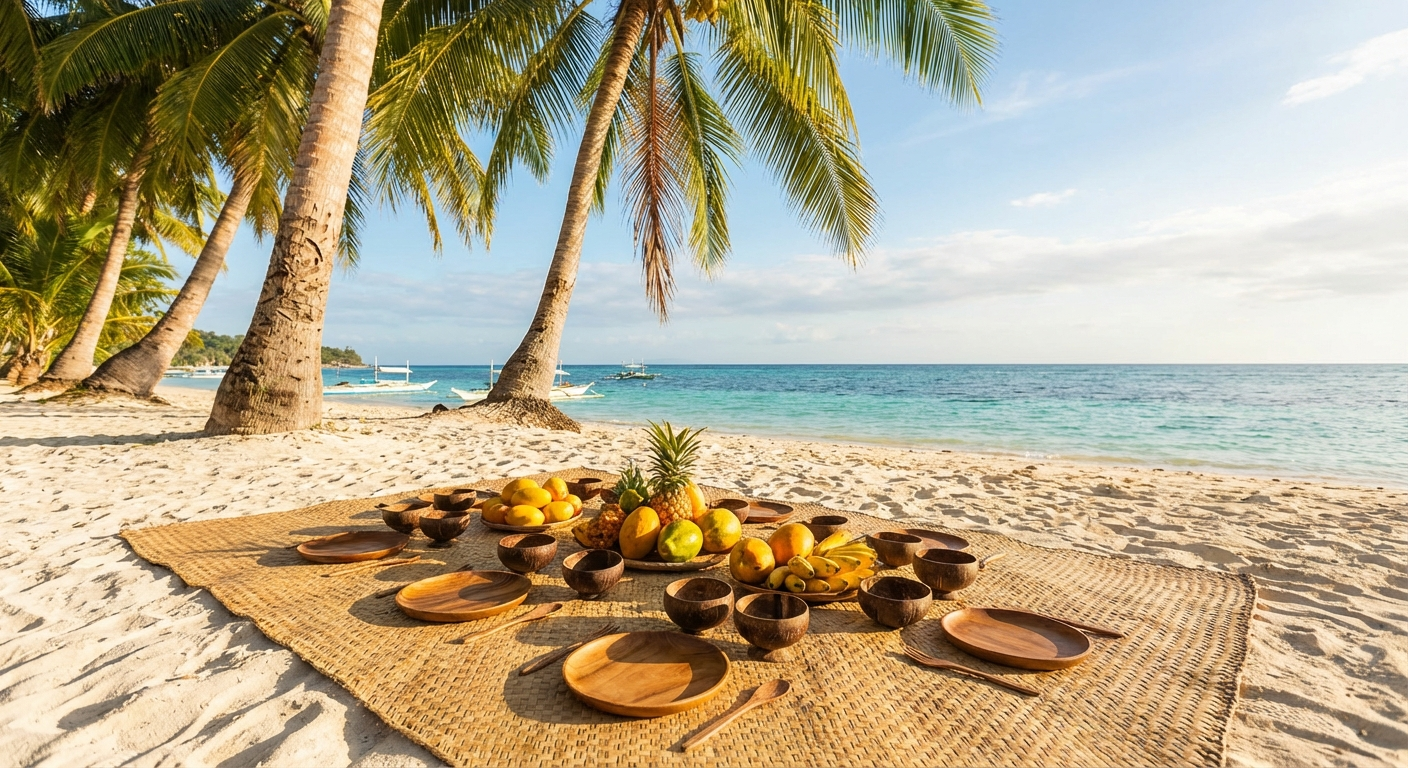
Paliton Beach, on the western coast near San Juan, offers the kind of scene that looks staged for a travel magazine but is entirely real. A row of coconut palms leans over white sand, casting striped shadows across the shore. The water is calm, shallow, and clear enough to see small fish darting between your feet.
What makes Paliton particularly suited for picnics is the natural shade. The palm line extends close to the water, which means you can set up on sand that stays cool even at midday. Local families have been eating here for generations, and on weekends you will often see groups gathered around banana leaf spreads of grilled fish and rice.
There are a few simple cottages available for rent near the south end of the beach, typically around 200 to 300 PHP for the day. These provide a raised platform with a roof, which is useful during the brief rain showers that sometimes roll through even in dry season. Bring your own food — there are no permanent vendors here, though a sari-sari store sits about a five-minute walk from the beach along the access road.
Best time to visit is late afternoon, when the sun drops toward the Sulu Sea and the light turns golden. Sunset from Paliton is consistently among the finest on the island.
Kagusuan Beach
Kagusuan sits on the eastern coastline near Maria municipality, accessed by a rough concrete path that winds through coconut groves. The beach itself is small — perhaps 80 meters of coarse white sand backed by low limestone cliffs. What it lacks in length, it compensates for in privacy.
Morning is the optimal time here. Kagusuan faces east, catching the sunrise directly, and the cliffs provide shade by early afternoon. The rocks at either end of the beach create natural tide pools that keep children entertained while adults eat. Water is typically calm from November through May, making it safe for swimming immediately after your meal if you are willing to wait the customary thirty minutes.
There are no facilities at Kagusuan. Bring everything you need, including water, and carry out all waste. The access path can be slippery after rain, so wear proper footwear rather than flip-flops.
Salagdoong Beach
Salagdoong is the most developed beach on the island, managed by the provincial government, and charges an entrance fee of around 30 PHP per person. It has concrete picnic tables, covered pavilions, and a small canteen selling basic food and drinks. For those who prefer convenience over solitude, this is the most straightforward picnic option.
The main beach sits in a protected cove with remarkably blue water. Cliff jumping platforms at the eastern end provide entertainment between courses. The higher platform stands at roughly ten meters, while the lower one is closer to five — both drop into deep, clear water.
The pavilions fill quickly on weekends and holidays, so arrive before 9:00 AM to secure a good spot. Weekday visits between March and May offer the best combination of good weather and low crowds.
Waterfall Picnic Locations
Cambugahay Falls
The tiered pools of Cambugahay Falls, south of Lazi, offer one of the most photogenic picnic settings in the Visayas. The three main pools are connected by cascades of milky blue water, and the surrounding forest provides dense, cool shade even at the height of midday.
The second tier has the most space for groups. Flat rocks along the pool edge serve as natural tables, and the sound of falling water provides a soundtrack that makes conversation feel oddly intimate despite the open-air setting. Bamboo rafts are available for rent if you want to eat while floating, though balancing a plate on a raft requires a certain confidence.
Food stays cool here naturally thanks to the canopy cover and the evaporative effect of the falls. This is one of the few spots where you can comfortably bring items that would wilt in direct sun — salads, fruit, and cold drinks all hold up well.
Entrance costs around 30 PHP, with additional fees for raft use. The walk down to the falls involves a steep staircase, so pack food in a backpack rather than carrying loose bags.
Lugnason Falls
Located in the interior near San Juan, Lugnason Falls is smaller and far less visited than Cambugahay. The single pool sits at the base of a moss-covered rock face, surrounded by ferns and hardwood trees. On weekday mornings, you will likely have the entire area to yourself.
The flat clearing beside the pool provides enough space for a full picnic spread. Several large rocks offer natural seating at comfortable heights. The forest canopy blocks direct sunlight almost entirely, creating a cool microclimate that feels several degrees cooler than the coastal areas.
Access requires a short trail through private land — a small environmental fee of 20 PHP is collected at the entrance. The path is well-maintained but narrow, so bring food in a single bag rather than multiple containers.
Lagaan Falls
Deep in the interior of Maria municipality, Lagaan Falls requires genuine effort to reach. The trail winds through dense tropical forest for approximately 45 minutes from the nearest road, crossing shallow streams and scrambling over root-covered terrain. This difficulty is precisely what makes it one of the finest picnic locations on the island.
The falls drop into a wide, deep pool of green-tinted water. A natural rock shelf at the base provides a flat surface large enough for a group of six to eat comfortably. The isolation means you will hear nothing but water, birds, and the occasional rustle of monitor lizards in the undergrowth.
Pack light but sufficient food and water for the hike. A local guide is recommended and can be arranged in barangay Candaping for around 300 to 500 PHP. The guide adds both safety and local knowledge about the plants and wildlife along the trail.
Mountain and Viewpoint Locations
Mount Bandilaan National Park
The summit area of Mount Bandilaan, Siquijor’s highest point at 628 meters, contains a network of paths through secondary-growth forest with several clearings that offer panoramic views. On clear days, you can see Bohol, Cebu, and Negros from the viewing platform near the telecommunications tower.
The picnic area near the butterfly sanctuary has concrete tables shaded by large trees. The elevation keeps temperatures noticeably cooler than the coast, typically five to seven degrees Celsius lower, making it comfortable even during the hot months of March through May.
The road to the summit is paved but steep in sections. Motorcycles handle it easily, but larger vehicles may struggle on the final kilometer. A small number of food stalls operate near the sanctuary during peak season, but availability is inconsistent — bring your own supplies to be safe.
Lazi Ridgeline Viewpoint
East of Lazi town, a narrow road climbs through farmland to a ridge that overlooks both the eastern coastline and the interior valleys. The viewpoint is unmarked and unofficial — locals know it simply as the spot where you can see both sides of the island simultaneously.
There are no facilities here, just grass, wind, and one of the most expansive views in Siquijor. The ridge catches steady breezes from the east, which keeps mosquitoes away and makes even midday temperatures bearable. Bring a ground sheet and anchor your napkins — the wind is reliable.
The sunset from this ridge is different from the coastal sunsets. You watch the light change across the interior landscape, with shadows creeping up the slopes of Bandilaan and the sky shifting through colors that reflect off the rice paddies in the valleys below.
Hidden and Local-Favorite Spots
Cang-Isok House Grounds
The historic Cang-Isok House in Lazi sits surrounded by mature trees and traditional gardens. While the house itself is a heritage attraction, the grounds around it provide a shaded, atmospheric setting for a quiet meal. Check with the caretaker before setting up — they are typically welcoming but appreciate being asked.
The stone walls and traditional landscaping create natural wind breaks, and the elevated position offers views toward the Lazi church and convent complex. This is a picnic spot with cultural weight, surrounded by structures that have stood since the Spanish colonial period.
Mangrove Boardwalks
Several municipalities maintain boardwalks through their mangrove preserves, particularly around Siquijor town and Larena. These raised wooden paths extend into the tidal forests and occasionally widen into platforms with benches.
Eating among the mangroves is a distinctive experience. The interlocking root systems below are alive with small crabs, mudskippers, and juvenile fish. The canopy filters sunlight into a green-tinted glow. Bring simple food that does not require utensils — sandwiches, spring rolls, or rice balls wrapped in banana leaves work well in this setting.
Tulapos Marine Sanctuary Shoreline
North of Maria, the rocky shoreline near Tulapos offers flat limestone platforms that sit just above the high-tide line. These natural tables look out over the sanctuary’s protected waters, where you can often spot sea turtles surfacing for air while you eat.
The morning hours are best here, before the sun climbs high enough to remove the shadows cast by the coastal vegetation. An early breakfast on these rocks, with coffee from a thermos and pan de sal from a Siquijor bakery, is one of the most peaceful experiences available on the island.
Practical Tips for Picnicking in Siquijor
What to Pack
A reusable ground sheet or woven mat is essential. Filipino families typically use banig mats made from pandan or buri leaves, and these are available at the Siquijor public market for around 100 to 200 PHP. They roll up compactly and dry quickly if they get wet.
Bring containers with secure lids rather than open plates. Ants find food within minutes at most outdoor locations, and the occasional gust of wind can send lighter items airborne. Reusable water bottles are preferable to single-use plastic, both for environmental reasons and because they are less likely to blow away.
Sunscreen, insect repellent, and a basic first aid kit should accompany any outdoor meal, especially at waterfall and forest locations where slips on wet rocks are the most common minor injury.
Where to Buy Picnic Supplies
The public market in Siquijor town operates daily and is the best source for fresh produce, cooked food, and snacks. Grilled fish can be purchased ready to eat, and several stalls sell rice in banana leaf wraps that are specifically designed for portable meals.
San Juan has a cluster of bakeries along the main road that produce fresh pan de sal, ensaymada, and other pastries from early morning. Several small grocery stores in both towns stock canned goods, crackers, and drinks.
For prepared food with more variety, visit one of the carinderia-style restaurants in Siquijor town or San Juan and request takeaway. Most are happy to pack food in containers or banana leaves for a small additional charge.
Leave No Trace
Siquijor’s natural beauty depends on visitors treating these spaces with respect. Pack out everything you bring in. This includes all food waste, packaging, and even organic scraps like fruit peels and bones. Many of these picnic spots remain beautiful precisely because the people who use them most — local residents — maintain a strong ethic of cleaning up after themselves. Visitors should hold themselves to the same standard.
Avoid lighting fires or using charcoal grills at waterfall and forest locations. The dry season months bring genuine fire risk to interior areas, and the forest canopy that provides shade is also fuel. If you want grilled food, prepare it at your accommodation and transport it to the picnic site.
Planning Your Picnic Day
The best picnic days in Siquijor during March fall between Tuesday and Thursday, when tourist numbers are at their weekly low. Start early — leaving your accommodation by 7:00 AM gives you time to stop at the market for supplies and reach your chosen spot before the heat builds.
Pair a morning picnic at a waterfall with an afternoon session at a beach, or combine a mountain viewpoint lunch with a sunset dinner on the coast. The island is small enough that you can reach any location from any other within 45 minutes by motorcycle, which makes multi-stop picnic days entirely practical.
The weather in March is reliably dry, with afternoon temperatures reaching 32 to 34 degrees Celsius at sea level. Morning and late afternoon offer the most comfortable conditions for outdoor eating. Midday picnics are best reserved for shaded locations like waterfalls and the Mount Bandilaan area, where the canopy or elevation provides natural cooling.
Frequently Asked Questions
Are there designated picnic areas in Siquijor?
What food should I bring for a Siquijor picnic?
Is it safe to leave food unattended at picnic spots?
Siquijor.xyz Editorial Team
Local experts sharing authentic Siquijor experiences
Related Experiences

Budget Travel Siquijor: Complete Money-Saving Guide
How to experience Siquijor on a budget - cheap accommodations, free attractions, money-saving tips, and sample budgets for backpackers.
Romantic Siquijor: A Couples & Honeymoon Guide
Plan the perfect romantic getaway in Siquijor. Secluded beaches, sunset dinners, couples activities, and the best accommodation for an intimate island escape.
Digital Nomad Guide to Siquijor: Remote Work in Paradise
Everything remote workers need to know about working from Siquijor: internet, coworking, accommodation, costs, and whether this island suits nomad life.