Siquijor Fossil Hunt: Discovering Ancient Life in the Island's Limestone Caves
Explore fossil sites in Siquijor's limestone caves and discover ancient marine life preserved in the island's geological formations.
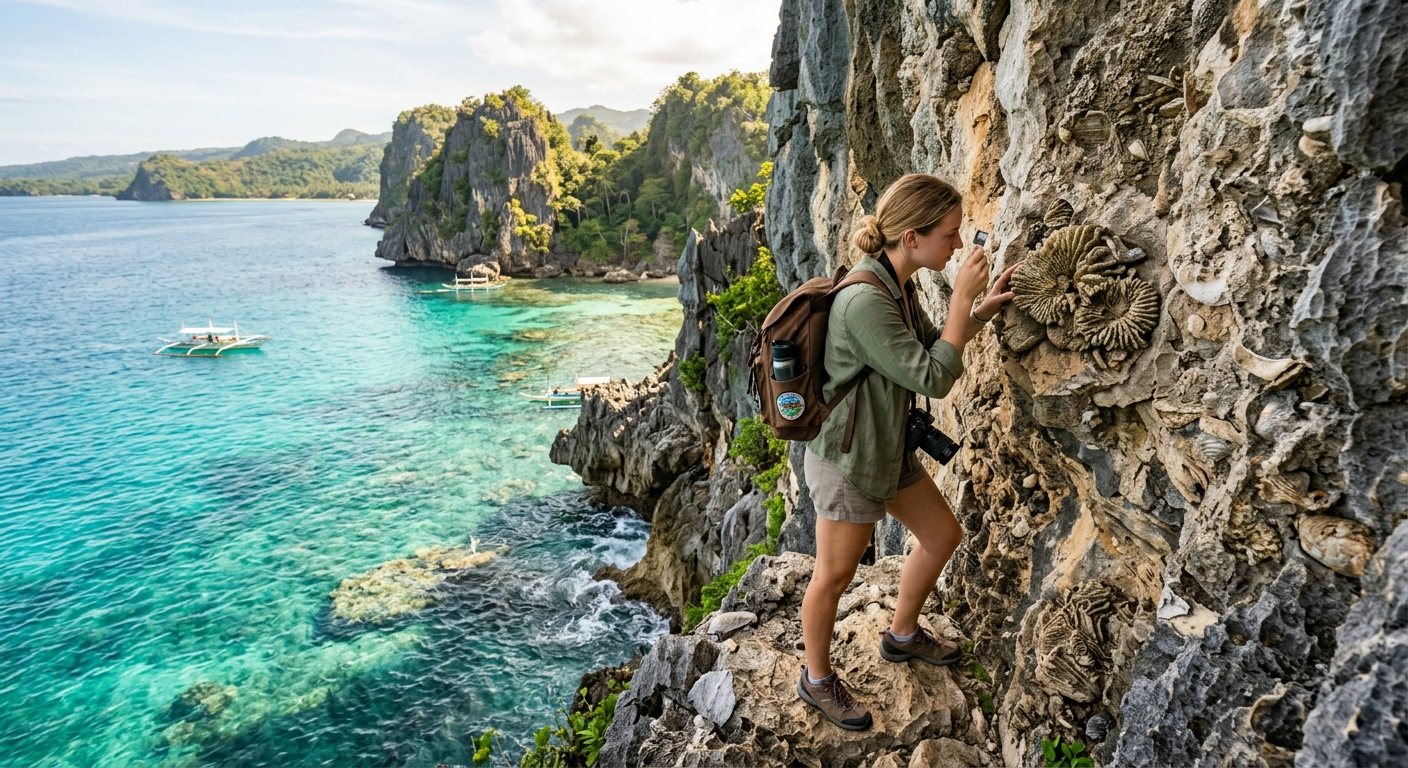
When most travelers think of Siquijor, they picture turquoise beaches, cascading waterfalls, and the legendary Balete Tree. But beneath the island’s surface lies a different kind of treasure: ancient fossils embedded in limestone walls that tell the story of a seafloor that existed millions of years before the first visitor arrived.
Siquijor’s geology is a window into the Miocene epoch, roughly 5 to 23 million years ago when this part of the Philippines lay beneath a shallow tropical sea. The limestone formations that now make up the island’s hills and cave systems are essentially fossilized coral reefs, complete with embedded shells, coral fragments, and occasionally the remains of larger marine creatures.
Understanding Siquijor’s Geological History
The entire island of Siquijor sits on a thick layer of limestone that formed during the Miocene and Pliocene epochs. This limestone, known geologically as the Siquijor Limestone Formation, was deposited when sea levels were significantly higher than today. Coral reefs grew in the warm, nutrient-rich waters, and as they died, their calcium carbonate skeletons accumulated and compacted over millennia.
What makes Siquijor particularly fascinating for fossil enthusiasts is that subsequent tectonic activity lifted these seabed deposits above sea level, exposing them to weathering and erosion that now reveal their hidden contents. Walking through the island’s interior, you are literally traversing an ancient seafloor.
Cantabon Cave: The Main Fossil Destination
Cantabon Cave remains the most accessible and rewarding destination for anyone interested in Siquijor’s fossil heritage. Located in the barangay of Cantabon near the center of the island, this cave system offers guided spelunking tours that take visitors through chambers decorated with stalactites and stalagmites while pointing out the fossilized coral patterns embedded in the limestone walls.
The cave tour typically lasts about an hour and involves some physical challenge, including crawling through narrow passages and navigating wet surfaces. However, guides are trained to highlight significant fossil specimens along the route. You will see ancient coral heads preserved in positions they occupied millions of years ago, sometimes with their internal structure perfectly intact.
Inside the cave, flashlight beams illuminating the walls reveal the layered history of the limestone. Different layers correspond to different periods of deposition, and fossil density varies accordingly. Some sections show concentrated shell beds while others display the branching patterns of ancient coral colonies.
Reading the Fossil Record
For the uninitiated, recognizing fossils in limestone can be challenging because the fossils are often the same color as the surrounding rock. The key is to look for patterns that suggest organized biological structures rather than random geological formations.
Coral fossils typically appear as circular or branching structures with internal chambers. These were the skeletons of colonial corals that built reefs during the Miocene epoch. Individual coral heads the size of dinner plates are common, sometimes displaying the characteristic star-shaped polyp impressions that give some coral species their names.
Shell fossils appear as elongated or coiled shapes with ribbed surfaces, often found concentrated in specific layers that represent ancient beach or seafloor deposits. Some limestone layers are so rich in shell fragments that they appear almost white, a testament to the sheer abundance of mollusks that lived in these ancient waters.
Occasionally, visitors report finding what appear to be vertebrate remains, though these are rarer. Shark teeth are the most commonly discovered larger fossils, carried by rivers that drained into the Miocene sea and deposited in underwater channels that are now part of the island’s limestone formations.
Practical Tips for Fossil Hunting in Siquijor
If you want to maximize your fossil-spotting opportunities, visit Cantabon Cave during the dry season from February through May. The cave floors are less slippery and flashlights work better without moisture issues. Early morning tours tend to be less crowded, giving you more time to examine interesting formations without feeling pressured to keep up with a larger group.
Bring your own flashlight even if the guides provide them. Having a secondary light source allows you to shine from different angles, which helps bring out the three-dimensional quality of fossil specimens. The interplay of light and shadow often reveals details invisible under direct beam illumination.
Wear shoes with good grip and avoid sandals. The cave paths can be wet and slippery, and some passages require scrambling over不平 surfaces where proper footwear is essential for safety.
Do not remove fossils from the cave or disturb them in any way. The geological heritage of Siquijor belongs to everyone, and removing specimens damages both the scientific record and the experience for future visitors. Photography is encouraged as an alternative to collection.
Other Geological Attractions on the Island
Beyond Cantabon Cave, several other locations offer glimpses into Siquijor’s fossil-rich past. The road cuts along the mountain interior between Lazi and San Juan expose limestone layers that display fossil concentrations visible from the roadside. Pull over at scenic viewpoints and examine the freshly cut rock faces for visible shell impressions and coral patterns.
The coastal areas around Paliton Beach and Salagdoong also contain fossil-bearing limestone, though coastal erosion and tourist activity have disturbed many specimen locations. Focus on the less-trafficked sections of beach away from the main access points.
Local residents often know of additional cave systems and rock shelters that contain fossils but are not included in standard tours. Building a friendly relationship with community members can lead to opportunities that mainstream tourism does not offer.
Connecting Fossils to Siquijor’s Modern Landscape
Understanding Siquijor’s geological history enhances the experience of exploring the island in other ways. The same limestone that contains fossils also creates the dramatic cliff formations around Salagdoong, the cave systems of Cantabon, and the flat-topped hills that characterize the island’s interior.
The soil that develops from limestone weathering creates the specific nutrient conditions that support the island’s unique vegetation. The minerals that erode from these formations wash into the surrounding sea, contributing to the marine biodiversity that makes Siquijor’s dive sites so productive.
When you swim in Cambugahay Falls or snorkel at Tubod Marine Sanctuary, you are experiencing ecosystems that exist because of the same geological processes that created the fossil deposits. The limestone acts as a natural filter, maintaining water clarity and providing attachment surfaces for the coral reefs that support marine life.
The Science Behind the Scenery
Researchers from the University of the Philippines Marine Science Institute and various international universities have studied Siquijor’s limestone formations as part of broader investigations into Philippine geological history. Their findings suggest that the Siquijor area was part of a larger shallow sea platform that connected to existing marine environments across the central Philippines during the Miocene epoch.
Fossil evidence from Siquijor indicates water temperatures and depths similar to today’s conditions, suggesting that the island has experienced a relatively stable tropical climate for millions of years. This geological stability is one reason why the surrounding marine environment supports such diverse ecosystems.
Climate change makes geological history increasingly relevant. Understanding how ancient organisms adapted to environmental shifts provides context for predicting how modern species might respond to current changes. Siquijor’s fossil record offers a small but valuable piece of this larger scientific puzzle.
Planning Your Geological Adventure
The best approach to fossil hunting in Siquijor is to combine organized cave tours with independent exploration. Spend half a day with a licensed guide at Cantabon Cave learning to identify fossil types and understanding the geological context. Then use the rest of your time exploring road cuts, coastal exposures, and other locations where limestone is visible and accessible.
For those with serious interest in paleontology, contact the Siquijor Provincial Tourism Office before your visit. They can provide information about any ongoing research projects and may be able to arrange visits to restricted sites where scientists are working.
Consider bringing a field notebook to document your observations. Sketching the fossils you see helps train your eye to recognize patterns and builds a personal record that is more meaningful than photographs alone.
Making the Most of Your Fossil Discovery
Finding fossils in Siquijor is not about collecting specimens to take home. Instead, focus on the experience of discovery and the connection to deep time that these ancient remains provide. Standing in Cantabon Cave and realizing that the coral pattern you are examining was alive in a sea that existed fifteen million years before any human walked on this island creates a perspective shift that is difficult to achieve through any other travel experience.
Share your discoveries responsibly. Post photographs with context that explains what viewers are seeing. Explain the geological significance rather than simply treating fossils as oddities or photo opportunities.
Support local efforts to preserve geological heritage. The cave tour guides earn their livelihoods from these natural resources and have strong incentives to protect them. tipping guides well and treating all formations with respect ensures that Siquijor’s geological treasures remain accessible for future generations.
Siquijor has long been celebrated for its mystical traditions and natural beauty. Its fossil heritage offers another reason to visit this remarkable island, one that connects present-day travelers to the ancient marine ecosystems that built the foundation for everything visitors see today.
This guide is for informational purposes. Visitors interested in geological research should consult with local authorities and licensed tour operators for the most current access information and safety guidelines.
Siquijor XYZ Team
Exploring Siquijor's hidden natural wonders
Related Experiences

Budget Travel Siquijor: Complete Money-Saving Guide
How to experience Siquijor on a budget - cheap accommodations, free attractions, money-saving tips, and sample budgets for backpackers.
Romantic Siquijor: A Couples & Honeymoon Guide
Plan the perfect romantic getaway in Siquijor. Secluded beaches, sunset dinners, couples activities, and the best accommodation for an intimate island escape.
Digital Nomad Guide to Siquijor: Remote Work in Paradise
Everything remote workers need to know about working from Siquijor: internet, coworking, accommodation, costs, and whether this island suits nomad life.