Siquijor Firefly Watching: A Guide to Bioluminescent Nights on the Mystic Island
Experience the magical firefly displays of Siquijor Island. Discover the best spots, seasons, and tips for watching thousands of fireflies light up mangrove forests and riverbanks after dark.
 Island Nature Team
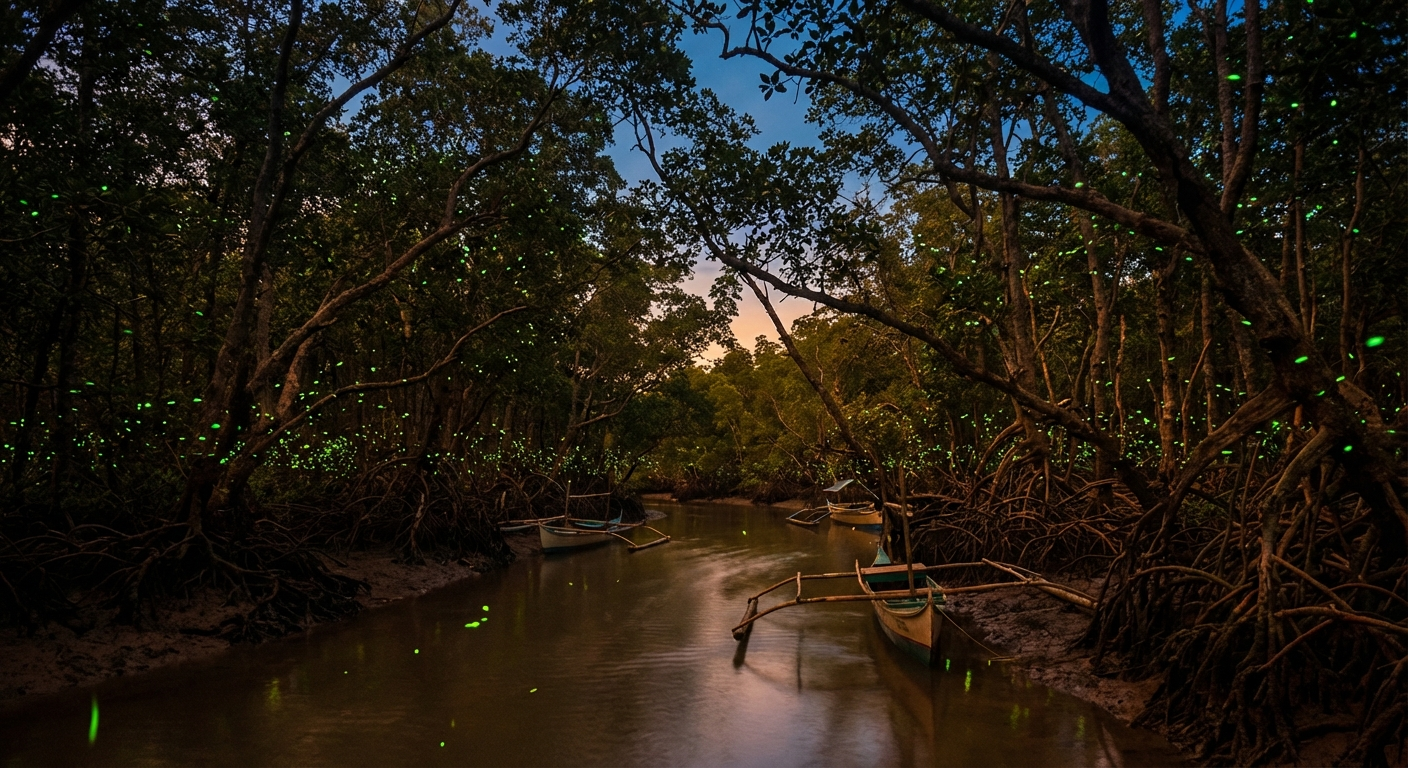
 When the sun sets over Siquijor and the last traces of golden light dissolve into the horizon, a different kind of magic takes hold. Along quiet riverbanks, within sheltered mangrove forests, and beneath the canopies of ancient trees, thousands of tiny lights begin to flicker. Fireflies, known locally as “aninipot” or “alitaptap,” transform the island’s dark corners into living constellations that rival the star-filled sky above.
While Siquijor has long been associated with mysticism and healing traditions, its firefly populations represent a different kind of enchantment, one rooted in biology rather than folklore but no less captivating. For travelers seeking an experience that goes beyond the typical beach-and-waterfall circuit, firefly watching offers an intimate encounter with the island’s natural world that few visitors ever discover.
Why Siquijor is Ideal for Firefly Watching
Siquijor possesses several characteristics that make it an exceptional location for observing fireflies. The island’s relatively small size of 343 square kilometers means that light pollution remains minimal outside the main town centers. Unlike larger Philippine destinations where urban sprawl has pushed firefly habitats to the margins, Siquijor’s rural character preserves the dark skies that these insects require.
The island’s network of rivers and streams, combined with intact mangrove areas along portions of its coastline, provides the moist, vegetated environments where fireflies thrive. Species in the Philippines typically belong to the family Lampyridae, with several genera present in the Visayas region. The males produce rhythmic flashing patterns to attract mates, and in areas where populations are dense, these individual signals can synchronize into spectacular coordinated displays.
Siquijor’s tropical climate ensures warm temperatures year-round, which keeps firefly populations active throughout all twelve months. However, the intensity and visibility of displays vary with seasonal rainfall patterns and lunar cycles, making some periods significantly better than others for observation.
Best Spots for Firefly Watching
Cang-Atay River Area, Siquijor Town
The Cang-Atay area near Siquijor town offers one of the most accessible firefly viewing locations on the island. The river here passes through areas of dense vegetation where fireflies congregate in the branches of overhanging trees. Local fishermen occasionally offer informal boat rides along the calmer stretches, providing a waterborne vantage point that brings observers close to the display without disturbing the insects.
The advantage of this location is its proximity to the main town, making it feasible to visit even without private transportation. From the town center, the river areas are reachable by a short tricycle ride or a 15-minute walk along barangay roads.
Capaluhan Mangrove Area, San Juan
The mangrove areas near Capaluhan in San Juan municipality host some of Siquijor’s most impressive firefly concentrations. Mangrove trees, particularly Sonneratia and Avicennia species, are preferred perching sites for many Philippine firefly species. The sheltered environment of the mangrove forest creates still air conditions that allow the insects’ light signals to be seen clearly, without wind-blown branches disrupting the visual effect.
Reaching the Capaluhan mangroves requires a short boat ride or a walk along coastal paths. The area is less developed for tourism, which means fewer artificial lights and more intense natural displays. Visitors should arrange a local guide through their accommodation, as navigating mangrove areas after dark without local knowledge is inadvisable.
Lazi River and Surrounding Wetlands
The municipality of Lazi, already known for its historic church and convent, harbors excellent firefly habitat along its river system. The Lazi River flows through areas of mixed vegetation including bamboo groves, coconut plantations, and patches of secondary forest. Fireflies here tend to gather in specific trees that serve as aggregation sites night after night, creating reliable viewing opportunities.
The surrounding wetland areas of Lazi also support firefly populations, particularly during and immediately after the wet season when standing water and lush vegetation create ideal breeding conditions. Some guesthouses in the Lazi area have begun offering guided evening walks specifically for firefly observation.
Cantabon and Interior Barangays, Enrique Villanueva
The interior areas of Enrique Villanueva municipality, particularly around the barangays near Cantabon Cave, offer firefly viewing in a dramatically different setting. Here, the insects inhabit the edges of the interior forest that covers Siquijor’s central highlands. The combination of forest canopy, small streams, and the complete absence of artificial lighting creates conditions for exceptional displays.
This location requires more planning to access, typically involving a motorcycle ride on unpaved roads and a local guide. However, the remoteness is part of the appeal. The darkness in these interior areas is profound, allowing even faint firefly bioluminescence to register clearly.
Best Time to See Fireflies in Siquijor
Seasonal Patterns
Firefly activity in Siquijor follows patterns linked to the island’s wet and dry seasons. The transition period from the wet season into the dry season, roughly November through January, often produces the most spectacular displays. During this time, residual moisture from the rains supports high insect populations while gradually clearing skies improve visibility.
The peak dry season months of March through May see reduced but still visible firefly activity. The drier conditions can concentrate populations along remaining water sources, sometimes creating dense aggregations at specific trees near rivers and streams.
During the height of the wet season from July through October, firefly numbers may actually be highest, but heavy cloud cover, rain, and the insects’ tendency to shelter during downpours can make observation unpredictable. Calm evenings between rain events during this period can produce extraordinary shows.
Lunar Cycle Considerations
The phase of the moon dramatically affects firefly visibility. New moon periods and the days immediately surrounding them provide the darkest skies and the most vivid firefly displays. Even a half moon can wash out the fainter bioluminescent signals, particularly from smaller species.
Planning a firefly watching excursion around the lunar calendar is one of the most important steps visitors can take. The three to five days centered on the new moon of any given month will consistently outperform any other period for observation quality.
Time of Night
Firefly activity typically begins 30 to 45 minutes after sunset, as ambient light levels drop below the threshold where the insects’ bioluminescence becomes visible. Peak display intensity usually occurs between 7:30 PM and 9:30 PM, with activity gradually declining as the night progresses.
Some species show a secondary activity peak in the pre-dawn hours between 4:00 AM and 5:00 AM, though few observers remain in the field during these times. Early risers heading to sunrise viewpoints occasionally report seeing the tail end of these dawn displays.
The Science Behind the Light
Firefly bioluminescence is produced through a chemical reaction involving the enzyme luciferase acting on a substrate called luciferin, in the presence of oxygen, ATP, and magnesium ions. This reaction occurs in specialized light-producing organs located on the ventral side of the abdomen, and it is remarkably efficient. Nearly 100 percent of the energy involved in the reaction is converted to light, with virtually no heat produced. By comparison, an incandescent light bulb converts less than 10 percent of its energy to visible light.
The color of firefly light ranges from yellow-green to orange depending on the species, with most Philippine fireflies producing light in the yellow-green range around 560 nanometers wavelength. Each species has a characteristic flash pattern, varying in duration, interval, and number of flashes per sequence. Males typically fly while flashing, while females respond from stationary positions in vegetation.
The synchronous flashing behavior observed in mangrove-dwelling species is particularly remarkable. Individual males adjust their flash timing to match their neighbors, producing waves of coordinated light that ripple through entire trees. This phenomenon, first studied extensively in Southeast Asian mangrove fireflies, continues to intrigue researchers studying collective behavior in biological systems.
How to Watch Fireflies Responsibly
Minimize Light Disturbance
The single most important rule for firefly watching is to avoid introducing artificial light into the viewing area. Flashlights, phone screens, and camera flashes all disrupt the insects’ signaling behavior and can cause them to stop flashing entirely. If a light source is absolutely necessary for navigating paths, use a red-filtered flashlight pointed at the ground and switch it off once you reach the viewing area.
Allow your eyes 15 to 20 minutes to fully adapt to the darkness. The difference between partially and fully dark-adapted vision is dramatic, and many visitors who report disappointing firefly sightings simply did not give their eyes enough time to adjust.
Keep Distance and Stay Quiet
Fireflies are sensitive to ground vibrations and air movement. Approach aggregation sites slowly and quietly, and avoid brushing against vegetation where insects may be perched. Maintaining a distance of at least three meters from the main display trees prevents physical disturbance to the insects.
Large groups can be more disruptive than small ones. If visiting with others, keep the party to four or fewer people and spread out rather than clustering in one spot.
Leave No Trace
This principle applies to all outdoor activities but deserves emphasis in the context of firefly habitats. These are often wetland and riparian environments that are sensitive to disturbance. Stay on established paths where they exist, avoid trampling vegetation, and carry out all waste.
Never attempt to capture fireflies. Beyond the obvious ecological argument, captured fireflies quickly stop producing light due to stress, making the exercise pointless even from a purely selfish perspective.
Photography Tips for Firefly Displays
Photographing fireflies requires patience and the right equipment. A camera capable of manual exposure settings is essential, ideally a DSLR or mirrorless camera with a fast lens. Settings in the range of ISO 1600 to 3200, aperture f/2.8 or wider, and exposures of 15 to 30 seconds will capture the light trails of flying fireflies.
A sturdy tripod is non-negotiable. Long exposures amplify any camera movement, and the resulting images will be blurred beyond usefulness without stable support. A remote shutter release or the camera’s built-in timer helps avoid vibration from pressing the shutter button.
The most compelling firefly photographs are often composites, created by stacking multiple long exposures in post-processing software. This technique accumulates the light trails from many individual frames into a single image dense with glowing paths. Twenty to thirty frames stacked together can produce images that approximate the visual density of the experience as perceived by the human eye over time.
Smartphone photography of fireflies is generally unsuccessful due to the limitations of small sensors in low-light conditions. Newer flagship phones with night mode and manual controls may capture a hint of the display, but dedicated cameras remain far superior for this subject.
Combining Firefly Watching with Other Night Activities
Firefly watching pairs naturally with other after-dark experiences on Siquijor. The island’s reputation as a stargazing destination means that the same new-moon periods ideal for fireflies also produce the best conditions for observing the Milky Way and celestial events. Planning an evening that begins with firefly observation and transitions to stargazing as the insects wind down their display makes efficient use of dark-sky nights.
Night snorkeling at sites like Tubod Marine Sanctuary offers a marine counterpart to the terrestrial bioluminescence of fireflies. Disturbing plankton in the water can trigger dinoflagellate bioluminescence, creating an underwater light show that echoes what the fireflies produce above the surface.
The night markets and evening food stalls in Siquijor town and San Juan provide a convenient starting or ending point for firefly excursions, offering the practical benefit of a meal alongside the atmospheric pleasure of browsing local street food under warm evening air.
Planning Your Firefly Watching Trip
Most accommodations in Siquijor can help arrange a firefly watching excursion with a local guide. Expect to pay between 300 and 500 pesos per person for a guided experience, though informal arrangements may cost less. Some eco-tourism initiatives on the island are developing more structured firefly tours, but as of 2026, the experience remains largely informal and community-based.
Bring insect repellent, as the same moist environments that attract fireflies also harbor mosquitoes. Wear long sleeves and pants in dark colors, which are less likely to reflect ambient light and disturb the insects. Sturdy closed-toe shoes are advisable for navigating uneven terrain in the dark.
The new Siquijor Tourism Ecological Fee, implemented in February 2026, supports environmental conservation efforts across the island, including the protection of habitats where fireflies thrive. This modest fee contributes to ensuring that future visitors will continue to enjoy the same natural spectacles that make the island remarkable.
Firefly watching on Siquijor is not a polished, commercialized attraction with designated viewing platforms and scheduled performances. It is a quiet, personal encounter with the natural world that requires a willingness to step away from the well-lit path and sit in darkness. For those who make the effort, the reward is an experience that stays vivid in memory long after the last light blinks out.
Island Nature Team
Nature enthusiasts documenting Siquijor's rich biodiversity and eco-tourism opportunities.
Related Experiences

Budget Travel Siquijor: Complete Money-Saving Guide
How to experience Siquijor on a budget - cheap accommodations, free attractions, money-saving tips, and sample budgets for backpackers.
Romantic Siquijor: A Couples & Honeymoon Guide
Plan the perfect romantic getaway in Siquijor. Secluded beaches, sunset dinners, couples activities, and the best accommodation for an intimate island escape.
Digital Nomad Guide to Siquijor: Remote Work in Paradise
Everything remote workers need to know about working from Siquijor: internet, coworking, accommodation, costs, and whether this island suits nomad life.