Responsible Tourism in Siquijor: How to Travel Sustainably on the Mystic Island
Learn how to minimize your environmental impact while visiting Siquijor Island. From reef-safe practices to supporting local communities, this guide covers everything you need to travel responsibly.
Siquijor is one of the Philippines’ most pristine island destinations, but growing tourism brings real challenges. Coral reefs face pressure from careless snorkelers, single-use plastics wash up on once-spotless beaches, and the delicate balance between tourism revenue and environmental preservation grows more precarious each year.
The good news: traveling responsibly in Siquijor is straightforward. With a few mindful choices, you can enjoy everything the Mystic Island offers while helping preserve it for future generations.
Why Responsible Tourism Matters in Siquijor
Siquijor is small. The entire province covers just 343 square kilometers, making it the third-smallest province in the Philippines. Its marine sanctuaries, freshwater ecosystems, and forested highlands are tightly interconnected. What happens at Cambugahay Falls affects the streams feeding the mangroves. Sunscreen washing off at a marine sanctuary impacts the coral that protects the shoreline from erosion.
The island welcomed a record number of visitors in 2025, and 2026 is shaping up to surpass those numbers. The provincial government recognized this trend by introducing the Tourism Ecological Fee in February 2026, a direct acknowledgment that tourism must fund the environmental protection it necessitates.
But government policy alone is not enough. Individual travelers make thousands of small decisions each day on the island, and those decisions collectively shape Siquijor’s environmental future.
The Tourism Ecological Fee: What It Funds
Starting February 1, 2026, all visitors to Siquijor pay a Tourism Ecological Fee upon departure. The fee applies to both domestic and international tourists. Revenue from this program goes directly toward environmental protection, waste management infrastructure, marine sanctuary maintenance, and cultural heritage preservation.
Rather than viewing this as an inconvenience, consider it an investment. The fee supports the very attractions that drew you to the island. Well-maintained marine sanctuaries mean better snorkeling. Funded waste management means cleaner beaches. It is one of the most direct ways your visit contributes to the island’s wellbeing.
Protecting Marine Ecosystems
Reef-Safe Sunscreen
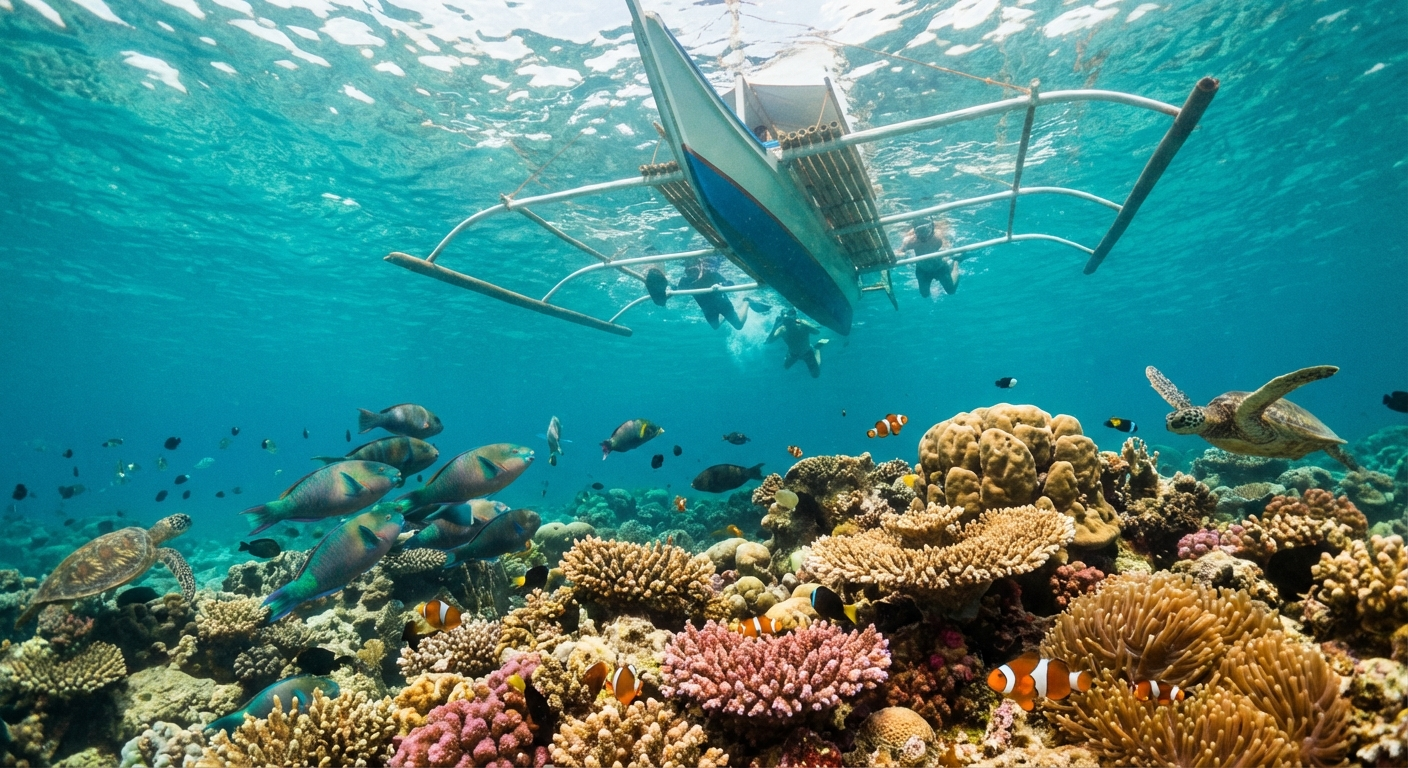
This single change has an outsized impact. Chemical sunscreens containing oxybenzone and octinoxate cause coral bleaching, even in tiny concentrations. When hundreds of tourists enter the water daily at popular sites like Tubod Marine Sanctuary or Salagdoong Beach, the cumulative effect is devastating.
Switch to mineral-based sunscreens containing zinc oxide or titanium dioxide. These sit on top of your skin rather than being absorbed, and they physically block UV rays rather than chemically filtering them. They leave a slight white cast but cause no harm to coral.
Better yet, wear a rash guard or UV-protective clothing. It provides superior sun protection and eliminates the sunscreen question entirely. Most dive shops in Siquijor sell affordable rash guards if you did not pack one.
Snorkeling and Diving Etiquette
At marine sanctuaries, follow these non-negotiable rules:
Do not touch the coral. Even a gentle brush of your fin can break coral structures that took decades to grow. Staghorn coral grows only a few centimeters per year. That branch you accidentally snapped will not recover in your lifetime.
Maintain buoyancy control. If you are new to snorkeling or diving, practice in open water before entering a sanctuary. Dragging your fins across the reef bottom destroys more coral than almost any other tourist behavior.
Do not feed the fish. It disrupts natural feeding patterns, makes fish dependent on human food, and alters the ecological balance of the reef. The bread and rice tourists toss into the water can promote algae growth that smothers coral.
Keep your distance from sea turtles. Siquijor’s waters host hawksbill and green sea turtles. Philippine law protects them. Touching, chasing, or riding sea turtles is illegal and carries significant fines. Observe from at least three meters away.
Supporting Marine Sanctuaries
Several marine sanctuaries around Siquijor charge modest entrance fees. Pay them willingly. These fees fund guardian boats, mooring buoys that prevent anchor damage, and monitoring programs. The sanctuaries at Tubod, Paliton, and along the coast of San Juan exist because local communities chose to protect their reefs rather than exploit them.
Reducing Waste on a Small Island
Waste management is one of Siquijor’s biggest challenges. The island has limited landfill capacity and no industrial recycling facility. Every piece of trash you generate on the island stays on the island, or worse, ends up in the ocean.
Bring a Reusable Water Bottle
Tap water in Siquijor is not potable, so tourists consume enormous quantities of single-use plastic water bottles. Bring a reusable bottle with a built-in filter, or purchase a large refillable jug from a water station (available in every municipality) and refill your bottle from that.
Many accommodations now offer free filtered water refill stations. Ask about this when booking, and prioritize properties that have made this investment.
Refuse Unnecessary Packaging
Street food vendors and market stalls often provide plastic bags and styrofoam containers by default. Carry a small reusable bag and, if you have one, a portable food container. Politely declining the plastic bag is enough.
When buying drinks, choose glass-bottled options over plastic when available. Local soft drinks and beer come in returnable glass bottles that enter a reuse cycle rather than becoming waste.
Dispose of Waste Properly
This sounds obvious, but it bears repeating: never litter. This includes cigarette butts on the beach, which contain plastic filters that take over a decade to decompose and leach toxic chemicals into the sand and water.
If you see litter on a beach or trail, pick it up. It takes five seconds and makes a tangible difference. Some visitors organize informal beach cleanups during their stay, which local communities genuinely appreciate.
Supporting the Local Economy
Responsible tourism is not only about the environment. It also means ensuring your travel spending benefits the people who live on the island year-round.
Choose Locally Owned Accommodation
Siquijor has a growing number of foreign-owned resorts, some of which are excellent. But staying at locally owned guesthouses, homestays, and small resorts ensures more of your money circulates within the island’s economy. The family that runs a beachfront nipa hut operation reinvests that income locally: their children attend Siquijor schools, they buy supplies from Siquijor markets, and they hire Siquijodnon staff.
Eat Local Food
Skip the Western-style restaurants for at least some of your meals. Eat at carenderias, the small local eateries serving Filipino home cooking. A full meal at a carenderia costs 60 to 100 pesos and supports a local cook directly. The food is often fresher and more flavorful than tourist-oriented restaurants because it is made for people who know what good Filipino cooking tastes like.
Visit the public markets in Siquijor town and Larena. Buy fruit from market vendors rather than convenience stores. Drink locally roasted coffee, which has become increasingly available as Siquijor’s coffee culture grows.
Hire Local Guides
For activities like cave exploration at Cantabon, waterfall trekking, or heritage tours, hire local guides. These guides possess knowledge no guidebook can match, and guiding provides meaningful income in communities with limited employment options.
Avoid booking through large international platforms when possible. Contact accommodations and tour operators directly. The booking fee that would have gone to an overseas platform instead goes to the Siquijodnon running the business.
Respecting Cultural Heritage
Healing Traditions
Siquijor is famous for its traditional healers, known as mananambal. These are real practitioners with deep spiritual and cultural significance, not tourist attractions. If you visit a healer, approach the experience with genuine respect and openness rather than voyeuristic curiosity.
Do not photograph healing rituals without explicit permission. Do not laugh at or mock practices you do not understand. Offer a respectful donation rather than haggling over prices. Remember that you are a guest in someone’s spiritual practice.
Churches and Heritage Sites
Siquijor’s historic churches, particularly San Isidro Labrador in Lazi, are active places of worship. Dress modestly when visiting: cover shoulders and knees. Keep noise levels low. Do not enter restricted areas. If a service is underway, either attend respectfully or return later.
Local Communities
When visiting rural barrios or engaging with local communities, basic courtesy goes a long way. Ask before photographing people, especially children. Learn a few Cebuano phrases: “salamat” (thank you) and “maayo” (good) are easy starting points that people genuinely appreciate.
Do not distribute candy, money, or gifts to children you encounter. While well-intentioned, this practice encourages begging, creates dependency, and can cause conflict within communities. If you want to give, donate to established local organizations or schools.
Transportation Choices
Motorcycles Over Cars
Most tourists explore Siquijor by rented motorcycle, which is already one of the more environmentally sensible options. Motorcycles consume far less fuel than cars and produce fewer emissions. The island’s 72-kilometer circumferential road is perfectly suited to motorcycle exploration.
If you cannot ride a motorcycle, hire a local tricycle driver for the day rather than renting a car. Tricycle drivers know the roads intimately, and a day hire provides solid income for a local family.
Walk When Possible
Many of Siquijor’s best experiences are within walking distance of each other, particularly in San Juan where beaches, restaurants, and accommodations cluster along the coast. Walking produces zero emissions and lets you notice details you would miss at speed: the wildflowers along the roadside, the fishing boats being repaired on the beach, the sound of roosters and church bells marking the passage of a slow island day.
Accommodation Practices
Water Conservation
Siquijor’s freshwater supply is limited, particularly during the dry season from February through May. Take shorter showers. Decline daily towel and linen changes if your accommodation offers that option. Report any dripping faucets or running toilets to staff.
Energy Use
Air conditioning consumes significant electricity on an island where power generation has historically been challenging. Use fans when the temperature allows. Turn off lights and air conditioning when you leave your room. Charge your devices during the day rather than overnight.
Choose Eco-Conscious Properties
An increasing number of Siquijor accommodations have adopted sustainable practices: solar panels, rainwater collection, composting, refillable water stations, locally sourced building materials, and waste reduction programs. Support these properties with your booking and leave positive reviews that mention their environmental efforts. Market incentives work.
The Bigger Picture
Responsible tourism in Siquijor is not about perfection. You will generate some waste. You will use some fuel. You will consume resources. The goal is not zero impact but reduced impact combined with positive contribution.
Every reef-safe sunscreen choice protects coral. Every meal at a local carenderia supports a Siquijodnon family. Every plastic bottle you do not buy is one less piece of waste on a small island with limited disposal options.
Siquijor’s magic lies in its relative unspoiled nature, its clear waters, its quiet roads, its traditional culture that persists alongside modernity. These qualities are precisely what tourism threatens if left unchecked. But they are also what responsible tourism can preserve.
The Mystic Island does not need more tourists. It needs better tourists. Visitors who understand that the privilege of experiencing a place this special comes with a responsibility to protect it.
Travel slowly. Spend locally. Tread lightly. And leave Siquijor a little better than you found it.
Siquijor.xyz Editorial Team
Related Experiences

Budget Travel Siquijor: Complete Money-Saving Guide
How to experience Siquijor on a budget - cheap accommodations, free attractions, money-saving tips, and sample budgets for backpackers.

Romantic Siquijor: A Couples & Honeymoon Guide
Plan the perfect romantic getaway in Siquijor. Secluded beaches, sunset dinners, couples activities, and the best accommodation for an intimate island escape.
Digital Nomad Guide to Siquijor: Remote Work in Paradise
Everything remote workers need to know about working from Siquijor: internet, coworking, accommodation, costs, and whether this island suits nomad life.