Birdwatching in Siquijor: A Guide to Endemic and Migratory Species
Discover Siquijor's rich birdlife from Philippine hawk-eagles to migratory warblers. Complete guide to birdwatching spots, best seasons, and species checklists for this overlooked birding destination.
 Island Nature Team
 Siquijor may be famous for its mystical reputation, turquoise waters, and centuries-old balete tree, but few visitors realize that this small island province in the Central Visayas harbors a surprisingly diverse avian population. With habitats ranging from coastal mangroves and lowland forests to the montane environment of Mount Bandilaan National Park, Siquijor offers birdwatching opportunities that rival much larger Philippine destinations.
Whether you are a seasoned birder maintaining a Philippine life list or a casual nature lover who enjoys spotting colorful species during morning walks, this guide will help you find, identify, and appreciate the birds of Siquijor Island.
Why Siquijor for Birdwatching
The Philippines ranks as one of the top biodiversity hotspots in the world, with over 700 bird species recorded across the archipelago. More than 200 of these are endemic, found nowhere else on Earth. While major birding destinations like Palawan, Sierra Madre, and Mount Kitanglad attract most of the attention, smaller islands like Siquijor offer a more intimate and accessible birding experience.
Siquijor’s compact size works in your favor. The entire island spans only 343 square kilometers, meaning you can visit multiple habitat types in a single day. The relative lack of heavy industry and urban development has preserved pockets of forest and coastline that serve as important refuges for both resident and migratory species.
The island sits along the East Asian-Australasian Flyway, one of the world’s great migratory bird routes. Between September and April, migratory species from as far as Siberia, Japan, and China pass through or overwinter on Siquijor, adding seasonal variety to the resident bird population.
Prime Birdwatching Locations
Mount Bandilaan National Park
The undisputed highlight for birdwatchers on Siquijor is Mount Bandilaan, the island’s highest point at 557 meters above sea level. The national park surrounding the peak protects one of the last significant tracts of secondary forest on the island.
The forested slopes host a range of forest-dependent species that you will not find in the coastal lowlands. Early morning visits, ideally arriving before 6:00 AM, offer the best chances for sightings as birds are most active during the first two hours of daylight. The Butterfly Sanctuary near the summit provides a convenient starting point, with well-maintained trails leading into the surrounding forest.
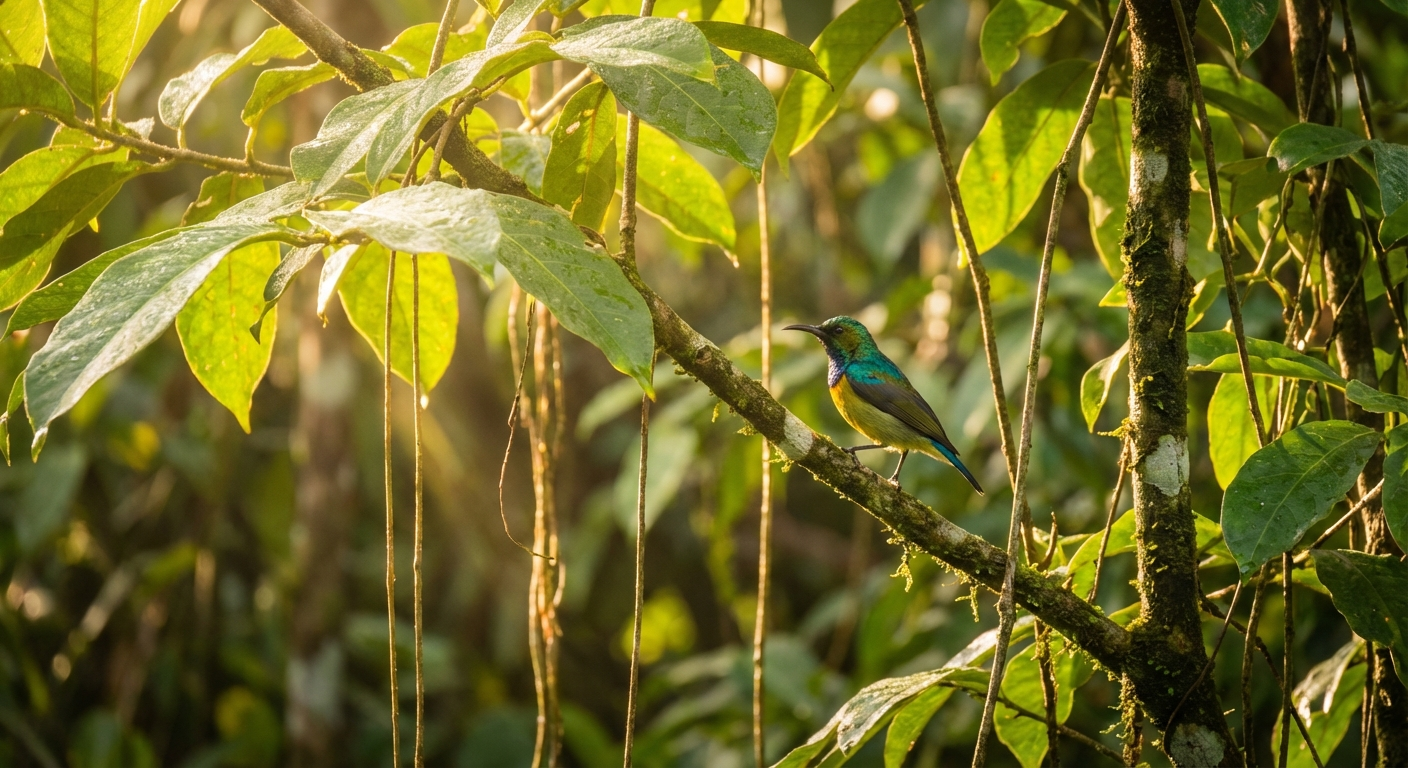
Species to watch for at Mount Bandilaan include the Philippine hawk-eagle soaring above the canopy, the distinctive call of the Philippine coucal echoing through the undergrowth, and various species of sunbird flitting between flowering trees. The endemic Visayan tarictic hornbill, while rare and increasingly threatened across its range, has been occasionally reported in the deeper forest sections.
Mangrove Areas Along the Coast
Siquijor’s remaining mangrove stands, particularly those near Larena and sections of the northern coast, provide excellent habitat for waterbirds and coastal species. Mangrove ecosystems support a distinct community of birds including various species of kingfisher, herons, egrets, and sandpipers.
The best approach for mangrove birding is to arrive during low tide when mudflats are exposed, attracting waders and shorebirds that feed on invertebrates in the substrate. A small boat or kayak can also give you quiet access to channels within the mangrove forest where birds are less disturbed by human presence.
Capilay Spring Park and Surrounding Wetlands
The freshwater spring park in San Juan municipality attracts a different set of species compared to the coastal and mountain habitats. The combination of freshwater, mature trees, and open grassy areas creates an edge habitat favored by many bird species.
White-breasted waterhens can often be seen stalking through the vegetation along the water’s edge, while various species of swallow and swift hawk insects above the open water in the late afternoon. The surrounding agricultural land and coconut groves host open-country species such as the Philippine pied fantail and the long-tailed shrike.
Coco Grove to Tubod Marine Sanctuary Coastline
The stretch of coast between Coco Grove Beach Resort and Tubod Marine Sanctuary encompasses rocky shores, sandy beaches, and coral reef flats. This area is particularly productive for spotting shorebirds and seabirds, especially during the migratory season from October through March.
Look for Pacific reef herons perched on exposed rocks at low tide, whimbrels probing the sand with their curved bills, and common terns diving into the shallow waters just offshore. During storms or strong weather fronts, pelagic species that normally stay well offshore may be pushed closer to land, occasionally producing unexpected sightings.
Notable Species of Siquijor
Endemic and Near-Endemic Residents
The Philippine archipelago’s complex geology and isolation have produced an extraordinary number of endemic bird species. While Siquijor does not have its own island endemics, it shares species with the broader Visayan and Philippine endemic avifauna.
Philippine Coucal (Centropus viridis): This large, ground-dwelling cuckoo is common in scrubby areas, grasslands, and forest edges. Its deep, resonant booming call is one of the most characteristic sounds of the Philippine countryside. Look for its black body, chestnut wings, and long tail as it clambers through dense vegetation.
Coleto (Sarcops calvus): One of the most recognizable Philippine endemic birds, the coleto has a striking appearance with its bare pinkish facial skin contrasting against glossy black plumage. They are social birds, often seen in noisy flocks in fruiting trees. Siquijor’s coconut plantations and forest edges are good places to encounter them.
Philippine Pied Fantail (Rhipidura nigritorquis): This energetic small bird is common throughout the island, frequently seen flitting about in gardens, forest edges, and even around buildings. Its constant tail-fanning display and acrobatic insect-catching flights make it easy to identify.
Philippine Bulbul (Hypsipetes philippinus): A medium-sized, predominantly olive-brown bird common in forested areas and well-vegetated gardens. Its loud, chattering call is a constant backdrop in Mount Bandilaan and other wooded areas.
Stripe-headed Rhabdornis (Rhabdornis mystacalis): This uniquely Philippine genus of bird creeps along tree trunks and branches in a manner reminiscent of treecreepers. Look for its distinctive striped head pattern in the canopy of mature trees at Mount Bandilaan.
Migratory Visitors
Between September and April, Siquijor receives an influx of migratory species that significantly boost the island’s bird diversity. Key migratory species include:
Grey Wagtail (Motacilla cinerea): A slender, long-tailed bird that bobs its tail constantly as it walks along streams, rice paddies, and wet areas. Common throughout the island during the northern winter months.
Arctic Warbler (Phylloscopus borealis): This small, olive-green warbler breeds in the forests of northern Asia and migrates to Southeast Asia for the winter. It can be found in a variety of habitats on Siquijor, from forest canopy to garden shrubbery.
Chinese Egret (Egretta eulophotes): A globally threatened species, the Chinese egret passes through the Visayas during migration. While sightings on Siquijor are infrequent, the island’s coastal wetlands provide suitable stopover habitat.
Brown Shrike (Lanius cristatus): One of the most common winter visitors throughout the Philippines, the brown shrike perches conspicuously on wires, fences, and exposed branches. It is an aggressive predator for its size, catching insects and small lizards.
Various Sandpipers and Plovers: The migratory season brings a succession of shorebird species to Siquijor’s beaches and mudflats, including common sandpiper, wood sandpiper, Pacific golden plover, and Mongolian plover.
Best Seasons for Birdwatching
Dry Season (February to May)
The current season represents one of the best periods for birdwatching on Siquijor. February through early April still holds many overwintering migratory species while also offering comfortable weather conditions with lower humidity and less rainfall. Forest trails are drier and easier to navigate, and the reduced leaf cover in some deciduous trees improves visibility in the canopy.
March is particularly noteworthy as some migratory species begin their northward journey, creating a second pulse of movement that can produce interesting sightings. Resident species are also more vocal as the breeding season approaches, making them easier to locate by call.
Wet Season (June to November)
While the wet season presents logistical challenges with muddy trails and unpredictable rain, it coincides with the breeding season for many resident species. Birds in breeding plumage are often more colorful and conspicuous. The arrival of early migrants from August onward adds diversity, and lush vegetation supports higher insect populations that attract feeding flocks.
Peak Migration (October to November and March to April)
The shoulder periods when migrants are actively moving through produce the highest species counts and the greatest chance of unusual sightings. Weather fronts and typhoons can ground migrants, sometimes concentrating impressive numbers of birds in sheltered areas.
Practical Tips for Birding on Siquijor
Equipment
Binoculars are essential. A pair with 8x or 10x magnification is ideal for most situations on the island. If you plan to spend significant time at Mount Bandilaan, consider a compact spotting scope for scanning distant raptors and canopy species.
A field guide is invaluable. The “Birds of the Philippines” by Robert Kennedy and colleagues remains the standard reference. The eBird app from the Cornell Lab of Ornithology is also useful for identifying species and contributing your sightings to the global database.
Lightweight, neutral-colored clothing is preferable to bright colors. Long sleeves and trousers protect against insects and sun. A hat, sunscreen, and insect repellent are practical necessities.
Getting Around
Renting a motorcycle is the most practical way to reach birding sites around the island. The 72-kilometer coastal road connects all major points, while inland roads provide access to Mount Bandilaan. Arrange your transportation the evening before to ensure early morning departures.
For Mount Bandilaan, consider hiring a local guide through the barangay office or the national park staff. Local guides know the trails intimately and can often locate key species based on their calls and preferred perching sites. Guide fees typically range from PHP 300 to PHP 500 for a half-day excursion.
Ethics and Etiquette
Responsible birdwatching means minimizing your impact on the birds and their habitat. Avoid approaching nests, do not use playback of bird calls excessively (brief use for identification is generally acceptable), and stay on established trails to prevent habitat disturbance.
If you discover a nesting site for a rare or threatened species, share the information discreetly with conservation-minded individuals rather than posting exact locations publicly. Some species are vulnerable to disturbance during nesting, and public attention can sometimes attract unwanted visitors.
Contributing to Citizen Science
Your observations can contribute meaningfully to the understanding of Siquijor’s avifauna, which remains under-studied compared to larger Philippine islands. Submit your sightings to eBird, where they become part of a permanent scientific record used by researchers and conservationists worldwide.
The Wild Bird Club of the Philippines (WBCP) is the country’s leading birdwatching organization and maintains records of Philippine bird sightings. Connecting with them before your trip can provide up-to-date information on recent sightings in the Siquijor area.
Combining Birdwatching with Other Activities
One of the advantages of birdwatching on Siquijor is that it complements other popular island activities rather than competing with them. An early morning birding session at Mount Bandilaan can easily transition into a visit to the Butterfly Sanctuary, followed by a beach afternoon at Paliton or Salagdoong.
The island’s healing and wellness traditions also pair well with a nature-focused itinerary. Many visitors find that the quiet, observant mindset required for birdwatching creates a meditative state that aligns with Siquijor’s reputation as a place of healing and spiritual connection.
For photographers, the birds of Siquijor offer rewarding subjects. Early morning light on the eastern coast and golden hour on the western beaches provide excellent conditions for both landscape and wildlife photography. The coleto and Philippine pied fantail are particularly photogenic subjects that tolerate relatively close approach.
Conservation Concerns
Like many Philippine islands, Siquijor faces ongoing habitat loss from agricultural expansion, infrastructure development, and logging. The forest cover on the island has declined significantly over the past century, with Mount Bandilaan’s national park representing the most important remaining forested area.
Supporting local ecotourism initiatives, including guided birdwatching tours, creates economic incentives for habitat preservation. When communities benefit financially from intact forests and healthy bird populations, they have a tangible reason to protect these resources.
Visitors can contribute to conservation efforts by patronizing eco-friendly accommodations, participating in organized nature walks, and supporting the municipal environmental offices that manage protected areas on the island.
Planning Your Birdwatching Trip
A dedicated birdwatching visit to Siquijor requires a minimum of three days to cover the main habitat types adequately. A sample itinerary might include:
Day One: Early morning at Mount Bandilaan National Park for forest species. Afternoon exploring the Butterfly Sanctuary area and nearby secondary forest edges.
Day Two: Dawn visit to mangrove areas near Larena. Mid-morning at Capilay Spring Park. Afternoon coastal birding along the Tubod Marine Sanctuary shore.
Day Three: Return visit to the most productive site from the previous days, or explore agricultural areas and coconut plantations for open-country species. Late afternoon shorebird watching at low tide.
Accommodation in San Juan municipality provides the most central base for reaching all birding sites. Several guesthouses and small resorts in the area offer comfortable rooms at reasonable rates, and their garden environments often attract birds right to your doorstep.
Siquijor may never compete with Palawan or the Sierra Madre for sheer species numbers, but its accessibility, compact size, and the quality of its remaining habitats make it a worthwhile addition to any Philippine birding itinerary. The island rewards patient observation with genuine discoveries, and every visiting birdwatcher who documents their sightings contributes to a growing understanding of this small island’s natural heritage.
Island Nature Team
Nature enthusiasts documenting Siquijor's rich biodiversity and eco-tourism opportunities.
Related Experiences

Budget Travel Siquijor: Complete Money-Saving Guide
How to experience Siquijor on a budget - cheap accommodations, free attractions, money-saving tips, and sample budgets for backpackers.

Romantic Siquijor: A Couples & Honeymoon Guide
Plan the perfect romantic getaway in Siquijor. Secluded beaches, sunset dinners, couples activities, and the best accommodation for an intimate island escape.

Digital Nomad Guide to Siquijor: Remote Work in Paradise
Everything remote workers need to know about working from Siquijor: internet, coworking, accommodation, costs, and whether this island suits nomad life.