Beyond the Folklore: The Rise of Holistic Wellness and Eco-Retreats in Siquijor
Discover how Siquijor transforms from mystical legends into a premier wellness destination. Explore eco-retreats, yoga, and holistic healing blending ancient traditions with modern relaxation.
Siquijor has long been whispered about in Philippine folklore. Tales of enchanted balete trees, mysterious healing rituals, and practitioners with supernatural powers have shaped how travelers perceive this small Visayan island. But beneath the legends lies a quieter truth that modern visitors are increasingly seeking out: Siquijor is becoming one of the Philippines’ most compelling wellness destinations.
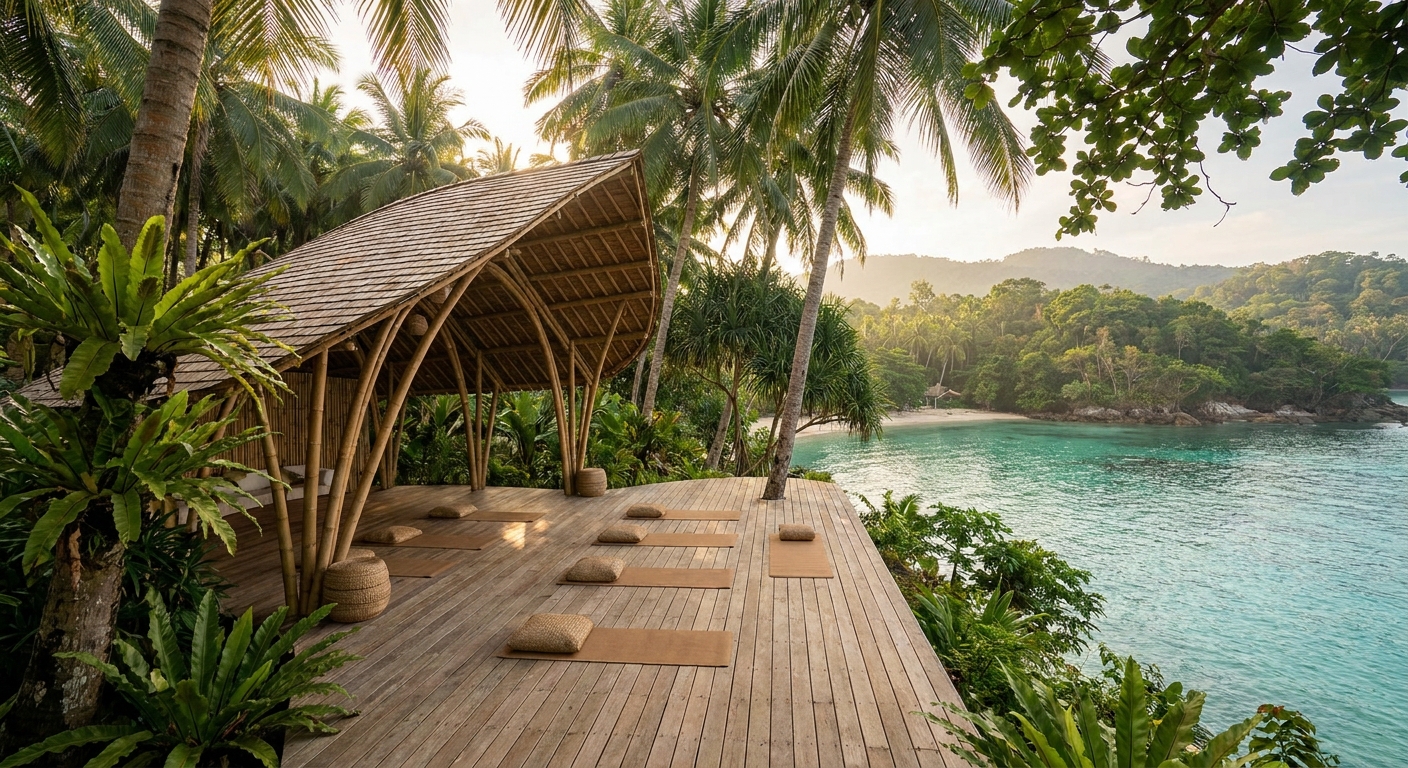
While the mystical narratives persist, a new chapter is unfolding. Eco-retreats built from bamboo and coconut timber are appearing along quiet coastlines. Yoga teachers are setting up mats in open-air pavilions where sea breezes replace air conditioning. Traditional herbalists are being consulted not just for folk remedies, but for guided plant walks that teach visitors about the island’s medicinal biodiversity. The island’s reputation for the mystical is quietly merging with something more tangible: genuine opportunities for rest, restoration, and reconnection with nature.
The Evolution from Mystical to Holistic
The connection between Siquijor and healing runs deeper than tourism marketing. For generations, the island’s mananambal orbaljo, traditional healers, have practiced herbal medicine using plants found growing wild across the island’s forests and coastlines. Thebolo-bolo technique, a gentle massage-like practice involving circular motions, has been passed down through families. These traditions were once shrouded in mystery and superstition. Today, they are being respectfully studied, adapted, and integrated into wellness programming that attracts visitors seeking something beyond beach resorts and island hopping tours.
The shift accelerated during the post-pandemic years when travel priorities changed dramatically. Gone were the days when travelers measured a destination by the number of attractions they could check off in a weekend. A growing segment of visitors began planning trips around mental health, digital detox, and meaningful cultural engagement. Siquijor, with its laid-back tempo, limited mobile signal in many areas, and strong community ties, found itself unexpectedly positioned to serve this new traveler.
Eco-Retreats Leading the Way
The accommodation landscape on Siquijor has shifted substantially since 2024. While beachfront resorts remain popular, a distinct category of eco-conscious retreats has emerged, catering specifically to wellness-focused travelers. These properties share common characteristics: architecture that minimizes environmental impact, menus built around locally sourced ingredients, and programming that encourages guests to slow down rather than fill every hour with activities.
Several established retreats have expanded their wellness offerings in recent years. Properties tucked away in the island’s interior highlands benefit from cooler temperatures and the soothing sounds of forest surroundings. Mornings often begin with guided meditation sessions, followed by breakfast featuring fresh tropical fruits, root crops, and fish caught by local fishermen the previous evening. Afternoons might include cooking classes focused on herbal teas and medicinal tonics, or guided walks through secondary growth forest where wild medicinal plants grow alongside cultivated gardens.
The eco-retreat model extends to spa treatments as well. Rather than importing synthetic products, these establishments increasingly use natural ingredients grown on-site or sourced from neighboring farms. Coconut oil becomes massage base. Crushed malunggay leaves form exfoliating scrubs. Heated guava leaves become compresses for tired muscles. This farm-to-treatment approach resonates strongly with travelers who want their experiences to benefit the local community rather than extract value from it.
Yoga and Movement Practices
Yoga instruction on Siquijor has grown substantially, though finding the right instructor requires some research. Several established resorts host visiting teachers on rotating schedules, typically during the high season months from November through April. Classes are held in diverse settings: dawn sessions on beach sand as the sun rises over the Bohol Strait, afternoon practices in shaded garden pavilions, and occasional candlelit flows when power outages create unexpected but magical opportunities for disconnection.
The style of yoga available tends toward gentler practices rather than vigorous vinyasa flows. Restorative yoga, yin yoga, and基础的hatha classes dominate program schedules. This aligns well with the island’s overall tempo and the expectations of most visitors, many of whom arrive more interested in stress reduction than physical challenge. Meditation practices complement the physical sessions, often drawing from both traditional Buddhist techniques and more secular mindfulness approaches.
Stand-up paddleboarding has emerged as a popular movement practice that combines physical engagement with nature immersion. The calm morning waters around Tubod Marine Sanctuary and the southern coastline near Larena offer ideal conditions for beginners. Several rental operators have begun offering SUP yoga combinations, though these remain limited to specific operators and advance booking is essential.
Traditional Healing Traditions in Modern Context
Siquijor’s traditional healing practices deserve careful treatment when discussed as wellness offerings. The island’s mananambal have served their communities for centuries, practicing herbal medicine, spiritual counseling, and ritual healing. For visitors interested in learning about these traditions, the appropriate approach is one of cultural respect and genuine curiosity rather than seeking cure-all solutions.
Several community-based tourism initiatives have begun offering educational experiences around traditional medicine. These typically involve guided walks through areas where medicinal plants grow, explanations of common remedies, and opportunities to observe or participate in preparation methods. The emphasis remains on learning rather than treatment, which respects both the complexity of traditional practice and the ethical boundaries that should govern cross-cultural health consultations.
The blending of traditional and modern wellness approaches is perhaps most evident in the island’s growing aromatherapy offerings. Coconut oil infused with locally gathered lemongrass, pandan leaves, and ginger serves as massage medium. Vicks VapoRub-style chest rubs are recreated using eucalyptus-scented native plants. The familiar bolo-bolo technique has found its way onto spa menus at several resorts, though often presented under different terminology that feels more accessible to international guests.
Digital Detox Opportunities
Siquijor has always been relatively disconnected compared to more developed Philippine destinations. Mobile signal is inconsistent outside town centers. Public WiFi remains limited to select cafes and resorts. Power interruptions, though less frequent than in previous years, still occur occasionally during the wetter months. For most visitors, these limitations are minor inconveniences. For the wellness-minded traveler, they represent genuine opportunities for the digital detox that many知道自己 need but struggle to achieve in more connected environments.
The case for digital detox as a wellness practice has been extensively documented in recent years. Constant connectivity contributes to elevated stress hormones, fragmented attention, and degraded sleep quality. Intentional disconnection, even for a few days, can reset these patterns. Siquijor’s infrastructure limitations, often framed as a disadvantage, serve a counterintuitive purpose: they make disconnection almost unavoidable, which removes the willpower requirement from the equation.
Several resorts have leaned into this positioning by actively encouraging guests to leave devices in rooms during certain hours. One property near Enrique Villanueva has adopted a no-phone policy during meals, citing research on the cognitive and social benefits of uninterrupted dining experiences. Another property near Maria runs what they call technology-free afternoons, spanning from early afternoon until sunset, during which guests are invited to engage in conversation, reading, napping, or simply watching the water.
Planning Your Wellness Trip to Siquijor
The practicalities of a wellness-focused Siquijor visit require slightly different planning than a standard beach vacation. Timing matters significantly. The dry season months from February through May offer the most favorable conditions, with minimal rainfall and reliable transportation connections. April occupies an interesting position within the dry season: the intense crowds of March have dispersed somewhat, prices for accommodations ease slightly, and the island returns to its natural rhythm.
Booking strategy depends on the type of experience sought. Standalone eco-retreats and wellness-focused accommodations tend to book out during peak season, particularly around Easter week when Filipino families travel. For April visits, reservations made two to three weeks in advance typically secure suitable options, though last-minute availability remains common given the island’s relatively modest visitor numbers compared to destinations like Boracay or Palawan.
Budget considerations for wellness travel on Siquijor align with the island’s generally affordable positioning. Mid-range eco-retreats with wellness programming typically cost between two thousand five hundred and five thousand pesos per night. Spa treatments range from eight hundred pesos for basic massage to two thousand five hundred pesos for comprehensive packages involving multiple modalities. The island’s low cost of living extends to wellness services, making extended stays financially accessible for travelers who might find similar experiences in other Southeast Asian destinations to be considerably more expensive.
The physical preparation for a wellness trip need not be extensive, but some consideration of fitness level helps set appropriate expectations. Most wellness activities on Siquijor emphasize gentle movement and relaxation rather than vigorous exercise. Beach walking, swimming in natural water features, and gentle yoga form the core of most programming. Travelers arriving in good general condition will find themselves well-prepared; those with significant fitness limitations should communicate these when booking to ensure accommodations can be made.
The Future of Wellness Tourism on the Mystic Island
Siquijor stands at an interesting inflection point regarding its wellness tourism positioning. The island has natural advantages that are difficult to replicate: consistent warmth, access to medicinal plant biodiversity, a cultural landscape that already values rest and community, and sufficient remoteness to naturally discourage over-tourism. These factors create conditions that wellness travelers actively seek.
The challenges that remain involve infrastructure and professional development. Quality yoga instruction requires trained teachers, and the island currently depends heavily on visiting instructors rather than resident professionals. Spa treatments would benefit from standardized training programs that combine traditional techniques with professional certification pathways. Accommodation options, while growing, remain limited in variety, with most eco-retreats occupying a similar price and design tier.
Despite these constraints, the trajectory is clearly positive. Each year brings new investments in wellness-oriented properties, new partnerships between traditional practitioners and resort operators, and new stories from travelers whose Siquijor wellness experiences exceeded expectations. The island’s mystical reputation, rather than competing with its emerging wellness identity, may actually reinforce it: visitors increasingly report that the combination of folklore heritage, natural landscapes, and genuine hospitality creates an experience they describe not simply as relaxation, but as something closer to transformation.
For travelers seeking a destination where the pace of life slows, where natural environments support mental restoration, and where meaningful cultural engagement happens without requiring elaborate planning, Siquijor in 2026 offers precisely what they are looking for. The island has always been different from other Philippine destinations. Now that difference has found a new expression in the language of wellness and holistic living, making Siquijor not just an intriguing footnote in Philippine tourism, but a genuinely compelling destination for the thoughtful modern traveler.
Ready to experience Siquijor’s wellness side? Start planning your trip with our Complete Siquijor Accommodation Directory 2026 to find eco-retreats and wellness-focused properties.
Siquijor.xyz Editorial Team
Local experts sharing authentic Siquijor experiences
Related Experiences

Siquijor Artisan Workshops: Weaving, Woodcarving & Local Crafts
Discover Siquijor's traditional crafts through hands-on workshops. Learn from local artisans who preserve ancestral techniques in weaving, carving, and more.

Fishing with Siquijor's Fishermen: A Pre-Dawn Ocean Adventure
Join local fishermen for an authentic pre-dawn fishing experience. Learn traditional techniques, witness sunrise at sea, and connect with Siquijor's maritime culture.
Siquijor Food Guide: Local Dishes & Where to Eat
Discover Siquijor's authentic cuisine from street food to seafood feasts. Local restaurants, traditional dishes, and the flavors that define the island.