Siquijor Seaweed Farming: Exploring the Island's Coastal Agriculture
Explore Siquijor's seaweed farming industry. Learn how coastal communities cultivate Eucheuma and Kappaphycus seaweed and how visitors can experience this livelihood.
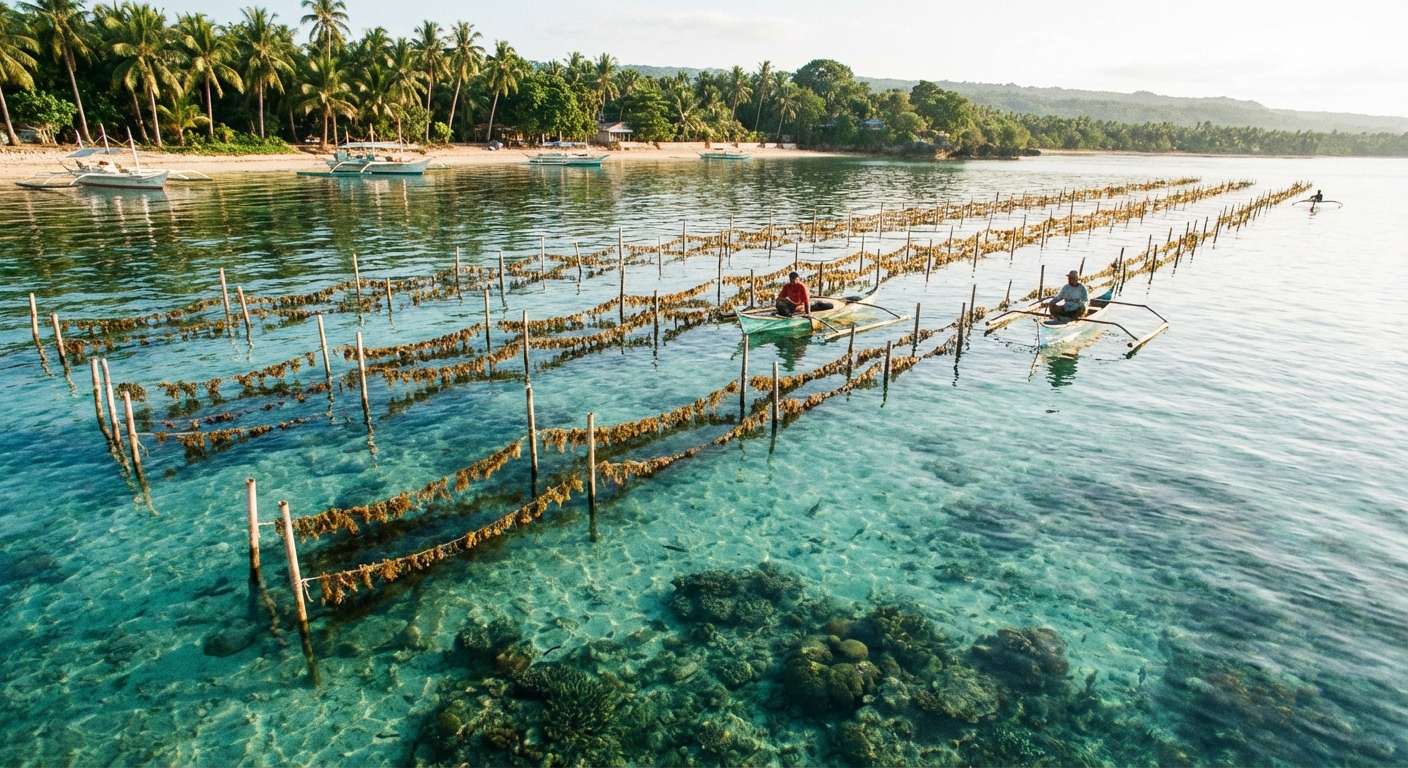
Most visitors to Siquijor come for the waterfalls, the white-sand beaches, and the mystical healing traditions. Few notice the geometric patterns stretching across the shallow waters of certain coastal barangays, lines of rope and stakes arranged with careful precision just below the surface. These are seaweed farms, and they represent one of the most important yet least discussed livelihoods on the island.
Seaweed farming in Siquijor is not a relic of the past nor a recent government initiative. It is a living, evolving practice that connects the island’s coastal communities to global supply chains while maintaining a rhythm of work that has shaped daily life for generations. For travelers willing to look beyond the standard itinerary, understanding this industry offers a profoundly different perspective on what Siquijor actually is.
The Seaweed Species of Siquijor
The Philippines is the world’s third-largest producer of farmed seaweed, and the Visayas region, which includes Siquijor, is a significant contributor to that output. Two species dominate the island’s seaweed farms.
Kappaphycus alvarezii, commonly called cottonii, is the primary commercial species. It produces kappa-carrageenan, a gelling agent used in food processing, cosmetics, and pharmaceutical products worldwide. The seaweed grows in clusters of thick, fleshy branches that range from deep green to reddish-brown depending on light exposure and water conditions.
Eucheuma denticulatum, known locally as spinosum, is the second major species. It yields iota-carrageenan, which has different thickening properties and is used in dairy products, toothpaste, and industrial applications. Spinosum tends to be thinner and more delicate than cottonii, with a branching pattern that resembles underwater coral.
Both species thrive in the warm, clear waters around Siquijor, where water temperatures typically range between 26 and 30 degrees Celsius year-round. The island’s relatively protected coastlines, particularly along the southern and eastern shores, provide ideal growing conditions with moderate current flow and minimal wave action.
How Seaweed Farming Works
The farming method used in Siquijor is the fixed off-bottom technique, which is well-suited to the island’s shallow reef flats. Here is how the process unfolds from planting to harvest.
Site Preparation
Farmers select areas with sandy or rubble substrates in water depths of one to two meters during low tide. They drive wooden or bamboo stakes into the seabed at regular intervals, typically two to three meters apart, creating a grid pattern. Nylon monolines are strung between the stakes, forming the framework on which seaweed will grow.
Planting
Small pieces of healthy seaweed, called seedlings or propagules, are tied to the monolines using soft plastic ties or strips of banana leaf. Each piece weighs roughly 100 to 150 grams and is spaced about 25 centimeters apart along the line. A single farm plot might contain dozens of lines, each carrying 30 to 50 seedlings.
The work is done at low tide, often in the early morning when the water is calm and the sun has not yet become intense. Farmers wade into the shallows, working methodically along each line. It is physical work that requires patience and an intimate knowledge of local tidal patterns.
Growth Period
Seaweed grows rapidly in favorable conditions. A typical growth cycle runs 45 to 60 days, during which the initial 100-gram seedlings can multiply their weight by eight to ten times. During this period, farmers visit their plots regularly to check for disease, remove epiphytes and grazing organisms, retie loose seedlings, and assess overall health.
The main threats during the growth cycle include ice-ice disease, a bacterial condition that causes the seaweed to whiten and break apart, and grazing by rabbitfish and sea urchins. Water temperature spikes above 32 degrees can also stress the plants and slow growth.
Harvest
When the seaweed reaches optimal size, farmers harvest by hand, pulling the heavy clumps from the lines and loading them into boats or baskets. A good harvest from a single cycle can yield several hundred kilograms of wet seaweed per farm plot.
The harvested seaweed is brought to shore and spread on drying racks, tarps, or elevated bamboo platforms. Sun-drying takes three to five days in good weather, reducing the moisture content from roughly 80 percent to about 35 percent. The dried product is then packed into sacks for sale to consolidators and traders.
Where to See Seaweed Farms
Several coastal barangays around Siquijor maintain active seaweed farming operations. The most accessible areas for visitors include the following.
Tubod and Paliton Area
The shallow waters between Tubod Marine Sanctuary and Paliton Beach host some of the most visible seaweed farms on the island. At low tide, you can see the stake-and-line systems clearly from the shore. The contrast between the turquoise water and the dark green seaweed creates a striking visual pattern that many photographers find compelling.
Lazi Coastline
The municipality of Lazi, on the southern coast, has a long tradition of seaweed cultivation. The protected waters near the port area and extending toward the east provide excellent growing conditions. Local farmers here often combine seaweed farming with fishing, working their farms in the morning and casting nets in the afternoon.
Maria and Enrique Villanueva
The eastern municipalities of Maria and Enrique Villanueva have some of the most extensive seaweed farming operations on the island. The relatively calm waters and wide reef flats in this area support larger farm plots. Visitors passing through on the coastal road circuit will notice the drying racks and processing areas near shore.
The Economics of Seaweed
Understanding the economics of seaweed farming provides important context for appreciating its role in Siquijor’s communities. The dried seaweed is sold to local consolidators at prices that fluctuate based on global carrageenan demand, typically ranging from 25 to 45 Philippine pesos per kilogram for dried cottonii.
A smallholder farmer with a modest plot can produce 200 to 500 kilograms of dried seaweed per cycle, earning between 5,000 and 22,500 pesos every 45 to 60 days. While this is not a large sum by international standards, it provides a reliable income stream that complements fishing and other agricultural activities. Many families operate multiple plots or coordinate farming with neighbors to achieve economies of scale.
The seaweed moves through a supply chain that connects Siquijor’s coastal barangays to processing plants in Cebu and Manila, and from there to international markets in the United States, Europe, and East Asia. Carrageenan extracted from Philippine seaweed appears in thousands of consumer products worldwide, from chocolate milk to pet food to pharmaceutical capsules.
Environmental Considerations
Seaweed farming occupies an interesting position in discussions about marine conservation and sustainable livelihoods. Unlike some forms of aquaculture, seaweed cultivation does not require feed inputs, antibiotics, or freshwater. The farms actually absorb dissolved nutrients from the water, potentially reducing eutrophication in coastal areas.
However, there are environmental trade-offs. Poorly managed farms can shade seagrass beds, which serve as important habitat for juvenile fish and other marine organisms. The stakes and lines can also damage coral if placed too close to reef structures. In Siquijor, local management practices generally maintain buffer zones between farms and sensitive habitats, though enforcement varies by municipality.
Some marine scientists have noted that well-managed seaweed farms can serve as secondary habitat for small fish and invertebrates, creating a mosaic of productive zones along the coast. The farms may also contribute to local carbon sequestration, though quantifying this benefit remains an active area of research.
Visiting Seaweed Farms Respectfully
If you want to learn about seaweed farming firsthand during your visit to Siquijor, there are several ways to do so without disrupting the farmers’ work.
Ask permission before approaching. Seaweed farms are private operations, and the plots represent a family’s livelihood. Do not wade into farming areas without speaking to the farmer first. Most are happy to explain their work if approached with courtesy and genuine interest.
Visit during harvest time. The most visually interesting and educational time to observe is during harvest, when farmers are actively working in the water and bringing seaweed to shore for drying. Early morning is typically the most active period.
Support local products. Some communities in Siquijor are beginning to develop value-added seaweed products, including dried seaweed snacks, seaweed soap, and seaweed-based skin care items. Purchasing these products directly supports the farming communities and encourages diversification of the local economy.
Be mindful of your impact. Do not step on drying seaweed, move equipment, or take large quantities of fresh seaweed as souvenirs. These actions may seem minor but can affect quality and yield.
Seaweed in Siquijor’s Kitchen
Beyond its industrial applications, seaweed has a place in Siquijor’s local cuisine that predates commercial farming. Several traditional preparations remain common on the island.
Fresh seaweed salad is the most widespread dish, made with blanched or raw Eucheuma dressed with vinegar, tomatoes, onions, and sometimes green mangoes. The texture is crunchy and slightly gelatinous, with a clean, oceanic flavor. You will find it served at local eateries and carinderias, particularly near fishing communities.
Seaweed soup appears in some home kitchens, where fresh seaweed is added to fish broth along with local vegetables. The seaweed breaks down slightly during cooking, adding body to the soup without overpowering the fish.
Seaweed desserts are less common but gaining popularity. Some local cooks prepare a jelly-like sweet using carrageenan extracted from fresh seaweed, flavored with coconut milk and pandan. The result is similar to the Filipino dessert gulaman but with a distinctly local character.
The Future of Siquijor Seaweed
The seaweed industry in Siquijor faces both opportunities and challenges in the coming years. Climate change is altering water temperatures and weather patterns, which directly affects growing conditions. The increasing frequency of typhoons and strong weather events poses risks to farm infrastructure, though Siquijor’s position in the central Visayas provides some protection compared to more exposed islands.
On the positive side, growing global demand for plant-based and sustainable products has increased interest in seaweed as a food ingredient, bioplastic feedstock, and agricultural fertilizer. These emerging markets could command higher prices for Philippine seaweed and provide new income opportunities for Siquijor’s farming communities.
Several non-governmental organizations and academic institutions have begun working with Siquijor seaweed farmers on improved cultivation techniques, disease management, and quality control. These partnerships aim to increase yields while maintaining the environmentally low-impact character of the industry.
There is also growing interest in integrating seaweed farming into the island’s tourism narrative. Rather than treating the farms as background scenery, some community leaders envision agri-tourism programs that allow visitors to participate in planting and harvesting, learn about marine ecology, and purchase locally made seaweed products. Such programs could diversify income sources for farming families while giving tourists a meaningful connection to Siquijor’s working landscape.
A Different Side of Island Life
Seaweed farming will never compete with waterfalls and beaches for tourist attention, and that is perfectly fine. Its value lies precisely in its ordinariness, the way it reveals the texture of daily life on a small Philippine island that happens to also be a popular travel destination.
Walking past a seaweed drying area in the late afternoon, watching the sunset paint the spread-out fronds in warm orange light, you catch a glimpse of Siquijor that no resort brochure captures. The island is beautiful, yes, but it is also a working place where people make their living from the sea in ways that are practical, ingenious, and deeply rooted in the coastal environment.
For travelers who seek to understand destinations rather than simply consume them, spending time near a seaweed farm, even just observing from a respectful distance, adds a layer of understanding that enriches the entire visit. It is a reminder that the crystal-clear waters of Siquijor are not just a backdrop for vacation photographs but a productive landscape that sustains communities and connects this small island to the wider world.
Siquijor.xyz Editorial Team
Related Experiences

Siquijor Artisan Workshops: Weaving, Woodcarving & Local Crafts
Discover Siquijor's traditional crafts through hands-on workshops. Learn from local artisans who preserve ancestral techniques in weaving, carving, and more.
Fishing with Siquijor's Fishermen: A Pre-Dawn Ocean Adventure
Join local fishermen for an authentic pre-dawn fishing experience. Learn traditional techniques, witness sunrise at sea, and connect with Siquijor's maritime culture.
Siquijor Food Guide: Local Dishes & Where to Eat
Discover Siquijor's authentic cuisine from street food to seafood feasts. Local restaurants, traditional dishes, and the flavors that define the island.