Siquijor Holy Week Healing Festival: Complete Visitor Guide
Discover Siquijor's famous Holy Week Healing Festival where traditional healers gather for ancient rituals. A complete guide to witnessing the island's mystical traditions respectfully.
 Island Adventures Team
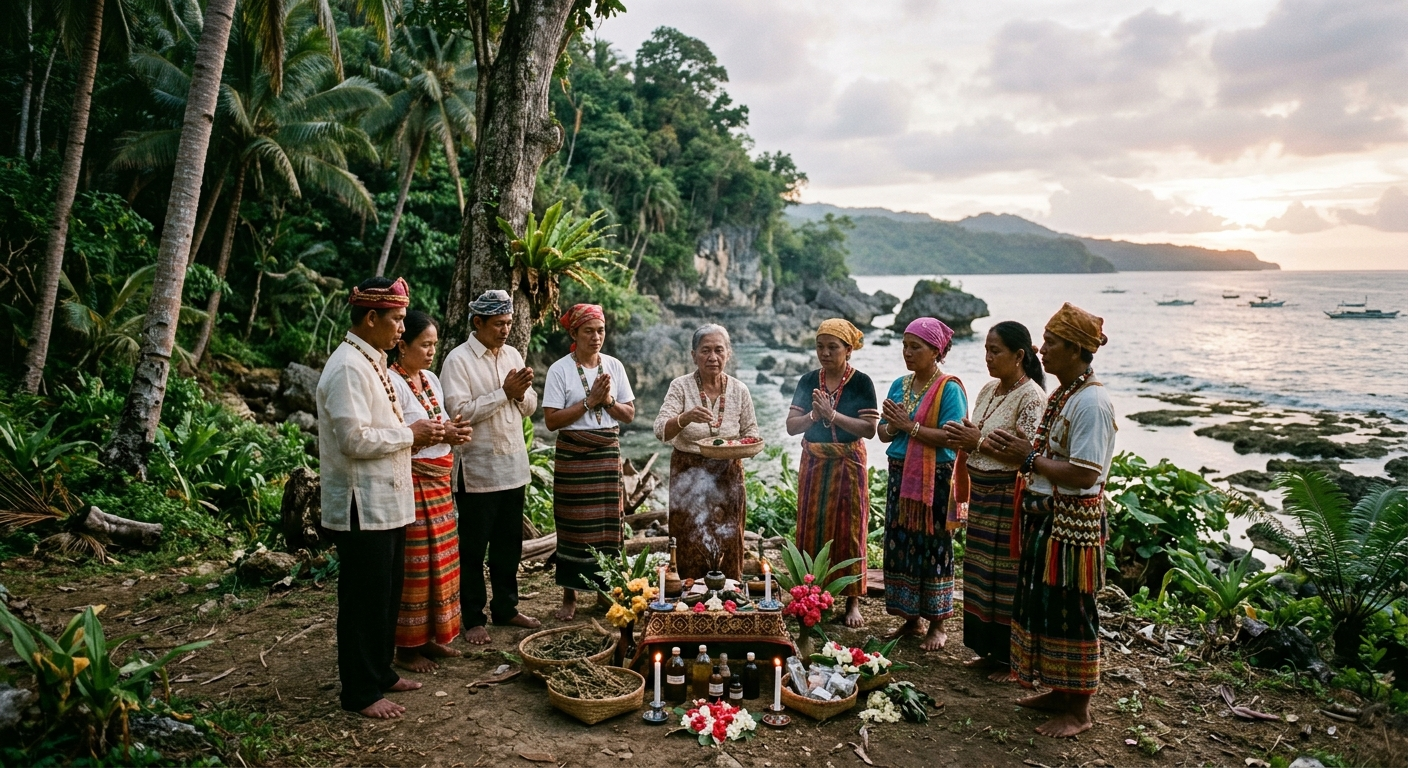
 Every year during Holy Week, a remarkable gathering takes place on the Philippine island of Siquijor that draws both the faithful and the curious from across the archipelago and beyond. The Siquijor Holy Week Healing Festival represents one of the most enduring expressions of folk tradition in the Philippines, where traditional healers known as mananambal converge to practice ancient rituals passed down through generations.
Understanding Siquijor’s Reputation as the Mystical Island
Siquijor has long been called the “Isla del Fuego” or Island of Fire, a name derived from the mysterious lights that reportedly appear along the shoreline at night. But beyond this natural phenomenon, the island has built a reputation spanning centuries as a center for folk medicine, spiritual healing, and esoteric traditions that continue to thrive despite modernization.
The island’s isolation historically allowed these practices to develop with minimal external interference. Unlike other parts of the Philippines where colonial influences largely supplanted indigenous healing traditions, Siquijor’s geographic position created conditions where old ways persisted. The arrival of Spanish missionaries in the 16th century brought Catholicism, but rather than replacing traditional beliefs, an interesting syncretism emerged that continues to this day.
Today, visitors arrive on Siquijor seeking experiences they cannot find elsewhere in the country. Some come for the beautiful beaches and waterfalls that rank among the finest in the Visayas. Others specifically seek out the island’s healers, hoping to find remedies for ailments that have resisted conventional treatment. Understanding this cultural context enriches any visit to the island, particularly during Holy Week when the healing traditions reach their annual crescendo.
The Holy Week Gathering: History and Significance
The Holy Week healing gathering in Siquijor traces its roots to the colonial period when the island’s healers, traditionally called mananambal, were forbidden from practicing their craft during the Lenten season. According to local tradition, these practitioners would gather in the barangay of San Antonio during Holy Week to collectively prepare herbal medicines, perform rituals, and share knowledge accumulated throughout the year.
What began as a practical arrangement to wait out the restrictions evolved over generations into a formalized festival that now attracts thousands of visitors annually. The timing is not coincidental. Holy Week represents the most sacred period in the Christian calendar, and the convergence of Catholic observance with pre-colonial spiritual practices creates a unique cultural moment that embodies the syncretic nature of Philippine folk religion.
During these days, the normally quiet town of San Antonio transforms into a bustling gathering point. The healers, predominantly elderly women known for their deep knowledge of local herbs and spiritual practices, set up stations where visitors can observe demonstrations, receive treatments, or simply ask questions about the traditions. The atmosphere balances reverence with curiosity, sacred observance with cultural exchange.
Traditional Practices You May Encounter
Bolo-Bolo Healing
One of the most recognizable practices associated with Siquijor healing is bolo-bolo, a ritual involving the use of water, prayers, and sometimes objects like stones or coins to address various ailments. The healer takes water in their mouth and, while reciting prayers, blows it in small sprays over the patient’s body. The practice is believed to address spiritual causes of physical and emotional distress.
Visitors should understand that bolo-bolo operates within a framework fundamentally different from Western medicine. The healers do not claim to cure diseases in the biomedical sense. Instead, they work with concepts of spiritual imbalance, hexes lifted from rivals, or soul loss from frightening experiences. For visitors raised in cultures where such explanations hold no meaning, observing these practices offers insight into alternative ways of understanding health and affliction.
Herbal Medicine Preparation
The Holy Week gathering serves a practical function beyond ritual. Many of the herbs used in traditional Siquijor medicine are considered most potent when harvested during Lent. The healers collectively gather, prepare, and distribute these preparations during the festival, creating an annual pharmacy of sorts that supplies the wider community for the coming year.
Common preparations include tongkat ali substitutes made from local roots, respiratory treatments using endemic herbs, and various tinctures and poultices for external applications. The knowledge of these preparations represents centuries of accumulated wisdom about the island’s flora, much of which has not been scientifically studied or documented in Western medical literature.
Amulets and Talismans
Siquijor has also become famous for anting-anting, amulets and talismans believed to provide protection, luck, or special abilities to their bearers. During Holy Week, these objects take on particular significance as visitors seek items blessed during the sacred period. The objects range from simple cords worn around the neck to elaborate containers holding prayers written on paper or cloth.
The production and distribution of these items follows protocols passed from teacher to student within the healing community. Not all mananambal create anting-anting, and those who do guard the specific prayers and procedures as proprietary knowledge accumulated over lifetimes of practice.
How to Visit Respectfully
Approaching the Holy Week healing festival requires cultural sensitivity that enhances rather than diminishes the experience for both visitor and practitioner. The healers are not performers providing entertainment for tourists. They are respected community members engaging in serious spiritual work during the most sacred time of their religious calendar.
Before visiting, spend time understanding the basic beliefs and practices so you can frame what you witness within its proper context. Reading about Philippine folk religion, attending mass at one of Siquijor’s historic churches, and speaking with local guides provides essential background. The more you understand before arriving, the more meaningful your observations become.
When you do visit healing stations, observe before approaching. Watch how other visitors interact with the healers and follow their lead. Ask permission before photographing anyone, recognizing that many practitioners specifically avoid having their images captured during Holy Week rituals. Some may refuse, and this refusal should be accepted gracefully without argument or negotiation.
Dress modestly and speak quietly. This is not the time for casual beach attire or loud conversation. Treat the space as you would any place of worship, because for many who gather there, that is exactly what it represents. Demonstrating respect for these norms signals that you come with genuine interest rather than exploitative curiosity.
What to Expect During Your Visit
The festival takes place primarily in San Antonio, a coastal barangay in the municipality of Maria. During Holy Week, particularly from Maundy Thursday through Black Saturday, you will find the largest concentration of healers and visitors. The scene is unlike the packaged cultural performances found in more tourist-oriented destinations. There is no admission fee, no scheduled showtimes, and no performers expecting payment for photos.
You may encounter healers working individually with patients under makeshift shelters. Others gather in small groups to share tea and conversation during breaks. Some stations display the herbs and preparations they create, happy to explain their uses to genuinely interested visitors. The atmosphere can feel chaotic by Western standards, but this disorganization reflects the organic, community-driven nature of the gathering.
Many visitors come seeking treatments for chronic conditions that have not responded to conventional medicine. These visitors may spend hours waiting for their turn with a particular healer, following protocols that can seem mysterious to outsiders. Observing this patient waiting, the quiet conversations between healer and patient, and the careful administration of treatments offers insight into a fundamentally different approach to healthcare that prioritizes spiritual and emotional dimensions often overlooked in contemporary medical practice.
Combining Cultural Exploration with Beach Vacation
The Holy Week festival provides a compelling reason to visit Siquijor during a period many tourists avoid. Yes, the island sees larger crowds during this time, and some beaches that would normally offer solitude become more populated. Yet the cultural reward of witnessing living tradition makes this trade-off worthwhile for visitors with genuine interest.
Siquijor’s beaches, waterfalls, and diving sites remain accessible throughout Holy Week. In fact, the surrounding days offer excellent conditions for island exploration, with the post-rain dry season providing clear skies and calm seas ideal for snorkeling around the marine sanctuaries of Tubod and Tulis. You can structure your days around beach activities and cultural visits, returning to your accommodation each evening to process the day’s experiences.
Many visitors find that the spiritual dimension of Holy Week adds depth to their beach vacation in unexpected ways. Watching fishermen prepare their boats for the fishing season’s opening, seeing families gather for picnics at the waterfalls, and joining the contemplative atmosphere that settles over the island creates a travel memory quite different from typical tropical beach holidays focused primarily on sun and sand.
Practical Information for 2026
The Holy Week festival in 2026 runs from Thursday, April 16 through Saturday, April 18, with the most intense activity occurring on these days. Holy Monday and Tuesday see the initial arrival of healers and early visitors, while Easter Sunday brings a more festive atmosphere as the Lenten period concludes.
Accommodation on Siquijor books solid during Holy Week, particularly in the San Antonio area where the festival takes place. If you plan to witness the gathering, reserve your lodging several weeks in advance. Prices increase during peak season, and budget options fill first. Consider staying in nearby municipalities like Maria or even Siquijor Town and commuting to San Antonio, which offers more accommodation variety while remaining within easy reach of the festival.
Getting to Siquijor has become more convenient with the recent introduction of commercial flights connecting the island directly to Cebu. Previously, visitors had to take ferries from Dumaguete or Bohol, requiring additional travel time and scheduling constraints. The new air route makes attending the Holy Week festival more accessible, particularly for those with limited time who cannot spare the full day of travel that ferry connections previously demanded.
Conclusion
The Siquijor Holy Week Healing Festival represents a rare opportunity to witness living tradition in an increasingly globalized world. These practices have survived colonial suppression, modernization pressures, and decades of outside curiosity precisely because they address needs that Western medicine cannot fully satisfy. Whether you seek healing, cultural understanding, or simply a meaningful travel experience during Holy Week, approaching the festival with respect and genuine curiosity rewards visitors with insights unavailable anywhere else in the Philippines.
As the island opens to more visitors through improved air access, the challenge becomes balancing tourism development with the preservation of traditions that make Siquijor unique. The healers continue their practices not for tourists but for their communities and the belief systems that give those practices meaning. When visitors approach with corresponding respect, everyone benefits from the encounter.
Island Adventures Team
Cultural explorers documenting Siquijor's unique traditions with respect.
Related Experiences

Siquijor Artisan Workshops: Weaving, Woodcarving & Local Crafts
Discover Siquijor's traditional crafts through hands-on workshops. Learn from local artisans who preserve ancestral techniques in weaving, carving, and more.
Fishing with Siquijor's Fishermen: A Pre-Dawn Ocean Adventure
Join local fishermen for an authentic pre-dawn fishing experience. Learn traditional techniques, witness sunrise at sea, and connect with Siquijor's maritime culture.
Siquijor Food Guide: Local Dishes & Where to Eat
Discover Siquijor's authentic cuisine from street food to seafood feasts. Local restaurants, traditional dishes, and the flavors that define the island.