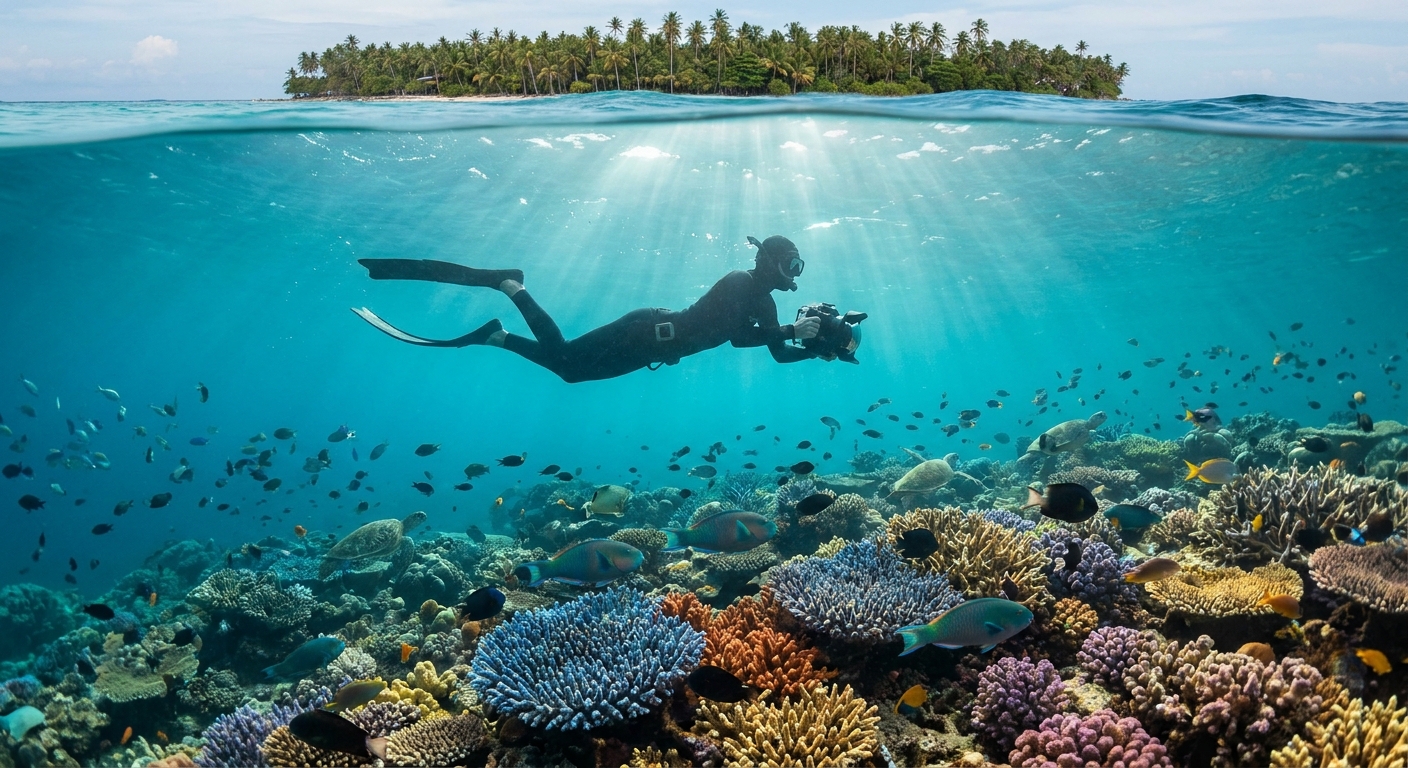
Getting Your Freediving Certification in Siquijor: Complete Guide
Complete guide to freediving certification in Siquijor Island Philippines. Learn about SSI and Molchanovs courses, training costs, and what to expect.
Siquijor Island has quietly transformed into one of Southeast Asia’s most sought-after freediving certification destinations. What started as a handful of instructors offering informal training has blossomed into a comprehensive ecosystem of professional freediving schools, world-class training sites, and certification pathways that attract divers from across the globe. If you have ever considered adding freediving credentials to your skill set, Siquijor offers a combination of conditions, expertise, and atmospheric charm that is genuinely difficult to match elsewhere.
Why Siquijor Has Become a Freediving Education Hub
The island’s rise as a certification destination is not accidental. Several factors converge to make Siquijor particularly well-suited for freediving training.
The marine environment is exceptionally suited to learning. Water temperatures hover around 26 to 29 degrees Celsius year-round, meaning you can train comfortably without thick wetsuits that would restrict your movement. Visibility regularly exceeds 20 meters, and the underwater topography offers everything from gentle sloping reefs perfect for open water training to deeper sites suitable for advanced courses. Critically, currents are generally mild, giving students the stability they need to focus on technique rather than fighting environmental conditions.
Beyond the water itself, the freediving community on the island has matured significantly. Several schools operating here employ instructors with international competition experience and years of teaching behind them. These are not weekend hobbyists running courses on the side but dedicated professionals who treat freediving education as a craft. Their collective presence has created a knowledge-sharing environment where best practices evolve continuously and students benefit from accumulated expertise.
The island infrastructure has caught up with the sport’s growth. Accommodations ranging from budget-friendly hostels to beachfront resorts can accommodate freediving students at various price points. Equipment rental shops stock quality freediving gear, meaning you do not need to invest in your own equipment before discovering whether the sport is for you. Dive shops have expanded to offer dedicated freediving programs alongside traditional scuba offerings.
Certification Organizations Operating in Siquijor
Two main certification bodies maintain a strong presence on the island, each with distinct pedagogical approaches.
SSI Freediving
Scuba Schools International offers a structured progression that is particularly attractive to those who appreciate clear benchmarks and systematic skill building. The SSI freediving pathway begins with the Basic Freediver level, which teaches proper breath-hold techniques, equalization methods, and safety protocols in confined water. From there, students can progress through Level 1 and Level 2 certifications, with each level adding depth, distance, and complexity to the skill set.
SSI courses typically span three to four days for the complete Level 1 certification. The curriculum covers theoretical knowledge through self-directed study materials, pool sessions for technique refinement, and open water training at ocean sites around the island. Students learn static apnea, dynamic apnea, constant weight freediving, and essential rescue techniques. The organization emphasizes safety consciousness as a foundational element rather than an afterthought.
The Molchanovs organization brings a different philosophy to freediving education. Founded by world record holder Alexey Molchanov, the program emphasizes progressive approach methodology and personal development over competitive achievement. Molchanovs courses are known for their depth coaching approach, where instructors work intensively with small groups to develop technique through individualized feedback.
Molchanovs Wave 1 and Wave 2 certifications follow a similar scope to SSI levels but with different teaching rhythms. The Wave 1 course typically requires four to five days and focuses on building solid foundational habits that will support long-term development rather than simply reaching certification standards. This approach appeals particularly to those who see freediving as a long-term practice rather than a one-time credential.
What to Expect During Certification Training
The First Days: Foundations and Breath-Hold Work
Certification training begins with understanding the physiology that underlies freediving. Students learn about the mammalian dive reflex, how the body responds to breath-hold, and why certain techniques produce better results than others. This theoretical foundation is not abstract; it directly informs every practical skill you will develop.
Breath-hold training starts in a pool or calm shallow water. You will learn proper breathing patterns that maximize oxygen uptake before a dive and techniques for managing the urge to breathe that arises during apnea. Most students find their initial breath-hold times shorter than expected, but improvement comes rapidly once proper breathing rhythms become automatic.
Equalization is often the skill that requires the most attention, particularly for those who have not scuba dived before. The Frenzel technique and other equalization methods must be practiced until they require no conscious thought. Instructors are accustomed to working with students at all levels and will provide patient guidance through this phase.
Open Water Sessions: Depth and Technique
Open water training moves from shallow sites to progressively deeper locations as your skills develop. The first open water sessions focus on buoyancy control, proper body positioning, and relaxation under water. Instructors watch from above and below, providing real-time corrections that accelerate the learning process.
By the midway point of a standard certification course, most students are attempting dives of 10 to 20 meters. The experience of swimming effortlessly downward with a single breath, surrounded by the blue void and the occasional curious fish, tends to be transformative for people. This experience is not incidental to the certification process; it is often what draws people to freediving in the first place.
Safety protocols are woven throughout training rather than delivered as a separate module. You will learn to recognize the signs of hypoxia, practice buddy procedures for black-out situations, and understand the importance of always diving with a trained companion. These skills are practiced repeatedly until they become instinct.
Typical Costs and Time Investment
Understanding the financial and temporal commitment helps with planning.
Course Fees
Level 1 or Wave 1 certification typically costs between 10,000 and 15,000 Philippine pesos, depending on the school, season, and included materials. This fee generally covers instruction, pool access, boat trips to training sites, and certification processing. Equipment rental usually costs an additional 1,500 to 3,000 pesos for the duration of the course.
Advanced certifications command higher fees, with Level 2 or Wave 2 courses ranging from 15,000 to 22,000 pesos. These higher-level courses involve more open water training, greater depth requirements, and more intensive skill development.
Duration
A complete Level 1 or Wave 1 certification requires a minimum of three full days of training for most students. Some schools offer accelerated four-day intensive programs, while others spread training over a week to allow more absorption time between sessions.
Selecting the Right School for Your Goals
With several operations competing for students, choosing the right school requires some consideration.
Factors to evaluate include instructor credentials and experience, class sizes, and teaching philosophy. Smaller class sizes, typically a maximum of four students per instructor, allow for more individualized feedback and faster skill development. Schools that employ instructors who compete internationally or have significant professional credentials generally offer more rigorous training, though this also tends to correlate with higher prices.
Reviews on platforms like Google, TripAdvisor, and specialized freediving forums provide useful perspective. Look for comments about instructor patience, safety culture, and whether past students feel adequately prepared after certification.
Location matters for the overall experience. Schools based near good training sites reduce transit time and allow for more flexible scheduling. Those operating from more remote areas may offer a more focused training environment but require longer boat rides to reach deeper sites.
Combining Certification with a Broader Island Visit
One advantage of pursuing freediving certification in Siquijor is that the process naturally integrates with broader island exploration. Training sessions typically run from morning through early afternoon, leaving afternoons free for beaches, waterfalls, and other island attractions.
You can structure your visit to minimize tourism overlap with training focus. Spend mornings on the water developing your technique, then use late afternoons to visit Cambugahay Falls, explore Lazi Church, or simply relax on Paliton Beach. This combination produces a more substantial experience than either certification alone or passive beach time alone would provide.
Many students find that a week-long stay strikes the right balance between focused training and recovery time. This duration allows you to complete certification while building in days for integration practice and broader island exploration.
Preparing Before You Arrive
Certain preparations will make your certification experience more productive.
Physical conditioning helps, particularly cardiovascular fitness and flexibility. While you do not need to be an athlete to certify, greater aerobic capacity supports longer breath-holds and faster recovery between dives. Swimming practice in the weeks before your trip builds water comfort that translates directly to freediving performance.
Equalization preparation deserves attention if you have any history of ear, sinus, or respiratory issues. A pre-trip consultation with a healthcare provider familiar with freediving can identify potential complications. Starting a nasal irrigation routine before travel helps maintain clear passages for effective equalization.
Mental preparation involves understanding that freediving is fundamentally a relaxation practice. The athletes who perform best are those who can remain calm under pressure, manage discomfort without panic, and approach each dive with patience rather than aggression.
After Certification: Continuing Your Freediving Journey
Certification is a beginning, not an endpoint. Many students who complete their first certification in Siquijor return for advanced training, depth trips, or simply to practice in the waters they have come to know.
The skills developed through certification transfer to any ocean environment. Freedivers certified in Siquijor have gone on to explore cenotes in Mexico, blue holes in the Bahamas, and coral walls throughout Southeast Asia. The technique foundation built during island certification serves wherever water covers the earth.
Local practice groups operate in Siquijor, offering opportunities to dive with other freedivers after formal training ends. These gatherings provide social connection and the safety benefits of always having a buddy, while allowing you to explore sites at your own pace.
Making the Decision
Freediving certification represents an investment of time, money, and attention. The question is whether the returns justify that investment for your specific circumstances.
If you are drawn to the ocean, enjoy breath-hold experiences, and want structured instruction that transforms casual snorkeling into a recognized skill set, certification in Siquijor delivers genuine value. The combination of professional training, beautiful surroundings, and relatively accessible costs makes this island an attractive proposition for anyone considering freediving credentials.
Even if freediving never becomes a central pursuit in your life, the techniques learned during certification improve any water activity. Better breath control, more efficient swimming, and greater comfort in the ocean enhance snorkeling, swimming, and general beach enjoyment.
Siquijor has earned its reputation as a freediving certification destination. The island offers the full package: conditions, expertise, infrastructure, and atmosphere. Whether you arrive as a complete beginner or an experienced diver seeking new skills, the water here is ready to teach you what you came to learn.
Siquijor.xyz Editorial Team
Related Experiences
Apo Island Day Trip: Swimming with Sea Turtles
Complete guide to visiting Apo Island from Siquijor - swim with sea turtles, explore vibrant coral reefs, and experience one of the Philippines' best marine sanctuaries.
Cantabon Cave Spelunking: An Underground Adventure in Siquijor
Navigate underground rivers, squeeze through tight passages, and discover stunning rock formations in Siquijor's most thrilling cave system. Complete spelunking guide included.
Cliff Jumping at Salagdoong Beach
Your complete guide to cliff jumping at Salagdoong Beach - Siquijor's most thrilling adventure with platforms at 5m, 8m, and 10m heights.