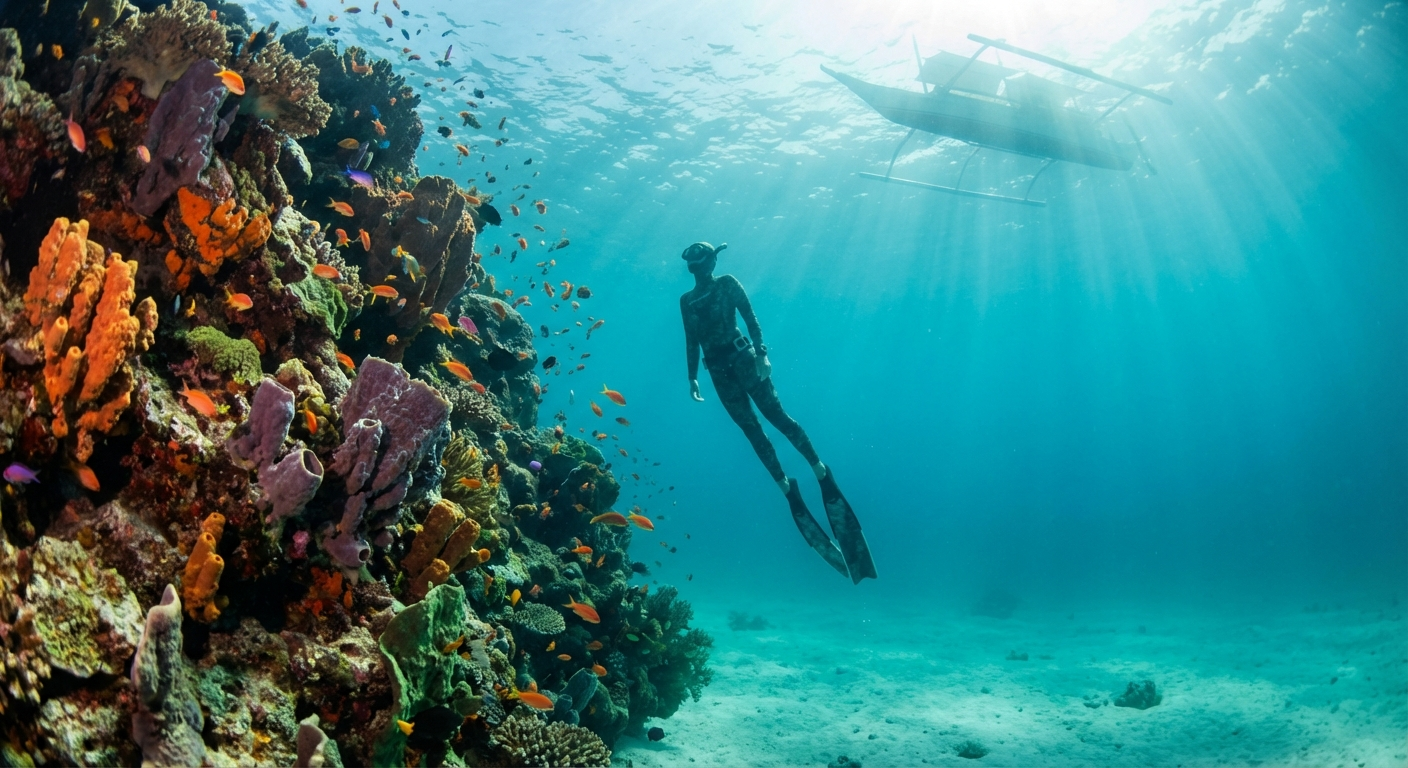
Free Diving in Siquijor: Breath-Hold Adventures in Crystal Waters
Discover the best free diving spots in Siquijor. Sites, training, gear, safety tips, and why this island is the Philippines' next freediving destination.
Free diving — the art of diving on a single breath — is experiencing a global surge in popularity. And while the Philippines has long been a scuba diving mecca, a quieter revolution is taking place beneath the surface of Siquijor Island. With water visibility that routinely exceeds 30 meters, warm temperatures hovering around 28 degrees Celsius year-round, and an absence of strong currents at most coastal sites, Siquijor offers conditions that feel tailor-made for breath-hold exploration.
Unlike the bustling dive hubs of Cebu or Palawan, Siquijor gives you something increasingly rare in Southeast Asian diving: solitude. You can slip beneath the surface at dawn and have an entire reef system to yourself, with nothing but the sound of your own heartbeat and the distant crackle of parrotfish feeding on coral.
Why Siquijor for Free Diving
Several factors combine to make this small island an exceptional free diving destination. Understanding them will help you plan your sessions and choose the right sites.
Exceptional Water Clarity
Siquijor sits in the Bohol Sea, fed by deep oceanic currents that keep plankton levels moderate and visibility outstanding. During the dry season months of February through May, visibility at most sites ranges from 25 to 40 meters. This clarity is not just aesthetically pleasing — it is a genuine safety advantage for freedivers, allowing your buddy to maintain visual contact during deeper dives.
Gentle Conditions
The island’s coastal geography creates natural shelter from prevailing winds. The western coastline, from San Juan through Larena, is protected during the northeast monsoon that blows from November through March, which means calm surface conditions during the peak travel season. The eastern side, around Maria and Lazi, comes into its own during the southwest monsoon months. In practical terms, there is always a sheltered side of the island available for diving.
Accessible Depth Profiles
Many of Siquijor’s reef systems feature a shallow coral plateau that drops away to walls and slopes reaching 30 meters and beyond within a short swim from shore. This compressed depth profile is ideal for freedivers. You can warm up in three to five meters of water over stunning coral gardens, then progress to deeper dives along the wall — all without needing a boat.
Minimal Boat Traffic
Compared to popular dive destinations in the Visayas, Siquijor sees relatively few motorized boats along its coastline. This reduces both the noise underwater and the physical danger of surfacing into boat traffic, a genuine concern at busier sites elsewhere in the Philippines.
Best Free Diving Sites
Siquijor’s 102-kilometer coastline offers dozens of potential entry points, but the following sites stand out for their combination of access, depth, marine life, and safety.
Tubod Marine Sanctuary
Located along the San Juan coastline, Tubod is arguably the best all-around free diving site on the island. The sanctuary status has allowed marine life to flourish here for years, and the results are visible from the moment you put your face in the water. A shallow sandy entry gives way to dense coral formations starting at around two meters, with the reef crest dropping to a gentle slope that reaches 15 to 20 meters.
For freedivers, Tubod works beautifully as both a training ground and a recreational dive site. The shallow coral gardens are perfect for static breath-hold practice and duck-dive drills, while the slope provides a natural depth progression for constant weight dives. Expect to encounter schools of fusiliers, anemonefish colonies, blue-spotted rays tucked under table corals, and the occasional hawksbill turtle cruising the reef edge.
A small entrance fee of around 50 pesos supports the sanctuary’s conservation efforts. Visit early in the morning before snorkel tour groups arrive, ideally between 6:00 and 8:00 AM.
Paliton Wall
The reef off Paliton Beach in San Juan conceals one of Siquijor’s most dramatic underwater features: a vertical wall that drops from roughly eight meters to well beyond 40. For experienced freedivers comfortable at depth, this is the island’s signature dive.
Enter from the beach and swim out over the shallow reef flat, which extends about 50 meters from shore. The bottom drops away abruptly, and you find yourself hovering above a sheer cliff face decorated with soft corals, sea fans, and barrel sponges. Pelagic fish are common here — jacks, barracuda, and the occasional reef shark patrol the blue water beyond the wall edge.
The wall’s orientation means it catches morning light beautifully, with sunbeams cutting through the water column and illuminating the coral-encrusted face. This is a site where underwater photography and free diving intersect perfectly.
Safety note: The depth here exceeds recreational free diving limits quickly. Always dive with an experienced buddy and use a surface marker buoy. Current can pick up along the wall during tidal changes, so check conditions before entering.
Salagdoong Marine Area
The waters around Salagdoong Beach in Maria municipality offer a different character. The reef here is less developed than at Tubod, but the underwater terrain features interesting rock formations, small swim-throughs, and a gentle slope that provides a natural depth ladder.
What makes Salagdoong special for freedivers is the combination of the underwater landscape with the dramatic cliff-lined coastline above. Between dives, you can rest on the rocks and watch other visitors cliff-jumping from the famous platforms — a surreal contrast to the meditative quiet of the underwater world you have just left.
The site works best in calm conditions, as the entry can be rocky. Wear reef shoes and choose your entry and exit points carefully during higher swell.
Sandugan Wall
North of Larena, the Sandugan area features another wall system that drops steeply from a shallow reef. This site sees very few visitors, even by Siquijor standards, making it an excellent choice for uninterrupted training sessions. The coral coverage on the wall is impressive, with large gorgonian fans and thick growths of soft coral providing habitat for nudibranchs, pygmy seahorses, and other macro life that rewards slow, observant diving.
Access is easiest with a motorbike, as the coastal road passes close to the entry point. Look for the Sandugan dive site markers.
Caticugan Reef
Situated along the coast between Siquijor town and Larena, Caticugan is a lesser-known site with a healthy reef system and easy shore access. The reef extends outward in a gentle slope, reaching 20 meters at about 80 meters from shore. Large coral bommies dot the sandy bottom, each one a miniature ecosystem hosting cleaning stations, territorial damselfish, and hunting lionfish.
This site is particularly good for newer freedivers building confidence, as the gradual depth increase allows you to push your limits incrementally without the psychological pressure of a sheer wall drop.
Training and Preparation
Free diving in Siquijor is primarily a self-guided activity. As of 2026, there are no dedicated freediving schools on the island, though several scuba operators can provide guidance and buddy support.
Pre-Trip Training
If you are new to free diving, complete at least a basic course before arriving. Organizations like AIDA, SSI, and Molchanovs all offer entry-level certifications through their global network of instructors. Many instructors operate in nearby Cebu or Dumaguete, making it feasible to combine a certification course with your Siquijor trip.
A basic course will teach you proper breathing techniques, equalization methods, duck-dive mechanics, and critical safety protocols including buddy procedures and blackout response.
Daily Preparation
The quality of your free diving in Siquijor will depend heavily on how you prepare each morning. Experienced freedivers know that breath-hold performance is deeply connected to overall physical and mental state.
Get a full night of sleep. Siquijor’s quiet environment actually supports this well, with minimal noise pollution even in the more developed San Juan area.
Eat a light breakfast at least two hours before diving. The island’s many cafes offer fresh fruit, rice porridge, and other easily digestible options that provide energy without weighing you down.
Hydrate thoroughly. The tropical climate dehydrates you faster than you might expect, and dehydration directly impairs equalization and breath-hold capacity. Carry a large water bottle and drink consistently from the moment you wake up.
Spend 15 to 20 minutes doing breathwork and stretching before entering the water. Diaphragmatic breathing exercises, thoracic stretches, and gentle yoga are all effective. Many freedivers find that Siquijor’s peaceful atmosphere makes this preparation phase more effective than in busier locations.
Equalization Considerations
The warm water in Siquijor is generally forgiving for equalization, as the heat helps keep the tissues of the sinuses and Eustachian tubes flexible. However, if you have been traveling — especially flying — give yourself a full rest day before attempting deeper dives. Air travel and changes in cabin pressure can temporarily inflame the sinuses and make equalization difficult or painful.
If you struggle with equalization, consider practicing Frenzel technique on dry land before your trip. This hands-free equalization method is essential for dives beyond 15 to 20 meters and far more reliable than the Valsalva maneuver used by most beginners.
Essential Gear
Free diving in Siquijor requires minimal equipment, but what you bring matters.
Long bi-fins or monofin are the most important piece of gear. Siquijor’s dive sites reward efficient finning, as most require a surface swim of 30 to 100 meters to reach diving depth. Soft to medium stiffness blades work well for the depths available here.
A low-volume mask is essential. Free diving specific masks reduce the air volume you need to equalize at depth, directly extending your bottom time and comfort.
A three-millimeter wetsuit provides thermal protection on longer sessions and, just as importantly, protection from jellyfish stings. While Siquijor’s waters are warm, spending two or three hours in 28-degree water will eventually chill you, and the wetsuit prevents this from affecting your performance.
A weight belt with quick-release buckle is necessary for most divers in a wetsuit. Aim for neutral buoyancy at around 10 meters as a starting point.
A surface marker buoy with a dive flag is strongly recommended, especially at sites with any boat traffic. This is as much about signaling your presence to fishermen as it is about safety protocol.
A dive watch or freediving computer helps track depth, dive time, and surface intervals. Several affordable freediving computers are available that provide all the data you need.
Bring reef shoes for rocky entries. Most of Siquijor’s shore-access sites involve walking over coral rubble or volcanic rock to reach the water.
Safety Guidelines
Free diving carries inherent risks that must be managed through discipline and proper protocols. The remoteness of Siquijor makes self-reliance especially important.
Never dive alone. This is the fundamental rule of free diving, and it applies regardless of your experience level. A shallow water blackout can occur without warning, even on dives well within your established limits. Always have a trained buddy watching from the surface, ready to respond.
Follow the one-up, one-down protocol. One diver is in the water; the other watches from the surface. The surface diver should be in the water, wearing a mask, and prepared to descend immediately if needed.
Observe a surface interval of at least twice your dive time between dives. If you were down for one minute, rest on the surface for at least two minutes. For deeper dives, extend this ratio.
Know the location of the nearest medical facility. Siquijor District Hospital in Siquijor town is the primary medical facility on the island. For serious diving emergencies, evacuation to Dumaguete — roughly an hour by fast ferry — provides access to more advanced medical care. Carry the emergency numbers in a waterproof pouch with your gear.
Stay well within your limits. Siquijor is not the place to chase personal depth records. The island’s appeal lies in its beauty at accessible depths. Some of the most rewarding dives happen at 10 to 15 meters, where the coral is healthiest and the light is most spectacular.
Best Time to Visit
February through May represents the prime window for free diving in Siquijor. The dry season brings the calmest seas, best visibility, and most consistent conditions. February is particularly good, as the post-holiday lull means fewer visitors but conditions are already excellent.
The water temperature hovers around 27 to 29 degrees Celsius during these months, warm enough for extended sessions in a thin wetsuit or even a rash guard.
June through October, the southwest monsoon season, brings occasional rain and choppier conditions on the western coast. However, the eastern side of the island often remains diveable, and visibility can actually improve after a rain event clears the initial runoff.
Combining Free Diving with Island Life
One of the joys of free diving in Siquijor is how naturally it integrates with the island’s unhurried pace. A typical day might look like this:
Wake early and drive to your chosen site on a rented motorbike. The island’s compact size means even the farthest sites are within 45 minutes of anywhere. Complete your morning diving session, finishing before the midday sun drives surface temperatures uncomfortably high and before the afternoon sea breeze kicks up chop.
Return to your accommodation for lunch and rest during the hottest hours. Use this time for equipment maintenance, reviewing dive data, or simply reading in a hammock.
In the late afternoon, an optional second session is possible at sites with western exposure, where the lowering sun creates extraordinary light conditions underwater. Alternatively, explore the island’s waterfalls, historical sites, or food scene.
Evening brings spectacular sunsets from the San Juan coast, fresh seafood at beachfront restaurants, and the deep, restorative sleep that comes from a day spent in the ocean.
Conservation and Respect
Siquijor’s marine ecosystems are in better condition than many comparable sites in the Philippines, thanks in part to the network of marine sanctuaries established along its coast. As freedivers, we have a responsibility to maintain this.
Practice impeccable buoyancy control. Do not touch, stand on, or rest against coral formations. Even brief contact can damage coral polyps that take years to regrow.
Do not chase, touch, or harass marine life. Turtles, in particular, are a highlight of Siquijor diving, and they deserve to be observed from a respectful distance.
Pay sanctuary entrance fees cheerfully. These small contributions directly fund the community-based management programs that keep Siquijor’s reefs healthy.
Consider bringing a mesh bag to collect any debris you encounter during your dives. Plastic pollution reaches even remote islands, and every piece removed makes a difference.
Free diving in Siquijor is not about records or extreme depth. It is about experiencing one of the most beautiful underwater environments in the Philippines on the most intimate terms possible — one breath at a time, in water so clear it feels like flying. The island rewards patience, preparation, and respect, and for those willing to slow down and dive quietly, it reveals treasures that no tank dive could match.
Siquijor.xyz Editorial Team
Local experts sharing authentic Siquijor experiences
Related Experiences
Apo Island Day Trip: Swimming with Sea Turtles
Complete guide to visiting Apo Island from Siquijor - swim with sea turtles, explore vibrant coral reefs, and experience one of the Philippines' best marine sanctuaries.
Cantabon Cave Spelunking: An Underground Adventure in Siquijor
Navigate underground rivers, squeeze through tight passages, and discover stunning rock formations in Siquijor's most thrilling cave system. Complete spelunking guide included.
Cliff Jumping at Salagdoong Beach
Your complete guide to cliff jumping at Salagdoong Beach - Siquijor's most thrilling adventure with platforms at 5m, 8m, and 10m heights.