Siquijor vs Siargao: Which Philippine Island Paradise Is Right for You?
Compare Siquijor and Siargao across beaches, activities, budget, nightlife, and vibe. Find out which Philippine island matches your travel style in 2026.
The Philippines has over 7,600 islands, but two consistently rise to the top of every traveler’s shortlist: Siquijor and Siargao. Both offer jaw-dropping natural beauty, welcoming locals, and an escape from the grind of city life. But they deliver wildly different experiences.
If you are stuck deciding between Siquijor or Siargao for your next trip, this head-to-head comparison breaks down everything that matters — beaches, activities, budget, nightlife, and overall vibe. By the end, you will know exactly which Philippine island paradise matches your travel style.
Getting There: Accessibility and Travel Routes
Siargao has its own airport (Sayak Airport, IAO) with direct flights from Manila and Cebu on Cebu Pacific and Philippine Airlines. Flight time from Manila is roughly 2 hours. From Cebu, it is about 1 hour. This makes Siargao surprisingly easy to reach despite its remote location in the northeastern corner of Mindanao.
Siquijor has no commercial airport. The standard route is to fly into Dumaguete (DGT), then take a ferry. Fast craft from Dumaguete to Siquijor Port takes 45 to 60 minutes and costs PHP 200 to 250. You can also reach Siquijor from Cebu, Bohol, or other Visayan ports via slower RORO ferries. The extra step adds about an hour to your journey but keeps Siquijor feeling less overrun.
Verdict on access: Siargao wins on convenience with direct flights. Siquijor requires a ferry transfer but benefits from its central Visayan location, making it easy to combine with Dumaguete, Bohol, or Cebu trips.
Beaches and Natural Attractions
Siargao Beaches
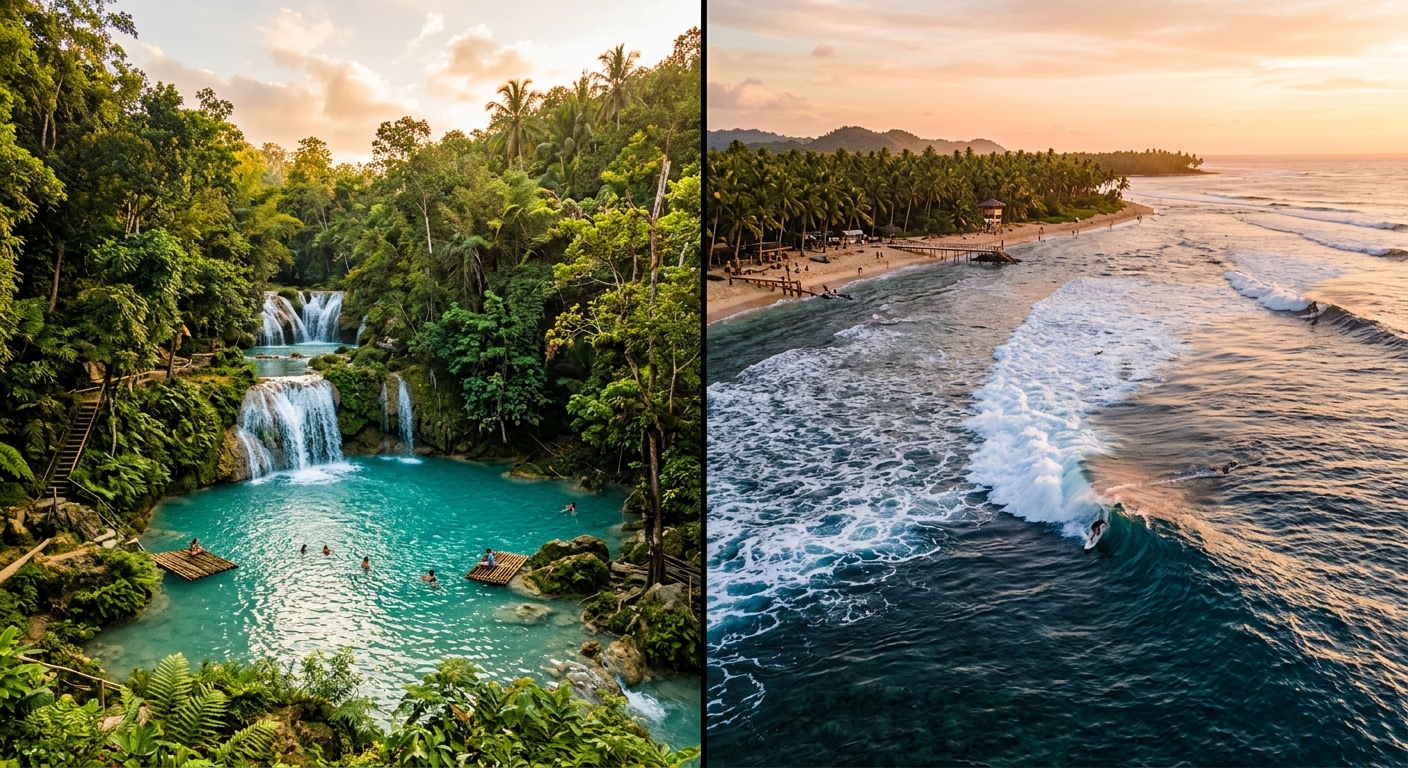
Siargao is famous for its surf beaches, with Cloud 9 being the crown jewel. Beyond the breaks, you will find stunning spots like Naked Island (a bare sandbar in the middle of turquoise water), Daku Island (white sand with swaying palms), and Magpupungko Rock Pools (natural tidal pools carved into flat rock formations). The beaches tend to be raw and undeveloped, which is part of the appeal.
Siquijor Beaches
Siquijor delivers a different kind of beauty. Salagdoong Beach features a cliff-jumping platform overlooking crystal-clear water. Paliton Beach offers a quiet, palm-lined stretch that feels like your own private coast. San Juan Beach, along the island’s southwestern shore, provides a long, swimmable coastline with gentle waves.
But Siquijor’s real edge is what happens inland. Cambugahay Falls is a multi-tiered turquoise waterfall where you can swim between cascades and swing from a Tarzan rope into natural pools. Cantabon Cave offers guided spelunking through an underground river system. Century-old balete trees draped in roots create otherworldly landscapes. Siquijor packs an unusual density of natural attractions for an island only 340 square kilometers in size.
Verdict on nature: Siargao dominates for beach variety and island-hopping. Siquijor wins for waterfalls, caves, and inland exploration. Both deliver world-class natural scenery.
Activities and Adventures
Surfing
This is where Siargao stands alone. Cloud 9 is one of the best surf breaks in Asia, drawing international competitors and surf enthusiasts year-round. The hollow right-hand reef break produces barreling waves that have put Siargao on the global surf map. Beginners can learn at more forgiving breaks nearby, with board rentals starting around PHP 300 per hour and lessons from PHP 500 to 800.
Siquijor has no notable surf scene. The waters are calm and sheltered, which is great for swimming but offers nothing for surfers.
Diving and Snorkeling
Both islands deliver excellent underwater experiences, but the character differs. Siargao offers reef diving and encounters with larger pelagic species. Dive shops cluster around General Luna.
Siquijor is a diver’s quiet secret. The marine sanctuaries around Apo Island (a short boat ride away) and the house reefs along Siquijor’s coast offer vibrant coral gardens, sea turtles, and abundant marine life without the crowds. Dive operators in San Juan charge around PHP 1,500 to 2,500 per fun dive. The visibility is often exceptional, and the lack of heavy boat traffic keeps the underwater environment pristine.
Other Adventures
Siquijor offers waterfall chasing, cave exploration, mountain biking around the 72-kilometer coastal loop road, and visiting traditional healers who practice folk medicine — a cultural experience unique to this island. The entire island can be circled by motorbike in about two hours, making it perfect for self-guided exploration.
Siargao’s non-surf activities include island hopping to the three famous islets, paddleboarding through mangrove forests in Del Carmen (the largest mangrove forest in Mindanao), and rope swinging at Sugba Lagoon. The island also has a growing kitesurfing scene.
Verdict on activities: Siargao is the clear choice for surfers and water sports enthusiasts. Siquijor appeals to travelers who want diverse land-based adventures, diving, and cultural encounters.
Nightlife and Social Scene
Siargao has developed a vibrant nightlife scene, particularly around General Luna. Bars like Bravo, Harana, and RumBar keep the energy going well past midnight. There are regular DJ nights, beach parties, and a steady rotation of events during peak season (September to November for surf, December to May for general tourism). The crowd skews young, international, and social. If you want to meet people, Siargao makes it effortless.
Siquijor is quiet after dark. A handful of bars in San Juan serve drinks and play music, but do not expect clubs or late-night parties. The nightlife here means sunset beers on the beach, a bonfire at your guesthouse, or stargazing from your balcony. This is intentional — travelers come to Siquijor precisely because it is not a party island.
Verdict on nightlife: Siargao by a wide margin if nightlife matters to you. Siquijor is for those who consider silence after 9 PM a feature, not a bug.
Budget Comparison
Both islands are affordable by international standards, but there are meaningful differences.
Accommodation
Siquijor remains one of the cheapest islands in the Philippines for lodging. Basic guesthouses and fan rooms start at PHP 500 to 800 per night. Mid-range boutique stays with air conditioning and pools run PHP 1,500 to 3,000. Even beachfront resorts rarely exceed PHP 5,000 per night.
Siargao has seen prices rise significantly with its growing popularity. Budget hostels and fan rooms start at PHP 800 to 1,200. Mid-range options run PHP 2,000 to 5,000. During peak surf season, prices spike further and availability tightens. Upscale villas and resort rooms can hit PHP 8,000 to 15,000.
Food
Local meals (carinderia or street food) cost roughly the same on both islands: PHP 80 to 150 per plate. But Siargao’s restaurant scene has expanded to include cafes, brunch spots, and international kitchens where meals run PHP 300 to 600. Siquijor has fewer upscale dining options, which keeps the average meal price lower at PHP 150 to 350 for restaurant food.
Transport
Siquijor motorbike rentals cost PHP 300 to 400 per day. Tricycle hires for day tours run around PHP 1,500 to 2,000. The island’s compact size means fuel costs are minimal.
Siargao motorbike rentals are PHP 350 to 500 per day. The island is larger, so you burn more fuel. Island-hopping tours typically cost PHP 1,500 to 2,000 per person.
Verdict on budget: Siquijor is 20 to 40 percent cheaper overall. A comfortable daily budget on Siquijor is PHP 2,000 to 3,500, while Siargao runs PHP 3,000 to 5,500 for the same comfort level.
Vibe and Atmosphere
This is where the two islands diverge most sharply, and it is often the deciding factor.
Siquijor carries an air of mystery and calm. Known historically as the “Island of Fire” due to the bioluminescent fireflies that once lit its shores, Siquijor has a reputation steeped in folk healing and enchantment. The pace of life is genuinely slow. Tourist density remains low even during peak months. You can ride a motorbike around the entire coast and count the other travelers you pass on one hand. The island attracts people seeking solitude, healing, spiritual connection, or simply a real break from noise.
Siargao vibrates with a youthful, cosmopolitan energy. The surf culture brings an international crowd that blends Filipino warmth with a backpacker-meets-digital-nomad atmosphere. General Luna feels like a small town that has been plugged into the global travel circuit — coworking spaces, acai bowl cafes, and Instagram-worthy spots are everywhere. It is social, dynamic, and constantly evolving.
Neither vibe is better. They serve different needs at different times.
Best Island For Your Travel Style
Couples
Siquijor edges ahead for couples, especially those seeking romance over adventure. Sunset motorbike rides, private waterfall swims, and quiet beachfront dinners create natural intimacy. Siargao works for adventurous couples who bond over surf sessions and nightlife.
Solo Travelers
Siargao is the stronger pick. The social hostels, group surf lessons, bar scene, and international crowd make it exceptionally easy to connect with other travelers. Siquijor solo travel is rewarding but requires more comfort with solitude.
Families
Siquijor wins for families. Calm waters, easy motorbike distances between attractions, affordable accommodation, and a safe, low-key environment make it manageable with children. Siargao’s strong currents, party scene, and rougher roads are less family-friendly.
Digital Nomads
Siargao has developed genuine digital nomad infrastructure: coworking spaces, reliable (though not blazing fast) internet in General Luna, and a community of remote workers. Siquijor’s internet has improved but remains inconsistent outside of the main towns, and coworking options are limited.
The Verdict: Siquijor or Siargao?
Choose Siquijor if you want peace, natural beauty beyond beaches, cultural depth, and a budget-friendly escape that has not been reshaped by mass tourism. Siquijor rewards the traveler who wants to slow down, explore waterfalls and caves, dive uncrowded reefs, and experience an island that still feels like a discovery.
Choose Siargao if you want surf, nightlife, a social atmosphere, and an island with modern traveler amenities. Siargao is ideal for those who want adventure with a community around them and do not mind paying a premium for it.
The honest answer? They are not competing. They serve completely different moods. Many travelers end up visiting both on separate trips, and that is probably the best advice we can give. But if you are choosing one for your next flight, match the island to your current state of mind. Seeking energy? Siargao. Seeking stillness? Siquijor.
Quick Comparison Table
| Category | Siquijor | Siargao |
|---|---|---|
| Getting There | Fly to Dumaguete + 1hr ferry | Direct flights from Manila/Cebu |
| Best Beaches | Salagdoong, Paliton, San Juan | Cloud 9, Naked Island, Daku Island |
| Top Activity | Waterfall chasing, diving, caves | Surfing, island hopping |
| Nightlife | Quiet, sunset-focused | Vibrant bars and parties |
| Daily Budget | PHP 2,000-3,500 | PHP 3,000-5,500 |
| Accommodation | PHP 500-5,000/night | PHP 800-15,000/night |
| Vibe | Peaceful, mystical, slow | Social, energetic, youthful |
| Best For | Couples, families, solitude seekers | Surfers, solo travelers, digital nomads |
| Tourist Density | Low | Moderate to high |
| Internet | Inconsistent | Decent in General Luna |
Both islands represent the best of what Philippine travel offers. The question is not which island is better — it is which island is better for you, right now.
Siquijor.xyz Editorial Team
Local experts sharing authentic Siquijor experiences
Related Experiences
Day Trips from Siquijor: Dumaguete, Bohol & Beyond
Explore beyond Siquijor with day trips to Dumaguete city, Bohol's Chocolate Hills, and nearby attractions. Ferry schedules, costs, and practical planning tips.

Family Travel Guide to Siquijor: 2026 Complete Planning Resource
Plan the perfect Siquijor family vacation. Kid-friendly activities, family accommodations, safety tips, what to pack, and age-appropriate adventures.
How to Get to Siquijor in 2026: Complete Travel Guide
Everything you need to know about getting to Siquijor Island in 2026 - ferry routes, schedules, prices, and transportation options from Manila, Cebu, Bohol, and Dumaguete.