Siquijor vs Camiguin: Two Mystic Philippine Islands Compared
Choosing between Siquijor and Camiguin? Compare beaches, waterfalls, diving, culture, costs, and travel logistics to pick the right mystical Philippine island for your trip.
The Philippines has no shortage of tropical islands, but two stand apart for travelers seeking something beyond the typical beach holiday. Siquijor in the Central Visayas and Camiguin off the northern coast of Mindanao both carry reputations as mystical, off-the-beaten-path destinations with dramatic natural beauty and rich cultural traditions. Yet they offer distinctly different experiences.
If you are planning a trip to the southern Philippines and debating between these two islands, this comprehensive comparison covers everything from landscapes and activities to costs, logistics, and the overall travel experience each one delivers.
Geography and First Impressions
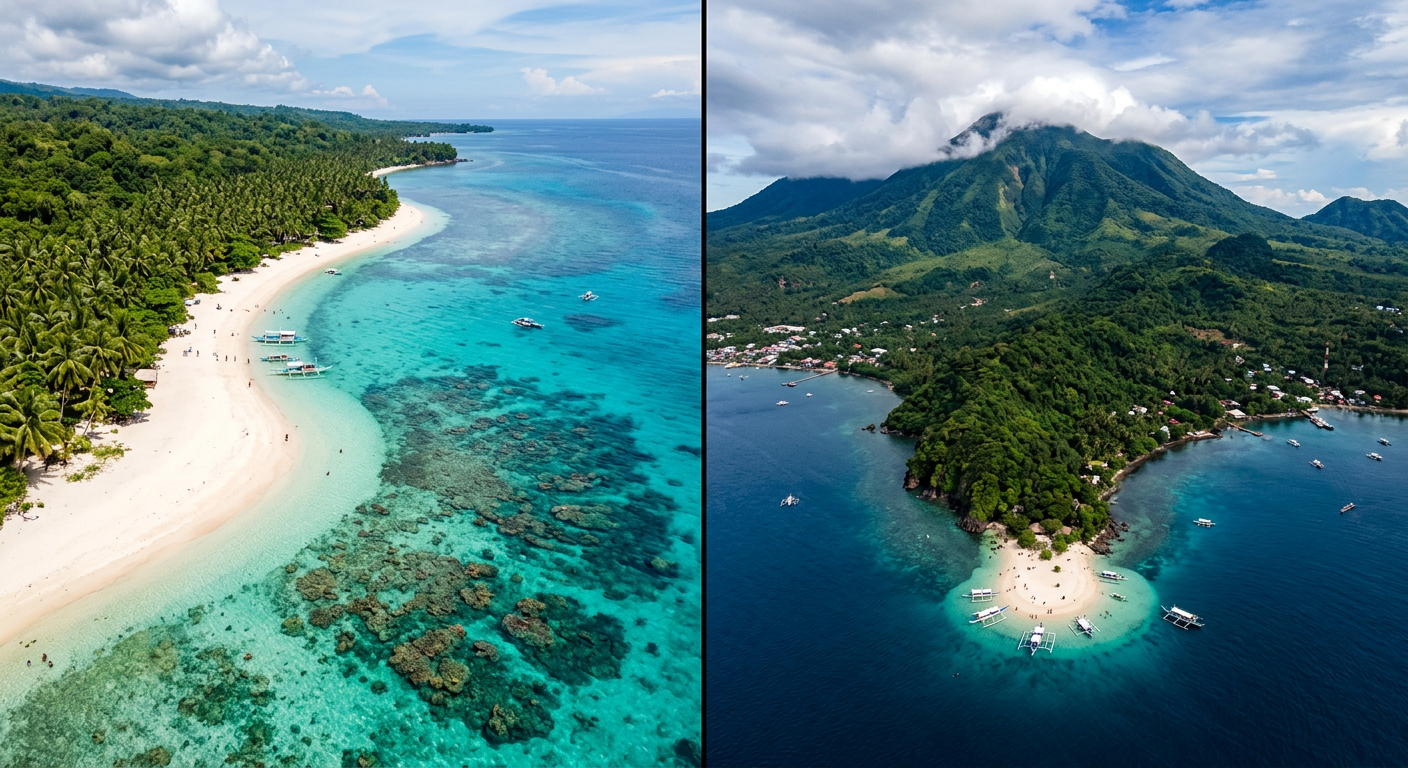
Siquijor is a compact coral island spanning roughly 344 square kilometers in the Bohol Sea. Its terrain is relatively gentle, with rolling hills reaching their peak at Mount Bandilaan (557 meters). The coastline alternates between white sand beaches, rocky shores, and mangrove-lined inlets. Arriving by ferry, the first impression is of an island wrapped in dense tropical greenery with a distinctly tranquil atmosphere.
Camiguin is volcanic to its core. Despite being one of the smallest provinces in the Philippines at just 238 square kilometers, it packs in seven volcanoes, including the still-active Mount Hibok-Hibok (1,332 meters). The island rises sharply from the sea, creating a dramatic silhouette visible from kilometers away. Landing on Camiguin feels like arriving at a place shaped by powerful geological forces, with hot springs, volcanic rock formations, and lush highlands dominating the scenery.
The fundamental difference is geological: Siquijor is a coral limestone island with gentle topography, while Camiguin is a young volcanic island with steep, rugged terrain. This single distinction shapes nearly every aspect of the travel experience.
Beaches and Swimming
Siquijor holds the advantage for beach lovers. Paliton Beach offers a long stretch of powdery white sand backed by coconut palms. Kagusuan Beach provides a more secluded experience tucked below limestone cliffs. Salagdoong Beach combines swimming with cliff jumping from purpose-built platforms. The island’s coral foundations create generally calm, clear waters ideal for swimming year-round.
Camiguin’s beaches are fewer and different in character. White Island, a shifting sandbar located offshore, is the main beach attraction. It requires a short boat ride to reach and offers stunning views back toward the volcanic peaks. Mantigue Island, another boat-accessible destination, provides excellent snorkeling alongside its small beach. The main island itself has limited sand beaches due to its volcanic geology, with many stretches featuring dark volcanic rock shores.
For dedicated beach time, Siquijor offers more variety and accessibility. For a unique sandbar experience with volcanic backdrops, Camiguin delivers something Siquijor cannot match.
Waterfalls and Freshwater Attractions
Both islands are well endowed with waterfalls, though the experiences differ considerably.
Siquijor’s star attraction is Cambugahay Falls, a multi-tiered cascade flowing over smooth limestone into turquoise pools. The water is remarkably clear, and rope swings at several levels add a playful element. Lagaan Falls offers a more adventurous experience with cave systems and hidden pools. Lugnason Falls (also called Zodiac Falls) provides a quieter alternative tucked into the forest.
Camiguin matches this with Katibawasan Falls, a dramatic 76-meter single-drop waterfall plunging into a deep pool surrounded by tropical vegetation. Tuasan Falls is smaller but features an unusual bowl-shaped formation carved from volcanic rock. The Ardent Hot Springs, fed by geothermal activity from the island’s volcanoes, offer a warm-water soaking experience that Siquijor simply cannot replicate.
The hot springs give Camiguin a distinctive edge for those who enjoy thermal bathing. Siquijor’s waterfalls tend to be more swimmable and accessible, making them better for extended afternoon visits.
Diving and Marine Life
Siquijor has established itself as a serious diving destination in the Visayas. The island’s coral reef systems support diverse marine life, with sites like Tubod Marine Sanctuary offering encounters with sea turtles, reef sharks, and vast coral gardens. Multiple dive shops operate around the island, and conditions are favorable for beginners and experienced divers alike. The proximity to Apo Island, one of the Philippines’ premier dive sites, adds significant value.
Camiguin’s underwater attractions include the Sunken Cemetery, where a volcanic eruption in the 1870s submerged a coastal graveyard now colonized by coral and marine life. It ranks among the most unique dive sites in the Philippines. Mantigue Island offers pristine reef diving, and the volcanic underwater topography creates interesting formations. However, Camiguin has fewer dive operators and less developed diving infrastructure overall.
For dedicated divers, Siquijor offers more variety and better-established facilities. Camiguin’s Sunken Cemetery alone, however, is worth the trip for anyone who values truly one-of-a-kind underwater experiences.
Hiking and Land Adventures
Camiguin dominates this category. The trek to the summit of Mount Hibok-Hibok is one of the most rewarding day hikes in the Philippines, offering views that stretch across the Bohol Sea to mainland Mindanao. The trail passes through several vegetation zones, from lowland forest to mossy cloud forest near the summit. The Stations of the Cross walkway ascending Mount Vulcan provides a shorter but still scenic climb past religious shrines.
Siquijor’s hiking is more modest. The trail to Mount Bandilaan’s summit passes through the national park and butterfly sanctuary, offering pleasant forest walking and panoramic views from the top. The island’s flatter terrain lends itself more to motorcycle exploration and coastal walking than serious mountain hiking.
Adventurous hikers and trekkers will find Camiguin far more compelling. Casual walkers and those who prefer exploring by motorbike will find Siquijor’s gentler landscape more approachable.
Culture and Mysticism
Both islands carry strong mystical reputations, but the nature of that mysticism differs.
Siquijor is famous throughout the Philippines for its mananambal (traditional healers), folk magic traditions, and herbal medicine practices. The Old Enchanted Balete Tree, a massive centuries-old fig tree with a fish spa at its base, has become the island’s most recognizable cultural landmark. During Holy Week, healers gather on Mount Bandilaan for ceremonies that blend Catholic and pre-colonial spiritual practices. The island’s mystical reputation, once a source of fear for other Filipinos, has become a draw for culturally curious travelers.
Camiguin’s cultural identity centers more on its Catholic heritage and volcanic history. The Sunken Cemetery cross standing offshore marks one of the most photographed historical sites in Mindanao. The ruins of the old Spanish-era church and convent, destroyed by the 1871 eruption, stand as haunting reminders of the island’s turbulent geological past. The Lanzones Festival each October celebrates the island’s signature fruit with street dancing and community gatherings.
For travelers drawn to folk traditions and spiritual practices, Siquijor is the clear choice. Those interested in geological history, religious heritage, and the intersection of natural disaster and human resilience will find Camiguin more compelling.
Food and Dining
Siquijor’s food scene has expanded significantly in recent years, driven by the growing tourist population and a wave of foreign-owned restaurants. Visitors can now find everything from traditional Filipino carinderias to Italian trattorias and French-inspired cafes. The island’s fresh seafood remains the highlight, particularly grilled fish purchased directly from local fishermen. A small but growing coffee culture supports several atmospheric cafes around San Juan and Larena.
Camiguin is known for its lanzones fruit, considered the sweetest variety in the Philippines. The island’s food scene is more traditionally Filipino, with fewer international dining options but excellent local cuisine. Fresh seafood, particularly in Mambajao, is outstanding. The island produces high-quality cacao, and a nascent chocolate-making industry has begun attracting foodie attention.
Neither island rivals the dining diversity of larger Philippine destinations, but both offer genuine, locally sourced food experiences. Siquijor has more variety for international palates; Camiguin offers a more authentically local culinary landscape.
Getting There and Getting Around
Siquijor is accessible primarily by ferry from Dumaguete (approximately one hour on a fast craft) or from Bohol and Cebu on longer routes. The recent introduction of commercial flights has improved accessibility, though ferry remains the most common arrival method. Once on the island, motorbike rental is the standard mode of transport, with the 72-kilometer coastal loop road making navigation straightforward.
Camiguin is reached by ferry from Balingoan on the Mindanao mainland (approximately one hour) or by plane from Cebu on small regional aircraft. Getting to Balingoan typically requires a bus from Cagayan de Oro, adding travel time. On the island, tricycles and motorbike rentals are the primary transport options. The coastal road circles the island in about 64 kilometers.
Siquijor is generally easier to reach for travelers coming from the popular Visayas circuit (Cebu, Bohol, Dumaguete). Camiguin is more accessible from northern Mindanao. Both islands are small enough to explore independently on a motorbike within two to three days.
Accommodation and Costs
Siquijor offers a wider range of accommodation, from budget hostels and homestays starting around 500 PHP per night to upscale beachfront resorts reaching 5,000 PHP and beyond. The San Juan area has the highest concentration of tourist-oriented accommodation, while other municipalities offer quieter, more locally flavored options. The growing tourist infrastructure means online booking is straightforward for most properties.
Camiguin’s accommodation skews more toward mid-range resorts and local guesthouses. Budget options exist but are fewer than on Siquijor. Luxury accommodation is limited. Overall daily costs on Camiguin tend to be slightly lower for food and transport, though accommodation prices are comparable.
For budget travelers, Siquijor offers more options at the lower end. For mid-range travelers, both islands provide good value. Neither island has truly high-end luxury resorts comparable to those found in Palawan or Boracay.
Best Time to Visit
Both islands share similar tropical climates, with a dry season running roughly from December through May and a wet season from June through November.
Siquijor’s peak season runs from February through April, coinciding with the dry season and Holy Week activities. March is widely considered the best month, offering reliable sunshine, calm seas, and the clearest water visibility for diving and snorkeling.
Camiguin’s peak coincides with its Lanzones Festival in late October, which brings domestic tourists in large numbers. The dry months of March through May offer the best weather for hiking Mount Hibok-Hibok and general sightseeing.
For a March 2026 visit, both islands are in excellent form. The seas are calm, rainfall is minimal, and outdoor activities are at their best.
Which Island Should You Choose?
Choose Siquijor if you prioritize beaches, diving, and snorkeling. The island rewards those who want a mix of marine adventure and cultural exploration wrapped in a compact, easily navigable package. It suits couples, solo travelers, and anyone drawn to mystical traditions and folk healing culture. The more developed tourist infrastructure makes it slightly easier for first-time Philippine travelers.
Choose Camiguin if you crave dramatic volcanic landscapes, serious hiking, and a less touristy atmosphere. The island appeals to adventure travelers, nature photographers, and anyone fascinated by the intersection of geology and human history. Its relative remoteness from the main tourist circuit means fewer crowds and a more raw, undiscovered feel.
The ideal solution, of course, is to visit both. They are different enough that one does not substitute for the other, and together they represent two of the most rewarding off-the-beaten-path island experiences the Philippines has to offer.
Practical Quick Comparison
Siquijor sits at roughly 344 square kilometers with its highest point at 557 meters. The primary access point is Dumaguete, and the main draw is beaches, diving, and mystical culture. It suits relaxation seekers, divers, and cultural explorers, with a tourist infrastructure level that is moderate and growing.
Camiguin covers approximately 238 square kilometers and rises to 1,332 meters at Mount Hibok-Hibok. Access comes primarily through Cagayan de Oro, and the main draw is volcanic landscapes, hot springs, and hiking. It suits adventure travelers and hikers, with a tourist infrastructure level that remains basic to moderate.
Both islands share a sweet spot for visits between February and May, motorbike-friendly coastal loops, friendly local communities, and that distinctive quality of being genuinely off the mainstream Philippine tourist trail. Whichever you choose, you are picking an island that rewards curiosity and a willingness to slow down.
Siquijor.xyz Editorial Team
Local experts sharing authentic Siquijor experiences
Related Experiences
Day Trips from Siquijor: Dumaguete, Bohol & Beyond
Explore beyond Siquijor with day trips to Dumaguete city, Bohol's Chocolate Hills, and nearby attractions. Ferry schedules, costs, and practical planning tips.

Family Travel Guide to Siquijor: 2026 Complete Planning Resource
Plan the perfect Siquijor family vacation. Kid-friendly activities, family accommodations, safety tips, what to pack, and age-appropriate adventures.
How to Get to Siquijor in 2026: Complete Travel Guide
Everything you need to know about getting to Siquijor Island in 2026 - ferry routes, schedules, prices, and transportation options from Manila, Cebu, Bohol, and Dumaguete.