Siquijor Rainy Day Activities: What to Do When It Rains on the Mystic Island
Discover the best rainy day activities in Siquijor, from visiting historic churches and healers to cooking classes, cave adventures, and cozy cafe hopping. Rain never has to ruin your island vacation.
When the Clouds Roll In
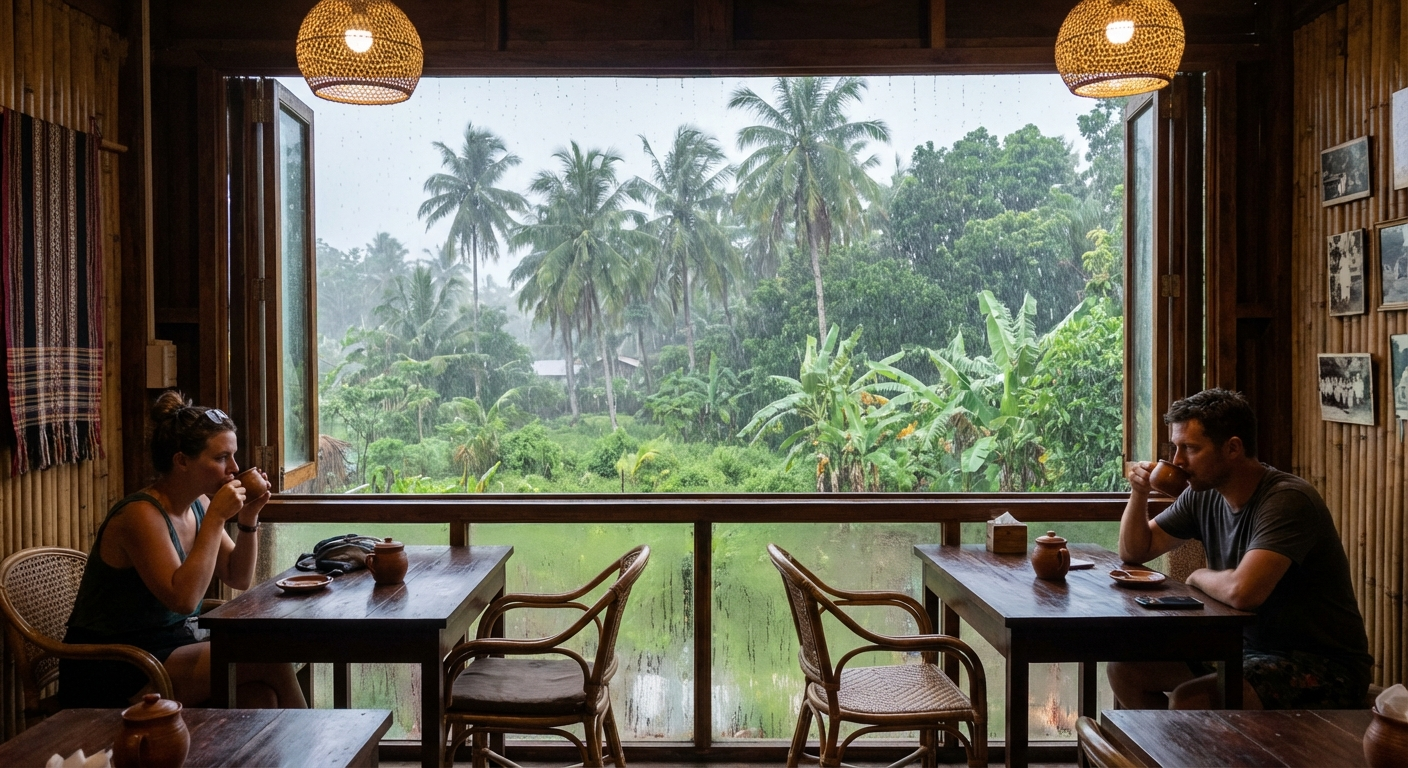
You wake up in your beachfront cottage, pull back the curtain, and see gray skies and sheets of rain sweeping across the ocean. Your heart sinks. You had plans for the beach today. But here is the thing about Siquijor: some of the island’s most memorable experiences happen precisely when the weather turns. Rain transforms the landscape into something almost impossibly green, waterfalls surge with power, and the usual crowds thin out to almost nothing.
Whether you are visiting during the dry season and caught an unexpected afternoon shower, or you planned a trip during the wetter months of June through October, this guide covers everything you can do in Siquijor when the rain comes down.
Visit Siquijor’s Historic Churches
Siquijor has some of the oldest and most beautiful churches in the Visayas, and a rainy day is the perfect time to explore them without the heat beating down on you. The island’s six municipalities each have their own parish church, and visiting them makes for a rewarding cultural tour.
San Isidro Labrador Church in Lazi
The Lazi Church and Convent complex is a UNESCO-recognized heritage site and one of the most impressive colonial-era structures in the Philippines. Built in 1884, the church features coral stone walls, a beautifully weathered facade, and an adjacent convent that is considered the largest in Asia. On a rainy day, the interior is cool and atmospheric, with natural light filtering through old windows and casting soft shadows across the wooden floors.
The convent now serves partially as a small museum where you can see old religious artifacts, photographs from the Spanish colonial period, and traditional items from Siquijor’s past.
St. Francis de Assisi Church in Siquijor Town
The main church in Siquijor Town sits right near the port, making it an easy first or last stop. Built in 1783, it features a distinctive bell tower and a serene interior. The church grounds include a small garden area that is especially pleasant during light rain.
Other Churches Worth Visiting
Complete the church circuit by visiting the parishes in Maria, Enrique Villanueva, San Juan, and Larena. Each has its own character and history, and driving between them takes you through some of Siquijor’s most scenic roads, which look their best when the vegetation is rain-fresh and vibrant.
Explore Cantabon Cave
Rain does not stop cave adventures. In fact, rain makes Cantabon Cave even more exciting. Located in the interior highlands of the island, this cave system is a legitimate spelunking experience with underground rivers, narrow passages, and chambers filled with stalactites and stalagmites.
Local guides lead visitors through the cave, which takes approximately one to two hours depending on your pace and how far you want to go. The cave stays dry in most sections regardless of weather outside, and the water levels in the underground river only rise significantly during prolonged heavy rainfall.
A few practical notes: wear shoes you do not mind getting muddy, bring a change of clothes, and hire a local guide at the entrance. The fee is modest and supports the community. The trail to the cave entrance can be slippery in rain, but the guides know every step and will help you navigate safely.
Learn to Cook Filipino Dishes
Several resorts and guesthouses on Siquijor offer cooking classes where you can learn to prepare traditional Filipino and Siquijodnon dishes. This is one of the best rainy day activities because it is entirely sheltered, hands-on, and ends with a meal.
Common dishes you might learn to prepare include chicken adobo, kinilaw (the Filipino version of ceviche using fresh fish with vinegar and coconut milk), pancit canton, and local vegetable dishes using ingredients like malunggay, kangkong, and fresh coconut.
Some hosts will take you to the local market first to buy ingredients, which is an experience in itself. You will see how locals shop, learn to identify tropical fruits and vegetables, and pick up bargaining skills along the way. Even if the market visit happens in light rain, covered market stalls keep everything dry.
Ask your accommodation if they offer classes, or check with restaurants in San Juan that occasionally host cooking sessions for guests.
Visit a Traditional Healer
Siquijor is famous throughout the Philippines for its mananambal, or traditional healers, who practice folk medicine using herbs, prayers, and rituals passed down through generations. Visiting a healer is a cultural experience unique to Siquijor, and it does not require sunshine.
The most well-known area for healers is the interior barangays around San Antonio and the mountains near Mount Bandilaan. Some healers welcome visitors who come with genuine respect and curiosity. They may offer a blessing, prepare herbal remedies, or simply share stories about their practice.
Important etiquette: approach with respect, ask permission before taking photographs, bring a small donation or offering, and do not treat the experience as entertainment. These are real practitioners with deep roots in Siquijor’s cultural heritage.
Rainy weather actually adds to the atmosphere of these visits. The mountain roads are shrouded in mist, the surrounding forest drips with moisture, and the quiet intensity of the experience feels amplified by the sound of rain on the roof.
Cafe Hop Through San Juan and Siquijor Town
Siquijor’s cafe scene has grown considerably in recent years, and spending a rainy afternoon moving from one coffee shop to another is a perfectly pleasant way to pass the time.
San Juan Cafes
San Juan is the tourism hub of Siquijor, and several cafes here cater to travelers and digital nomads. You will find places serving proper espresso drinks, fresh juices, smoothie bowls, and light meals. Many have comfortable seating areas with views of the ocean or the surrounding coconut groves, and some offer board games, books, or reliable WiFi for catching up on work.
Siquijor Town Options
The capital town has a few local coffee shops and bakeries worth exploring. The vibe here is more local and less tourist-oriented, which gives you a different perspective on daily life on the island. Try the local bread and pastries, which are baked fresh daily.
What to Order
Philippine coffee culture is having a moment, and several cafes in Siquijor now serve locally sourced beans from nearby provinces or even from the island itself. Order a pour-over or a traditional Filipino barako coffee for something with more character than the standard espresso.
Visit the Old Enchanted Balete Tree
The centuries-old balete tree in Lazi is one of Siquijor’s most iconic landmarks, and visiting during rain creates a completely different atmosphere compared to the usual sunny day experience. The massive tree, draped in aerial roots with a natural fish spa pool at its base, looks almost otherworldly when mist hangs in the air and rain drips from its canopy.
The site has a covered waiting area, and the fish spa pool at the base of the tree is fed by a natural spring, so its temperature stays consistent regardless of weather. Dipping your feet in while rain falls around you is surprisingly relaxing.
Visitor numbers drop dramatically during rain, which means you may have the entire tree to yourself, something that rarely happens during dry season afternoons when tourist vans line the road.
Browse Local Markets and Souvenir Shops
Siquijor’s markets operate rain or shine, and covered market buildings in the municipal centers keep vendors and shoppers dry. The public market in Siquijor Town is the largest, with sections for fresh produce, meat, fish, and dry goods.
Beyond the markets, several small souvenir shops around the island sell locally made products including woven bags, coconut oil, herbal products, handicrafts, and Siquijor-branded clothing. Shopping for souvenirs and local products is an easy way to fill a rainy hour or two while supporting the local economy.
Look for locally produced virgin coconut oil, which Siquijor is known for, and herbal wellness products made with ingredients harvested from the island’s forests.
Watch the Waterfalls in Full Force
This might seem counterintuitive as a rainy day suggestion, but visiting waterfalls during or just after rain is genuinely spectacular. Cambugahay Falls, the island’s most famous cascade, transforms from its usual gentle turquoise flow into a thundering torrent after heavy rain. The volume of water increases dramatically, and the surrounding vegetation looks impossibly lush.
You probably should not swim during heavy rainfall because water levels rise and currents strengthen, but simply watching the falls at their most powerful is an experience in itself. The bamboo raft operators at Cambugahay typically pause during heavy rain, so this is more of a photography and observation visit.
Other waterfalls worth seeing in the rain include Lugnason Falls (also called Zodiac Falls), which is tucked away in a forested valley, and Lagaan Falls, which has rope swings and pools that fill beautifully after rain.
Get a Hilot Massage
Hilot is the traditional Filipino massage technique, and Siquijor is one of the best places in the Philippines to experience it authentically. Several practitioners on the island offer hilot sessions that go beyond standard spa treatments, incorporating herbal oils, heated banana leaves for diagnosis, and pressure techniques developed over centuries.
A rainy afternoon spent getting a hilot massage is about as relaxing as travel gets. The sound of rain on the roof, the scent of herbal oils, and the skilled hands of a practitioner who learned the craft from generations of healers create something far more memorable than any resort spa.
Some hilot practitioners work from their homes, while others are associated with wellness retreats and resorts around the island. Prices are generally very affordable compared to commercial spa treatments.
Read, Rest, and Reset
Sometimes the best rainy day activity is no activity at all. Siquijor moves at a slower pace than most destinations, and embracing that rhythm means accepting that not every hour needs to be filled with sightseeing.
Bring a book, find a hammock under a covered porch, and listen to the rain. Many accommodations on the island have beautiful common areas designed for exactly this kind of idle afternoon. Some have small libraries or book exchange shelves stocked by previous guests.
If you are staying at a resort with a covered pool area, swimming in warm pool water while rain falls around you is unexpectedly enjoyable. The air temperature during rain in Siquijor rarely drops below comfortable levels, so you will not be cold.
Practical Tips for Rainy Days in Siquijor
Pack a light rain jacket or poncho. Umbrellas work for walking short distances, but a jacket is more practical if you are riding a motorcycle, which is the primary transportation on the island.
Waterproof your essentials. A dry bag or waterproof phone case costs very little and saves a lot of worry. Keep your phone, wallet, and any electronics protected.
Expect afternoon showers. Even during the dry season, brief afternoon rain showers are common in Siquijor. They typically last thirty minutes to an hour and clear up quickly.
Road conditions. Some interior mountain roads can become slippery during heavy rain. If you are on a motorcycle, ride slowly and carefully, especially on steep sections near Cantabon Cave or Mount Bandilaan.
Embrace the change of pace. Filipino culture handles rain with a shrug and a smile. Take the local approach: find shelter, wait it out, enjoy the cooler temperatures, and use the time to connect with people around you.
Rain Makes the Island Better
The travelers who only see Siquijor under blue skies miss something essential about the island. Rain reveals a different Siquijor: greener, quieter, more atmospheric, and deeply beautiful in ways that sunshine alone cannot achieve. The mystical reputation of this island feels most real when clouds wrap around the mountains, mist drifts through the forest, and the air smells of wet earth and tropical flowers.
Do not let a rainy forecast discourage you. Some of your best memories from Siquijor might just come from a day when the weather did not cooperate with your plans.
Siquijor.xyz Editorial Team
Related Experiences
Day Trips from Siquijor: Dumaguete, Bohol & Beyond
Explore beyond Siquijor with day trips to Dumaguete city, Bohol's Chocolate Hills, and nearby attractions. Ferry schedules, costs, and practical planning tips.

Family Travel Guide to Siquijor: 2026 Complete Planning Resource
Plan the perfect Siquijor family vacation. Kid-friendly activities, family accommodations, safety tips, what to pack, and age-appropriate adventures.

How to Get to Siquijor in 2026: Complete Travel Guide
Everything you need to know about getting to Siquijor Island in 2026 - ferry routes, schedules, prices, and transportation options from Manila, Cebu, Bohol, and Dumaguete.